
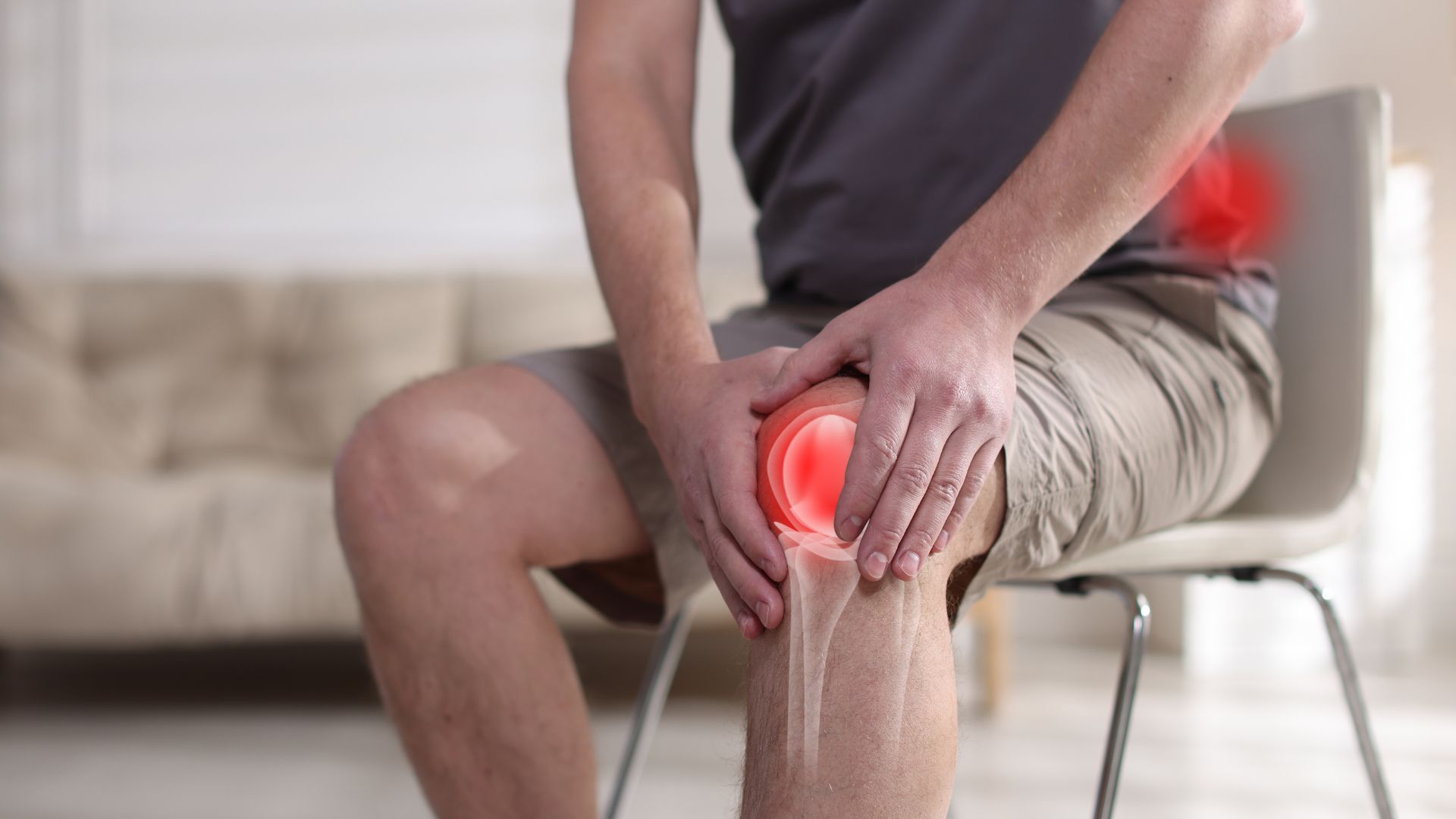
Can Sciatica Cause Knee Pain?
May 19, 2026
CONTENTS
- What Is Sciatica?
- Can Sciatica Cause Knee Pain? The Four Mechanisms Explained
- Sciatica Knee Pain vs. Knee Osteoarthritis: How to Tell the Difference
- Symptoms of Sciatica-Related Knee Pain
- When to See a Specialist
- How Sciatica-Related Knee Pain Is Diagnosed: The Painostic® Methodology
- Treatment Options for Sciatica-Related Knee Pain
- Daily Self-Management Tips for Sciatica Knee Pain
- Frequently Asked Questions
- Key Takeaways
- Speak to a Sciatica Specialist in Singapore
Quick Answer:
Yes — sciatica can cause knee pain, even when your knee joint is completely healthy. The sciatic nerve runs from your lower back through the buttocks and down the back of each leg, branching near the knee. When this nerve is compressed or irritated in the spine, pain signals can travel all the way to the knee. This is referred nerve pain, and it is frequently misdiagnosed as a knee condition.
If you have been treating knee pain for weeks — with rest, ice, and anti-inflammatories — and nothing seems to be working, there is a real possibility that the problem is not in your knee at all. The true source may be in your lower back.
This scenario is more common than many patients realise. In Singapore, where desk-bound work, heavy commuting, and sedentary lifestyles have become the norm, nerve-related conditions affecting the leg are a growing concern. Many patients arrive at pain specialists having already seen an orthopaedic surgeon or physiotherapist for their knee — only to discover that a compressed nerve in the spine is the underlying driver.
This article explains exactly how sciatica causes knee pain, how to tell it apart from a genuine knee problem, when to seek specialist assessment, and what treatment options are available in Singapore.
What Is Sciatica?
Sciatica is not a diagnosis in itself — it is a symptom of an underlying spinal condition. The term refers to pain, numbness, tingling, or weakness that travels along the path of the sciatic nerve: from the lower back through the buttocks, down the back of the thigh, and into the leg.
The sciatic nerve is the longest and widest nerve in the human body. It originates from nerve roots at the L4 through S3 levels of the lumbar and sacral spine, runs through the pelvis and buttock region, and then travels down the back of each leg. Near the back of the knee, it divides into two branches — the tibial nerve and the common peroneal nerve — which continue into the lower leg and foot.
The most common causes of sciatic nerve compression include:
- Herniated lumbar disc — when disc material bulges and presses on a nerve root, most commonly at L4–L5 or L5–S1
- Spinal stenosis — a narrowing of the spinal canal that compresses the nerves within it
- Piriformis syndrome — compression of the sciatic nerve by the piriformis muscle in the buttock
- Spondylolisthesis — when one vertebra slips forward over the one below, narrowing the nerve exit point
- Degenerative disc disease — age-related breakdown of spinal discs that can irritate nearby nerve roots
In Singapore, Dr. Bernard Lee Mun Kam, Consultant Pain Specialist at Singapore Paincare Centre, notes that sciatica is more commonly associated with adults above 50, though younger patients — including those in their twenties — are increasingly presenting with the condition, linked to sedentary work habits, poor posture, and sudden bursts of unaccustomed exercise (The Straits Times, 2025). Globally, annual prevalence of sciatica in the general population is estimated between 9.9% and 25%, with lifetime incidence commonly reported at 10–40% (Konstantinou & Dunn, Spine, 2008).
Can Sciatica Cause Knee Pain? The Four Mechanisms Explained
1. Direct Nerve Pain Travelling Along the Sciatic Pathway
The most straightforward mechanism is referred pain. When the sciatic nerve is compressed in the lower back, it does not necessarily produce pain only at the compression site. The nerve transmits abnormal signals along its entire length — and those signals can be interpreted by the brain as pain anywhere along that pathway, including the knee.
Patients often describe a burning, shooting, or electric pain that seems to travel through the knee rather than originate from it. This quality — pain that moves or radiates — is a strong indicator that a nerve is involved, rather than a joint or ligament.
2. L4 Nerve Root Compression Producing Knee Pain and Weakness
The L4 nerve root is one of the most clinically significant contributors to knee symptoms from the spine. L4 is a component of the sciatic nerve (which comprises L4–S3) and also controls knee extension via the quadriceps muscle. When a herniated disc or spinal stenosis compresses the L4 root, the result can be pain along the inner shin and knee, weakness when straightening the leg, and a reduced or absent patellar reflex. Patients often notice the knee “giving way” — which is, in reality, quadriceps weakness driven by nerve dysfunction, not a torn ligament.
3. Common Peroneal Nerve Involvement at the Knee
As the sciatic nerve travels down the thigh, it divides into the tibial nerve and the common peroneal nerve just above the back of the knee. The peroneal nerve then wraps around the outer head of the fibula and continues into the lower leg. This anatomy makes the outer and back of the knee a convergence point for referred sciatic symptoms. Patients with sciatic nerve irritation frequently report a dull ache behind the knee, tingling along the outer knee, and numbness that extends into the outer calf and top of the foot — all consistent with peroneal nerve involvement from a spinal source.
4. Compensatory Muscle Tension and Gait Changes
Chronic sciatic nerve irritation often leads patients to alter the way they walk, stand, and sit in order to avoid pain. This postural compensation increases mechanical load on the knee joint. Over time, the muscles around the knee — including the hamstrings, quadriceps, and iliotibial band — become shortened or weakened as a secondary effect of protecting the painful nerve. The result is genuine knee discomfort layered on top of the underlying nerve problem. This is why treating only the knee, without addressing the spinal source, often delivers incomplete relief.
Sciatica Knee Pain vs. Knee Osteoarthritis: How to Tell the Difference
Both conditions can cause significant knee discomfort, and they can also occur simultaneously — making accurate diagnosis essential. The table below highlights the key distinguishing features.
| Feature | Sciatica-Related Knee Pain | Knee Osteoarthritis |
|---|---|---|
| Origin | Lower back / lumbar spine | Knee joint itself |
| Pain character | Burning, shooting, electric, or radiating | Aching, grinding, stiffness |
| Pain location | Back or outer knee; may radiate to calf or foot | Generalised around the joint; may be localised to medial or lateral compartment |
| Accompanies back pain | Often yes — lower back or buttock pain present | Not typically |
| Worse with sitting | Yes — prolonged sitting compresses the nerve | Variable — often worse after inactivity, improves briefly with movement |
| Worse with specific knee movements | Not typically | Yes — stairs, squatting, kneeling |
| Associated numbness/tingling | Yes — along the leg and into the foot | Rarely, unless a nerve is secondarily compressed |
| Knee swelling | Usually absent | Common in flares |
| X-ray or MRI findings | Knee joint appears normal; spinal imaging shows disc or nerve changes | Joint space narrowing, osteophytes, cartilage loss visible on imaging |
| Relief with lying flat | Often yes | Variable |
Important note: Sciatica and knee osteoarthritis can and do coexist in the same patient, particularly in adults over 50. Clinical assessment — including a physical examination and appropriate imaging — is required to determine which condition is the primary pain driver and whether both require treatment.
Symptoms of Sciatica-Related Knee Pain
You may be experiencing sciatic knee pain if you notice:
- A burning, tingling, or electric sensation at the back or outer side of the knee that was not caused by a fall or direct injury
- Shooting pain that travels from the lower back or buttock through the thigh and into the knee or calf
- A sensation of the knee “giving way” without any structural injury, combined with difficulty climbing stairs
- Numbness or a patches-of-cotton-wool feeling along the inner shin, outer knee, or top of the foot
- Knee symptoms that worsen after sitting for long periods — on a flight, at a desk, in a car — and ease when you lie flat
- Back or buttock discomfort that coincides with, or precedes, the knee pain
- One-sided symptoms — sciatica almost always affects one leg at a time
Seek urgent assessment if you experience loss of bladder or bowel control, rapidly progressing weakness in the leg, or numbness in the groin or inner thigh (saddle anaesthesia), as these may indicate a serious nerve emergency requiring immediate medical care.
When to See a Specialist
You should consult a pain specialist if:
- Knee pain has persisted for more than 4–6 weeks despite rest, physiotherapy, and over-the-counter pain relief
- Your knee has been assessed and cleared of structural problems, yet the pain continues
- You have lower back pain, buttock pain, or a shooting sensation down the leg accompanying the knee symptoms
- You notice weakness, altered reflexes, or sensory changes along the leg
- Knee pain worsens noticeably after prolonged sitting, bending forward, or certain back movements
- Imaging of the knee has come back normal and no clear cause has been identified
Early diagnosis matters. Sciatica that is left undiagnosed and untreated can progress from intermittent to chronic pain, and long-standing nerve compression may lead to persistent muscle weakness, sensory loss, and significantly reduced quality of life. Identifying the true pain source before beginning treatment prevents wasted time, unnecessary knee procedures, and escalating disability.
How Sciatica-Related Knee Pain Is Diagnosed: The Painostic® Methodology
Diagnosing sciatica-related knee pain requires considerably more than an X-ray of the knee. At Singapore Paincare, our pain specialists use the Painostic® methodology — a structured, three-protocol assessment designed to identify the true source of your pain before any treatment begins.
Diagnostic Formulation
A multi-dimensional assessment covering pain history, physical examination, imaging findings, and pain questionnaire. This protocol differentiates mechanical pain from functional and nerve-mediated pain, and evaluates all potential pain generators — including spinal nerve roots, peripheral nerve branches, joint structures, and myofascial elements. A patient presenting with knee pain will be assessed not only at the knee, but comprehensively across the lumbar spine, sacroiliac joint, hip, and nerve distribution pathway. Goal: pinpoint the exact source of pain before any treatment decision is made.
Injection Roadmap
Once the pain source has been identified, a structured, evidence-based treatment plan is developed — combining minimally invasive procedures, physical therapy, and pharmacotherapy in a sequence tailored to the specific condition and the individual patient’s needs. For sciatica-related knee pain, this may involve spinal nerve root treatments, peripheral nerve interventions, or both, depending on where compression has been confirmed.
Injection Technique
Refined techniques determine precise needle depth and optimal placement to ensure medication is delivered accurately to the affected anatomical structure — whether that is a lumbar nerve root, an epidural space, or a peripheral nerve branch near the knee.
Where the pain source remains unclear even after clinical assessment and imaging, image-guided diagnostic nerve blocks can be used to confirm the pain generator by selectively anaesthetising specific structures. Treating the knee when the source of pain is the spine will not produce lasting relief — and may delay the correct treatment by months or years.
Treatment Options for Sciatica-Related Knee Pain
Conservative (Non-Surgical) Approaches
For mild to moderate presentations, conservative management may help settle symptoms:
Physiotherapy — targeted exercises to strengthen the lumbar stabilisers, stretch the piriformis and hamstrings, and reduce nerve tension in the leg
Pharmacotherapy — nerve stabilising medications such as gabapentin or pregabalin, anti-inflammatories, or low-dose antidepressants for pain modulation, as clinically appropriate
Postural correction and activity modification — ergonomic adjustments for desk workers, advice on avoiding prolonged sitting and loaded spinal flexion
Bracing and support — lumbar support during long commutes or heavy activity to reduce spinal load
Minimally Invasive Procedures (MIPs)
When conservative measures are insufficient, or where nerve compression has been confirmed on imaging, minimally invasive procedures can provide more targeted and sustained relief. Singapore Paincare has delivered minimally invasive pain treatments for over a decade.
NEUROSPAN — Spinal and Nerve Interventions
| Procedure | How It Helps |
|---|---|
| Epidural Analgesia | Steroid and local anaesthetic delivered at the correct spinal level to reduce inflammation around the compressed nerve root, relieving radicular pain travelling to the knee |
| Pulsed Radiofrequency (PRF) | Lower-temperature radiofrequency energy desensitises and modulates the pain-causing nerve root without ablation, preserving nerve function while reducing pain signalling [→ Learn more about PRF] |
| Radiofrequency Ablation (RFA) | Radiofrequency energy disrupts painful nerve signal transmission at the facet joint level; provides long-lasting relief for spine-driven radicular pain [→ Learn more about RFA] |
| Peripheral Nerve Block | Local anaesthetic and anti-inflammatory injected around the specific nerve branch (e.g. the common peroneal nerve) to interrupt pain signals reaching the knee |
| Neuroplasty | A tube is inserted to create space in the narrowed spinal canal, freeing trapped nerve roots by mechanically breaking down adhesions and delivering anti-swelling medication [→ Learn more about Neuroplasty] |
| Nucleoplasty | Controlled plasma ablation decompresses a herniated disc, reducing nerve root pressure; indicated for confirmed disc herniation causing sciatica and knee symptoms [→ Learn more about Nucleoplasty] |
MYOSPAN — Soft Tissue and Joint Interventions
| Procedure | How It Helps |
|---|---|
| Coreflex Injections | Local anaesthetic, anti-inflammatory, and muscle relaxants delivered to tense muscles along the sciatic pathway (e.g. piriformis) to break the spasm-pain cycle [→ Learn more about Coreflex] |
| Myofascial Block | Targeted injection into knotted muscle along the sciatic distribution to flush accumulated toxins and prevent chronic compensatory muscle dysfunction [→ Learn more about Myofasical Block] |
Singapore Paincare’s pain specialists have extensive experience selecting and delivering the appropriate combination of spinal and peripheral interventions for patients with complex nerve-related pain presentations.
Daily Self-Management Tips for Sciatica Knee Pain
Take movement breaks every 30–45 minutes — Prolonged sitting increases pressure inside the lumbar disc, compressing nerve roots further. Stand, walk briefly, or perform gentle lumbar extension to relieve this pressure throughout the workday.
Stretch the hamstrings and piriformis daily — Tight posterior chain muscles increase tension along the sciatic nerve. Gentle seated or supine hamstring stretches and piriformis releases can reduce the mechanical load on the nerve pathway.
Sleep with a pillow between the knees — If you sleep on your side, a pillow between the knees keeps the pelvis level and reduces rotational stress on the lumbar spine overnight. Side sleeping is generally preferable to prone (face-down) positions for those with sciatica.
Avoid loaded forward bending — Picking up heavy items with a rounded lower back significantly increases disc pressure and can trigger or worsen nerve compression. Bend at the hips and knees, keeping the spine as neutral as possible.
Stay active within pain limits — Gentle walking helps maintain circulation to the nerve and prevents the muscle weakness that develops with complete rest. Avoid high-impact activities that jar the spine until the acute phase has settled, and discuss a structured rehabilitation programme with your specialist.
Frequently Asked Questions
Can sciatica really cause knee pain even if my knee looks normal on an MRI?
Yes. Sciatica-related knee pain originates in the lumbar spine, not the knee joint itself. An MRI of the knee may appear entirely normal because the problem is in the nerve root exiting the spine. If your knee imaging is normal but pain persists, a lumbar spine MRI and specialist nerve assessment are the appropriate next steps.
How do I know if my knee pain is sciatica or a knee joint problem?
The key distinguishing features are location, character, and associated symptoms. Sciatica-related knee pain typically burns or shoots, affects the back or outer knee, travels down from the thigh, and is accompanied by lower back or buttock discomfort. Knee joint problems typically produce a localised ache or grinding sensation, are worsened by specific knee movements such as stairs and squatting, and are often associated with visible swelling. A physical examination by a specialist is the most reliable way to differentiate the two.
Does worsening knee pain mean the sciatica is getting worse?
Not necessarily, but it should not be ignored. Persistent or worsening nerve compression can lead to increasing weakness, sensory loss, and — in rare cases — permanent nerve damage. If your knee symptoms are intensifying, if weakness is developing, or if you are experiencing numbness spreading into the foot, you should seek specialist assessment without delay.
Can minimally invasive procedures help with sciatica-related knee pain?
Yes — for confirmed spinal nerve compression, minimally invasive procedures targeting the lumbar spine can be very effective. Options such as epidural analgesia, pulsed radiofrequency, nucleoplasty, and peripheral nerve blocks address the nerve at its source or along its pathway, which can significantly reduce or resolve knee symptoms. Your specialist will confirm the appropriate intervention based on your specific diagnosis.
Will I need surgery for sciatica that is causing knee pain?
The majority of patients with sciatica do not require surgery. Most cases can be managed with a combination of conservative care and, where appropriate, minimally invasive procedures that address the nerve compression without open surgery. Surgery may be considered only in cases of persistent severe neurological deficit, confirmed structural instability, or failure of all non-surgical options after a structured trial of treatment.
Where can I see a sciatica specialist in Singapore?
Singapore Paincare Medical Group has specialist pain clinics at Paragon Medical Centre (290 Orchard Road #18-03) and Novena Medical Centre (38 Irrawaddy Road #07-33). Our consultants — including Dr. Bernard Lee Mun Kam, with over 20 years of pain management experience — assess and treat sciatica and nerve-related knee pain using the Painostic® diagnostic methodology. No referral is required.
Key Takeaways
Sciatica is a common cause of knee pain that does not originate in the knee — the source is nerve compression in the lumbar spine.
The sciatic nerve divides near the back of the knee, which is why spinal problems can produce very convincing knee symptoms, including pain, tingling, weakness, and numbness.
Sciatica and knee osteoarthritis can occur together, making accurate differential diagnosis essential before any treatment is started.
Warning signs that your knee pain may be nerve-related include accompanying back or buttock pain, shooting or burning quality, one-sided symptoms, and worsening after prolonged sitting.
The Painostic® methodology at Singapore Paincare uses a structured three-protocol assessment — Diagnostic Formulation, Injection Roadmap, and Injection Technique — to confirm the true source of pain and guide precise, minimally invasive treatment.
Speak to a Sciatica Specialist in Singapore
If you have persistent knee pain that has not responded to conventional treatment, or if you suspect your spine may be involved, it is worth seeking an assessment from a specialist trained in both spinal and nerve-related pain. At Singapore Paincare, our consultants regularly assess patients presenting with knee symptoms that turn out to originate from lumbar nerve compression. Using the Painostic® diagnostic methodology, we conduct a thorough, multi-dimensional evaluation to identify the true pain source — so that any treatment plan is targeted at the right structure from the outset.
This article is intended for general informational purposes only and does not constitute medical advice. Please consult a qualified healthcare professional for diagnosis and treatment tailored to your individual condition.