
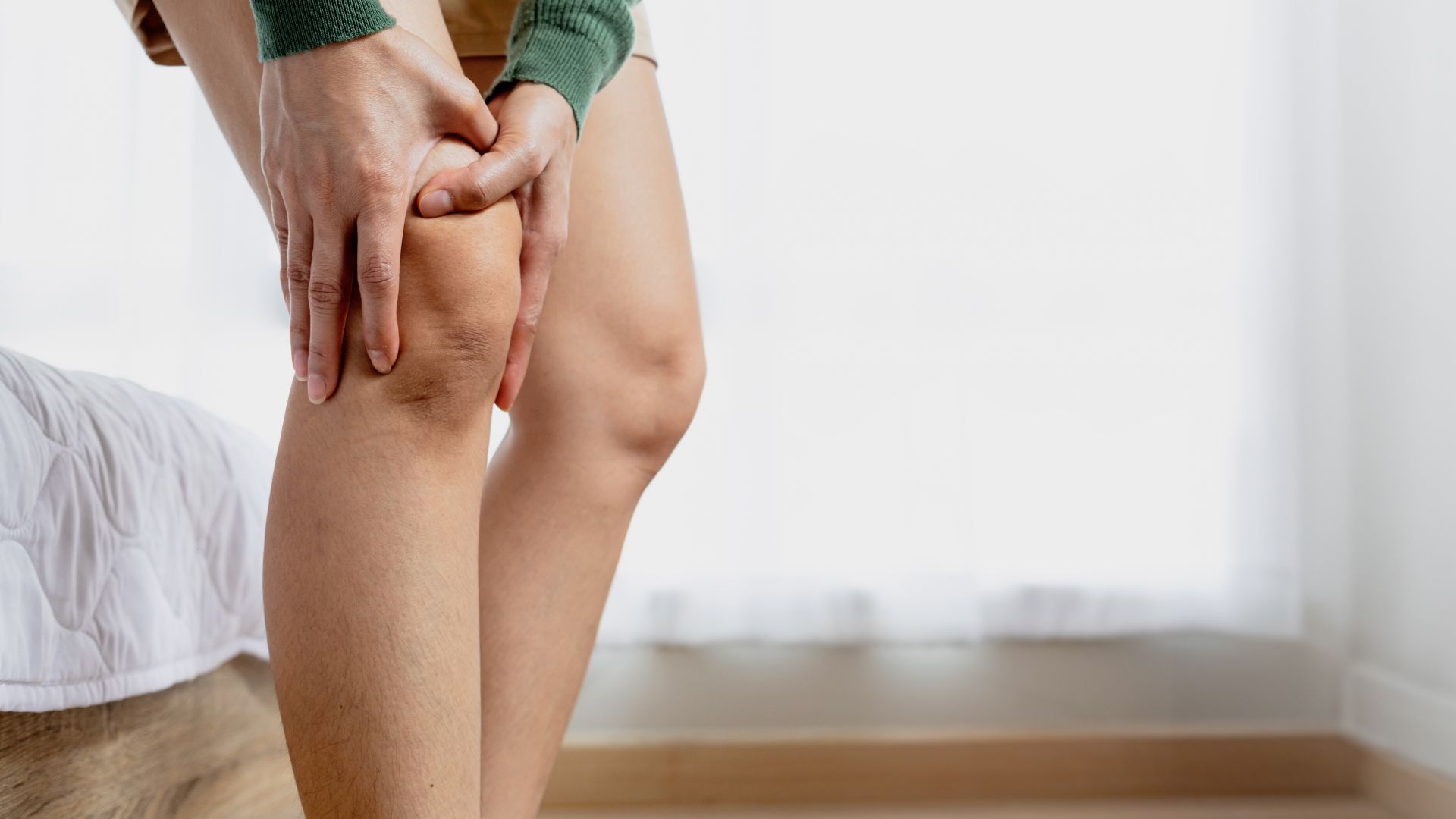
Why Is My Knee Buckling With No Pain? Causes and Treatment in Singapore
May 21, 2026
CONTENTS
- Understanding Why the Knee Is Vulnerable to Buckling
- What Causes Knee Buckling Without Pain?
- Reading Your Symptoms: Where and When Your Knee Gives Way
- Symptoms That Accompany Painless Knee Buckling
- How Is Painless Knee Buckling Diagnosed?
- Knee Buckling Treatment in Singapore: What Are Your Options?
- Managing Knee Instability Day-to-Day: Practical Tips
- When Should You See a Knee Pain Specialist in Singapore?
- Conclusion
- Frequently Asked Questions
Quick Answer:
Knee buckling without pain means your knee suddenly gives way or feels unstable, even though you feel no discomfort. This is more common than most people realise and can be caused by muscle weakness, early cartilage wear, ligament laxity, or nerve-related changes in the knee joint. Because there is no pain to act as a warning signal, many people in Singapore delay seeking help, and that delay allows the underlying cause to progress. A proper clinical assessment is the only reliable way to find out why your knee is giving out.
You are standing at the MRT platform, stepping off a bus, or simply walking from one room to another. Then it happens. Your knee suddenly gives way beneath you. You catch yourself, look down, and feel nothing. No pain, no swelling, no soreness. Just that unsettling split-second where your leg refused to hold you up.
Knee buckling without pain is a symptom that often gets dismissed because it does not hurt. Patients tell themselves it was a one-off, a minor stumble, or that it cannot be serious if it does not ache. But painless knee buckling is a clinical signal that something in the joint’s support system is not working correctly. It could be the muscles, cartilage, ligaments, or the nerves controlling them.
This article explains what causes knee buckling without pain, how to interpret your symptoms by where and when they happen, and what a knee pain specialist in Singapore can do to find the root cause and help you regain stable, confident movement.
Understanding Why the Knee Is Vulnerable to Buckling
The knee is the largest and most mechanically complex joint in the body. It connects the thigh bone (femur) to the shin bone (tibia) and relies on an intricate system of cartilage, ligaments, tendons, and muscles to stay stable during every step, squat, and staircase.
The hip is a deep ball-and-socket joint with inherent structural stability. The knee, by contrast, is essentially two flat surfaces resting on each other, held in place almost entirely by soft tissue. This design gives the knee its impressive range of motion, but it also means that any disruption to the muscles, ligaments, cartilage, or nerves can cause the joint to lose stability and give way without warning.
Knee buckling is more common in Singapore than many people assume. Research published in peer-reviewed journals has estimated that symptomatic knee osteoarthritis affects about 11% of Singaporean adults, rising to nearly 20% among those aged 60 and above (Singapore General Hospital, National Health Surveillance Survey data). Importantly, buckling can occur at very early stages of joint change, before pain has set in. This is exactly why its absence should not be mistaken for reassurance.
What Causes Knee Buckling Without Pain?
The absence of pain does not narrow the list of causes. If anything, painless buckling is diagnostically interesting because it points toward instability mechanisms rather than inflammatory or acute injury processes. The following are the most clinically common causes seen in Singapore patients.
Quadriceps Muscle Weakness
The quadriceps are the large group of muscles along the front of your thigh and the primary stabilisers of the knee during weight-bearing activity. When these muscles are weakened through inactivity, prolonged sitting at a desk job, or post-injury deconditioning, the knee loses its main line of dynamic support. The joint can give way suddenly, particularly when descending stairs, stepping off a kerb, or rising from a seated position. Because the muscles are simply too weak to hold the joint, rather than inflamed or damaged, the buckling often happens without any accompanying pain.
Early Knee Osteoarthritis
Osteoarthritis is the gradual wearing away of the cartilage that cushions the knee joint. In its early stages, structural changes to the cartilage can interfere with the smooth tracking of the joint surfaces and alter how force is transmitted through the knee, without necessarily generating significant pain. Over time, uneven cartilage wear can also affect proprioception, which is the joint’s ability to sense its own position in space. When proprioception is disrupted, the brain receives delayed or inaccurate signals about knee position, and the joint can give way unexpectedly. The prevalence of knee osteoarthritis in Singapore has nearly doubled over the past three decades, from 4.52% in 1990 to 8.83% in 2019 (Osteoarthritis and Cartilage, 2025), making it one of the most important causes to rule out early.
Ligament Laxity or Prior Ligament Injury
The four main ligaments of the knee (the ACL, PCL, MCL, and LCL) are the joint’s passive stabilisers. A previous sprain or partial tear, even one that healed without surgery years ago, can leave the ligament slightly lengthened and less taut than it should be. This laxity allows the joint to shift fractionally beyond its normal range during activity. The result is a buckling or giving-out sensation that may feel more like instability than pain, particularly during pivoting or lateral movements. Many patients in Singapore with a history of sports injuries in their younger years present with this pattern in their 30s and 40s.
Meniscus Tears
The menisci are two C-shaped pads of fibrocartilage that sit between the femur and tibia, acting as shock absorbers and contributing to joint stability. A meniscus tear does not always cause pain, especially in degenerative tears that develop gradually rather than through a single traumatic event. A loose or displaced fragment of torn meniscus can interfere with the normal gliding motion of the knee and cause it to catch, lock briefly, or give way. Patients often describe a fleeting sensation of the knee not being where it should be before it returns to its normal position.
Patellofemoral Tracking Problems
The kneecap (patella) glides in a groove at the front of the femur when the knee bends and straightens. If the kneecap tracks slightly out of line, a condition called patellofemoral maltracking or chondromalacia patellae, the knee can feel suddenly unstable. This is particularly noticeable when walking downstairs, squatting, or sitting for long periods. This condition is especially common among desk-bound workers in Singapore who spend most of the day with their knees bent, as sustained flexion loads the patellofemoral joint and can accelerate cartilage wear on the underside of the kneecap.
Plica Syndrome
The plica is a fold of the synovial membrane, which is the soft tissue lining inside the knee joint. When this fold becomes irritated or thickened through repetitive knee flexion, a minor injury, or prolonged kneeling, it can catch against the inner surface of the joint and cause a sudden clicking or giving-out sensation. Plica syndrome is frequently overlooked because it can cause buckling and mechanical catching without producing constant pain.
Nerve-Related Causes
Nerve involvement is an underappreciated cause of painless knee buckling. The femoral nerve controls the quadriceps. Any compression or irritation of this nerve, from a lumbar disc bulge, hip flexor tightness, or spinal stenosis, can cause the thigh muscles to momentarily lose their normal activation. The result is a knee that buckles because its primary muscle controller has been briefly disrupted. Referred nerve dysfunction from the spine can produce this pattern without causing obvious low back or leg pain. This is why buckling that appears isolated to the knee may actually originate higher up in the kinetic chain.
Reading Your Symptoms: Where and When Your Knee Gives Way
The circumstances in which your knee buckles can offer useful clues about the underlying cause, though they are not a substitute for clinical assessment.
If the knee gives way when descending stairs or stepping off a kerb, the most likely contributors are quadriceps weakness or patellofemoral tracking problems. Both involve high load on the front of the knee during controlled knee flexion. If buckling happens most often when pivoting or changing direction quickly, such as during weekend football, badminton, or even a sharp turn on the office floor, ligament laxity or a meniscus issue is more likely.
If the sensation is one of the knee briefly locking or catching before releasing, a meniscus tear or plica syndrome should be considered. If buckling is most noticeable on uneven surfaces or when you are tired, proprioceptive impairment from early cartilage changes is a common culprit.
Buckling that happens more frequently over time, or that begins to occur during simple activities like walking on flat ground, suggests a cause that is progressing and warrants prompt clinical review.
Symptoms That Accompany Painless Knee Buckling
Even when buckling is the only symptom, pay attention to what else you notice in the same knee. A subtle feeling of stiffness first thing in the morning that resolves within a few minutes can suggest early osteoarthritis. A sensation of the knee feeling full or slightly puffy after prolonged walking, even without obvious swelling, may reflect low-grade joint inflammation. Clicking or popping sounds that accompany the instability can indicate meniscus involvement or patellofemoral tracking issues. A sense of the knee feeling disconnected or unreliable often reflects proprioceptive disruption from cartilage or nerve changes.
If you experience any of the following, seek urgent medical attention promptly:
- Sudden severe swelling in the knee joint after a buckling episode
- Complete inability to bear weight after giving way
- The knee visibly shifts out of its normal position
- Buckling accompanied by sudden numbness or weakness spreading down the leg
- A loud popping sound at the moment of giving way, followed by immediate joint swelling
How Is Painless Knee Buckling Diagnosed?
A thorough assessment of painless knee buckling involves more than an X-ray. Because the causes range from muscular to mechanical to neurological, a comprehensive evaluation is needed to identify which structures are involved and why.
At Singapore Paincare, we use the Painostic® methodology, a four-pillar diagnostic framework developed by Dr. Bernard Lee Mun Kam, to assess knee instability from multiple dimensions. The four pillars are Pain Patterns, Pathology, Pain Perception, and Psychology. For a patient presenting with painless buckling, the assessment looks closely at how the instability behaves, when it occurs, what structures are likely affected, and whether any neurological or functional overlays are contributing to the symptom.
A detailed clinical history explores your activity patterns, work posture, any history of previous knee injuries, and whether you have noticed any changes in the frequency or severity of buckling over time. A physical examination assesses joint stability through specific ligament stress tests, quadriceps strength, patellar tracking, and joint range of motion. Imaging, including weight-bearing X-rays and MRI where indicated, helps identify structural changes in the cartilage, menisci, or ligaments. Where nerve-related causes are suspected, a targeted diagnostic nerve block may be used to confirm whether the buckling originates from a spinal or peripheral nerve source.
Knee Buckling Treatment in Singapore: What Are Your Options?
The right treatment for painless knee buckling depends entirely on the underlying cause. A diagnosis-first approach, guided by the Painostic® framework, ensures that each patient receives a personalised treatment plan rather than a generic protocol. You can learn more about the full range of options on Singapore Paincare’s knee pain treatment page.
Treatment follows a least-invasive-first principle. Conservative measures are tried and optimised before interventional procedures are considered. Many patients with muscle weakness or early cartilage changes respond very well to structured physiotherapy and targeted injections, without requiring surgery.
Activity Modification and Load Management
For patients whose buckling is driven by muscle fatigue or overloading of the joint, adjusting the type and intensity of activities can reduce the frequency of giving-way episodes while rehabilitation is underway. This does not mean stopping all activity. In fact, prolonged inactivity worsens muscle weakness and increases instability. The goal is to identify which specific movements are aggravating the joint and modify them while building strength around it.
Physiotherapy and Neuromuscular Rehabilitation
Strengthening the quadriceps, hamstrings, and hip stabilisers is the cornerstone of treatment for most cases of painless knee buckling. A structured physiotherapy programme also addresses proprioception by training the knee to sense its own position accurately through balance and coordination exercises. For many patients, this targeted neuromuscular rehabilitation is highly effective at restoring confidence and stability in the knee.
Anti-Inflammatory Medication
Where there is evidence of low-grade joint inflammation contributing to buckling, even without significant pain, short-term oral anti-inflammatory medication can help reduce swelling within the joint capsule and restore more normal mechanical function.
Coreflex Injections
Coreflex Injections deliver a precise combination of local anaesthetic, anti-inflammatory agents, and muscle relaxants directly to the affected periarticular structures around the knee. They are particularly useful where soft tissue tension, minor inflammation, or muscle spasm is contributing to altered joint mechanics and instability. Coreflex Injections are part of Singapore Paincare’s Myospan suite of minimally invasive procedures.
Intra-Articular Injections
Intra-Articular Injections place anti-inflammatory agents and hyaluronic acid directly inside the knee joint. Hyaluronic acid helps restore the normal viscosity and lubrication of the joint fluid, which improves how the joint surfaces move against each other. This is particularly appropriate for patients whose buckling is associated with early cartilage changes or mild osteoarthritis, where restoring joint lubrication can meaningfully improve stability and comfort.
Platelet-Rich Plasma (PRP) Therapy
Platelet-Rich Plasma (PRP) Therapy uses a concentration of the patient’s own platelets, prepared from a blood sample taken at the clinic, to stimulate the body’s natural healing response. At Singapore Paincare, PRP is used for the non-surgical treatment of acute ligament injuries around the knee that are contributing to instability, with the goal of supporting tissue repair alongside symptom relief.
Peripheral Nerve Block
Where the cause of buckling involves nerve dysfunction, whether from a compressed femoral nerve, spinal referred changes, or post-injury nerve sensitisation, a Peripheral Nerve Block can be used both diagnostically and therapeutically. By placing a local anaesthetic and anti-inflammatory agent around the relevant nerve, a nerve block can confirm whether the nerve is contributing to the instability. In many cases, it can also provide sustained relief by reducing nerve-related muscle activation dysfunction.
A Pain Specialist’s Perspective
One of the patterns we see frequently in Singapore is what I would describe as silent joint deterioration. A patient comes in with knee buckling that they have been experiencing for six months or more. They have no pain, their X-rays look relatively normal, and they cannot understand why their knee keeps giving way. When we work through the Painostic® assessment in detail, we often find a combination of two things happening together: early proprioceptive impairment from mild cartilage thinning that does not yet show clearly on standard imaging, and reduced quadriceps activation. This reduced activation often comes from years of desk-based work, reduced walking, or from subconsciously offloading the knee after a minor injury they had long forgotten.This combination is clinically important because neither finding alone is dramatic. The cartilage is not obviously damaged. The muscle is not severely wasted. But together, they create a joint that simply cannot reliably stabilise itself under everyday load.
The distinction I always make to patients is this: there are two types of knee buckling. The first is structural, where a specific mechanical problem, such as a ligament issue, a meniscus fragment, or a tracking problem, is causing the giving way. The second is functional, where the joint’s sensory and motor control has degraded to the point where it can no longer coordinate stability reliably. Both are treatable, but they require different approaches. Conflating them leads to patients doing the wrong rehabilitation for months without improvement.
The clinical message is straightforward. If your knee is giving way, even without pain, do not wait. The structures that protect your knee, including cartilage, ligaments, and proprioceptive nerve endings, do not repair themselves reliably once significantly damaged. Early assessment and targeted treatment give you the best opportunity to restore stability before that window narrows.
Managing Knee Instability Day-to-Day: Practical Tips
While you are waiting for your appointment, or as part of a broader management plan, there are several evidence-based strategies that can help reduce the risk of a serious fall from a buckling episode.
Strengthening the thigh muscles through simple seated knee extensions or mini-squats can improve the knee’s dynamic stability noticeably within a few weeks. Wearing shoes with good lateral support, rather than flat slip-ons or worn-out trainers, gives the ankle and knee a more stable platform during walking. If you stand or walk for extended periods at work, short rest breaks with the knee straightened can help reduce fatigue-related buckling.
Avoid activities with a high pivot-and-twist component, such as competitive badminton or basketball, until you have had a clinical assessment and built sufficient stability in the joint. On public transport, use a handrail when the vehicle is moving, as unexpected movements can trigger a buckling episode in an already unstable knee.
These are supportive measures, not substitutes for a proper diagnosis.
When Should You See a Knee Pain Specialist in Singapore?
You should seek a consultation with a knee pain specialist in Singapore if your knee gives way more than once, even if there is no pain. A single isolated episode during extreme fatigue may not require immediate investigation, but recurrent buckling is a sign that something in the joint’s support system needs attention.
You do not need a GP referral to consult at Singapore Paincare. You can come directly for an assessment. This is particularly important if the buckling has caused a fall or near-fall, if the frequency of giving-way is increasing, if you have noticed any accompanying stiffness, clicking, or swelling (however mild), or if the instability is affecting your confidence during daily activities like climbing stairs or walking on uneven ground.
A specialist assessment will identify the cause clearly, and from there, a personalised treatment plan can be put in place. Speak to our knee pain specialist to take the first step toward a clearer diagnosis and more stable knees.
Conclusion
Knee buckling without pain is not something to watch and wait on. The absence of pain means the warning system is not alerting you, not that the joint is healthy. Whether the cause is muscle weakness, early cartilage changes, ligament laxity, a meniscus issue, or nerve-related instability, the underlying problem will continue to progress if it is not identified and addressed.
At Singapore Paincare, our Painostic® methodology allows us to assess knee instability comprehensively, looking beyond what imaging shows to understand how your knee is actually functioning. Most patients with painless knee buckling have very good outcomes with early, targeted treatment, and the majority do not require surgery.
If your knee is giving way, book a consultation with our pain management team and find out exactly why it is happening.
Frequently Asked Questions
What does knee buckling without pain usually mean?
Painless knee buckling means that the joint is losing stability and giving way under weight, without the inflammatory or nerve pain signals that usually accompany a joint problem. The most common causes include quadriceps muscle weakness, early cartilage wear that disrupts the joint’s position sense, ligament laxity from a previous injury, or a nerve issue affecting the muscles that hold the knee stable. Because there is no pain to act as a warning signal, the underlying cause is often further advanced by the time it is assessed. Painless buckling always warrants a clinical evaluation to identify which structure is responsible.
Can knee buckling go away on its own?
Isolated episodes during extreme physical fatigue may resolve once the muscles recover. However, recurrent knee buckling, where the knee gives way regularly during normal activities, does not reliably resolve on its own. Without addressing the underlying cause, the joint typically becomes progressively less stable over time. Muscle weakness worsens with reduced activity; cartilage changes continue to develop; proprioceptive impairment deepens. Early treatment, including targeted physiotherapy or minimally invasive intervention where appropriate, offers significantly better outcomes than waiting.
What are the red flags with knee buckling?
Certain features accompanying a buckling episode require prompt medical attention. These include sudden severe swelling of the joint immediately after giving way, complete inability to bear weight after the episode, visible displacement of the knee joint, a loud popping sound at the moment of buckling followed by immediate swelling, and any spreading numbness or weakness running down into the foot. These patterns may suggest a ligament rupture, meniscus dislocation, or nerve injury requiring urgent assessment.
What treatments are available for knee buckling without surgery?
“Most cases of painless knee buckling respond well to non-surgical treatment. Structured physiotherapy focusing on quadriceps and neuromuscular rehabilitation is the foundation for muscle-related and proprioceptive causes. Where joint inflammation, cartilage wear, or soft tissue changes are contributing, Intra-Articular Injections and Coreflex Injections are minimally invasive options at Singapore Paincare that can meaningfully improve joint stability. Where an acute ligament injury is the underlying cause, PRP Therapy may also be considered, as outlined above. For nerve-related causes, a Peripheral Nerve Block may be used diagnostically and therapeutically. Surgery is generally only considered when specific structural damage, such as a complete ligament rupture or a large meniscus tear, has been confirmed and has not responded to conservative care.
How is knee buckling diagnosed at Singapore Paincare?
At Singapore Paincare, knee buckling is assessed using the Painostic® methodology, a four-pillar diagnostic framework that evaluates the pattern of instability, the pathological changes present in the joint structures, how the nervous system is processing and contributing to the symptom, and any psychological or behavioural factors affecting movement. The assessment includes a detailed clinical history, a physical examination with specific stability and strength tests, and imaging such as weight-bearing X-rays and MRI where indicated. Where nerve involvement is suspected, a targeted diagnostic nerve block may also be used to confirm the pain source. No referral is needed to book a consultation.
About Singapore Paincare
Singapore Paincare is a pain management group listed on the Singapore Exchange (SGX), with specialist clinics at Paragon and Novena. Our pain specialists use the proprietary Painostic® diagnostic methodology to provide minimally invasive, personalised treatment for a wide range of chronic and acute pain conditions. No referral is required.
Medical Disclaimer: This article is intended for general informational purposes only and does not constitute medical advice. Please consult a qualified healthcare professional for diagnosis and treatment tailored to your individual condition.