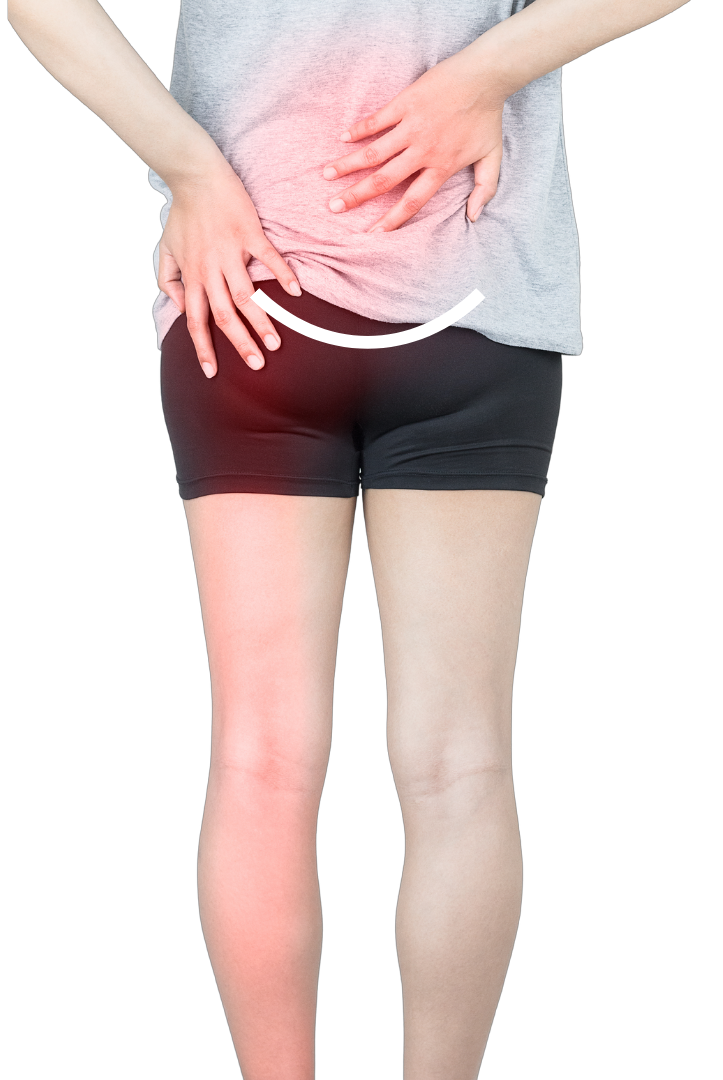
What Is Coccydynia?
Coccydynia is the medical name for pain in the tailbone. The coccyx is the last bone at the tail end of your spine. It is small, triangular and looks a little like a short tail.
Although we call it the “tail bone”, the coccyx is not one single bone. It is made up of 3 to 5 separate spinal segments joined together.
What Causes Tailbone Pain?
Coccydynia is persistent tailbone pain that is thought to involve inflammation of the coccyx. The most common causes are:
- A fall that injures the tailbone
- Childbirth
- Infection
However, about one in three people with coccydynia have no known cause. Some people feel pain without any fall or injury at all. In others, the original damage has healed but the pain continues. Between 20% and 40% of tailbone pain cases go on to become chronic pain.
Who Is More Likely to Get Coccydynia?
These factors can raise your risk of tailbone pain:
- Being female
- Obesity
- Osteoarthritis or osteomyelitis (a bone infection)
- Playing contact sports
- Rapid weight loss
What Are the Symptoms of Coccydynia?
Is a Curved Tailbone a Cause for Concern?
Not always. For most people, the tailbone is naturally curved. The sacrum, the bone just above the tailbone, follows the shape of the buttocks and curves gradually forward. The coccyx is attached to the sacrum by ligaments and tendons.
The angle between the tailbone and the sacrum is normal, and it varies from person to person. So a curved tailbone on its own is not necessarily abnormal.
Because this angle can also change after an injury or disease, X-ray results need careful review. An MRI is usually needed to rule out acute injuries such as bone abrasions, bruising (contusions) and swelling (oedema).
Many cases of coccydynia are caused by nerve hypersensitivity near the tip of the tailbone. Treatment therefore aims to reduce this nerve sensitivity, not to correct the angle of the tailbone
How Is Coccydynia Diagnosed?
At Singapore Paincare, our primary care doctors and pain specialists work together with an orthopaedic surgeon to assess your condition. We apply our Painostic® approach to evaluate the cause of your tailbone pain.
Your assessment may include:
Physical examination to check for the symptoms of coccydynia
Imaging tests, such as an X-ray, CT scan or MRI, if needed to understand the cause of your pain
What Are the Treatment Options for Tailbone Pain in Singapore?
Our goal is to treat your tailbone pain with the least invasive option, once we have identified its cause. We focus on removing the pain generators through specialised injections and minimally invasive procedures. These are combined with medication and cognitive and physical rehabilitation to help you regain function and reduce the chance of pain returning.
Non-Steroidal Anti-Inflammatory Drugs (NSAIDs)
NSAIDs are medicines with anti-inflammatory and pain-relieving effects. For coccydynia, your doctor may also offer a topical cream, which has fewer side effects.
Coccygeal Cushions
These specially designed cushions, often called “donut pillows”, relieve pressure on the coccyx when you sit.
Neurospan Radiofrequency Injections
Physical therapy sessions include resistance training to reduce pain. They also include stretching exercises to improve joint movement and minimise muscle loss. The type and intensity of exercise are tailored to your condition.
When Is Surgery Considered for Coccydynia?
Surgery is rarely needed. Non-surgical treatment has been effective in up to 90% of coccydynia cases. Surgery is usually only considered when pain does not respond well to conservative options.
All surgery carries risks, possible complications and downtime, so it may not be suitable for everyone. Weigh the pros and cons of non-surgical and surgical options carefully with your doctor before deciding.
Surgical options include:
- Partial coccygectomy: removal of part of the coccyx
- Total coccygectomy: removal of the whole coccyx
How Can I Prevent Coccydynia?
These simple steps can help lower your risk of tailbone pain:
- Maintain a healthy weight
- Avoid activities that worsen symptoms, such as cycling and sitting for long periods
- Prevent falls by keeping floors and walkways clear of loose objects, debris and cords