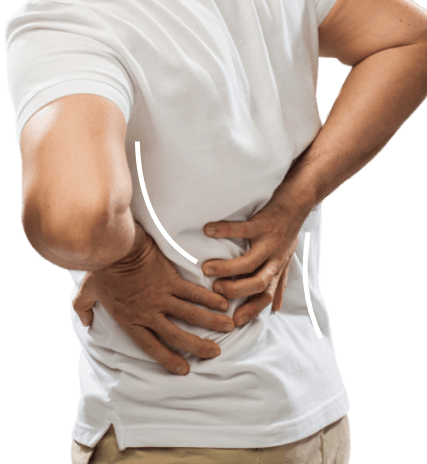
Understanding the Spinal Disc
Your spine is made up of stacked vertebrae. Between each pair sits a disc that cushions movement and absorbs impact. Each disc has two parts: a tough outer ring (annulus fibrosus) and a soft, gel-like centre (nucleus pulposus).
When the outer ring weakens or tears — through ageing, injury, or cumulative strain — the inner material can bulge outward. If this bulge presses on a spinal nerve, it triggers the symptoms associated with a slipped disc. In more severe cases, disc material enters the spinal canal and compresses the spinal cord itself.
What Are the Causes of a Slipped Disc?
Slipped discs in Singapore are most common between the ages of 30 and 50, and are roughly twice as common in men as in women. Several factors accelerate disc degeneration:
| Contributing Factor | How It Plays a Role |
|---|---|
| Age-related degeneration | Discs naturally lose water content and elasticity over time, becoming stiffer and more prone to tears. This is the single most common underlying cause. |
| Poor posture and prolonged sitting | Long hours at a desk or in front of a screen shift spinal load unevenly. Singapore’s desk-heavy work culture contributes significantly to early disc degeneration. |
| Improper lifting | Twisting while lifting heavy objects transfers shear forces to the disc rather than the legs and core, increasing herniation risk. |
| Excess body weight | Additional body mass increases compressive load on lumbar discs throughout the day. |
| Weak core muscles and sedentary habits | Without adequate muscular support, discs bear more mechanical stress during everyday movement. in women. |
| Smoking | Tobacco reduces nutrient delivery to the avascular disc tissue, accelerating degeneration. This is a less-known but clinically documented risk factor. |
| Previous disc injury | A disc that has partially herniated before is more vulnerable to re-injury under the same conditions. |
What Are the Symptoms of a Slipped Disc?
Symptoms depend on where in the spine the disc is herniated and whether a nerve is compressed. Some people experience no symptoms at all even with an MRI-visible disc bulge. When symptoms do occur, they typically include:
When to Seek Urgent Medical Attention
Some slipped disc symptoms are medical emergencies. Seek immediate care if you experience:
- Loss of bladder or bowel control
- Numbness or loss of sensation in the groin or inner thighs (saddle anaesthesia)
- Sudden weakness or paralysis in the legs
- Loss of balance or fine motor coordination
These may indicate cauda equina syndrome — a rare but serious condition that requires urgent intervention to prevent permanent nerve damage.
What Are the Different Types of Slipped Disc?
Not all slipped discs are the same. Understanding the type and severity helps your specialist select the most appropriate treatment pathway.
| Types | How It Plays a Role |
|---|---|
| Disc Bulge (Contained) | The outer ring of the disc is weakened and the disc protrudes outward, but the inner material has not broken through. Often found incidentally on MRI scans in people with no symptoms. May resolve with conservative care. |
| Disc Protrusion | The inner gel-like material (nucleus pulposus) pushes through a localised weakness in the outer ring but remains connected to the disc. The most common type of herniation. May cause nerve compression depending on its location and size. |
| Disc Extrusion | The inner material breaks fully through the outer ring and extends into the spinal canal but remains attached to the disc. More likely to cause significant nerve compression and radiating leg or arm pain. |
| Disc Sequestration | A fragment of disc material breaks off completely and floats freely in the spinal canal. The most severe form. Often causes intense, persistent nerve symptoms and may require more aggressive intervention. |
By Location: Slipped discs most commonly occur in the lumbar spine (L4–L5 and L5–S1 levels), causing lower back pain and sciatica. Cervical disc herniations (C5–C6, C6–C7) cause neck pain radiating into the arm. Thoracic herniations are rare.
How Is a Slipped Disc Diagnosed in Singapore?
Diagnosis begins with a thorough clinical assessment. Your specialist will review your medical history, assess your posture and movement, and perform neurological tests to identify the affected nerve level.
Imaging investigations that may be used include:
- MRI scan — The gold standard for visualising disc herniation, nerve compression, and spinal canal changes. Note: MRI findings do not always correlate with symptoms; clinical correlation is essential.
- CT scan — Used when MRI is contraindicated or for detailed bone assessment.
- X-ray — Does not show disc tissue but helps rule out fractures, instability, or significant spondylosis.
- Nerve conduction studies / electromyography (EMG) — Assess nerve function and help identify the level and severity of nerve involvement.
At Singapore Paincare, we use the Painostic® method — a structured diagnostic approach developed by Dr Bernard Lee — to go beyond standard imaging and identify the true pain generator in each patient.
The Painostic® Approach to Slipped Disc
Developed by Dr. Bernard Lee Mun Kam, Painostic® is Singapore Paincare’s proprietary diagnostic framework. It assesses pain across four dimensions — ensuring treatment targets root causes, not just surface symptoms.
Pain Patterns
How pain behaves — timing, triggers, radiation, and aggravating factors that reveal underlying mechanisms.
Pathology
Structural or physiological changes assessed through clinical examination, imaging, and diagnostic nerve blocks.
Pain Perceptions
dentifying central sensitisation and functional overlays — how the nervous system amplifies pain signals.
Psychology
Cognitive, emotional, and behavioural dimensions — fear-avoidance, catastrophising, and mood disorders that perpetuate the pain cycle.
What Are the Treatment Options for a Slipped Disc in Singapore?
Conservative Treatments
If your slipped disc is mild, you will benefit from conservative treatments, including:
- Pharmacotherapy : NSAIDs, muscle relaxants, and nerve pain medications help reduce inflammation and interrupt the pain cycle. Short-term use of stronger medications may be considered under close supervision.
- Activity modification: Pacing activity during acute flare-ups, avoiding prolonged sitting, and using proper lifting mechanics reduce stress on the affected disc.
- Physiotherapy and exercise: Targeted stretching, core strengthening, and low-impact aerobic exercise (such as swimming or brisk walking) maintain spinal flexibility and reduce recurrence risk. Research consistently supports active rehabilitation over prolonged bed rest.
Minimally Invasive Treatments
If your slipped disc pain has been persistent or more severe, minimally invasive treatments can address the real source without the need for open surgery. At Singapore Paincare, we offer precise procedures designed to relieve pain at its origin.
A specialised catheter is guided into the epidural space to free nerves that are trapped or irritated by scar tissue or adhesions around a slipped disc, restoring normal nerve function and reducing chronic pain.
A fine needle and radiofrequency energy are used to remove a small volume of disc material from the nucleus, reducing internal disc pressure and allowing the herniation to retract away from the nerve. Performed as an outpatient procedure, typically with minimal downtime.
Endoscopic Laser Decompression
Laser energy delivered through a thin endoscope removes protruding disc material under direct visual guidance, with precision targeting of the compressed nerve.
How Singapore Paincare Treats Slipped Disc: At Singapore Paincare, our specialists use the proprietary Painostic® method, developed from years of clinical experience, to assess slipped disc conditions. This in-house approach goes beyond standard assessment and imaging to identify the real source of pain in slipped disc cases, such as nerve compression or disc related inflammation, and to map treatment pathways tailored specifically to your condition. We focus on the least invasive options first, including targeted injections and minimally invasive procedures to relieve nerve irritation caused by a slipped disc, often supported by medication and physical or cognitive rehabilitation. Even in complex or persistent slipped disc cases, this integrated approach helps relieve pain, improve mobility, and reduce the risk of recurrence.
Surgical Treatment
Surgery is only considered when conservative and minimally invasive treatments have not provided sufficient relief, or when there is significant nerve damage or cauda equina risk. Options include:
- Microdiscectomy: Removal of the herniated disc portion through a small incision, relieving nerve pressure
- Artificial Disc Replacement: Replacement of a severely degenerated disc with a synthetic implant to preserve spinal motion
- Spinal Fusion with Laminectomy: Removal of part of the vertebral arch and fusion of adjacent vertebrae for stability in complex cases
Before recommending surgery, your specialist will review your imaging, explain the potential benefits and risks, and confirm that less invasive options have been appropriately trialled.
A Message About Slipped Disc from Our Pain Specialist
A slipped disc may start as a simple ache, but if ignored it can affect how you move, sleep, and work. Everyday factors like long hours of sitting, improper lifting, or just age-related wear and tear can trigger it. If left untreated, the bulging disc can press intensely on nerves, potentially causing severe, radiating pain, numbness, and weakness to spread down your limbs.
Many people assume severe back or leg pain always requires open surgery to fix a “slipped disc.” In reality, precise injections, physical therapy, and minimally invasive procedures are often enough to relieve the nerve compression. That’s why the first step is always to find out exactly where your pain comes from.
At Singapore Paincare, our Painostic® method goes beyond treating symptoms. We identify the real source of discomfort and build an individualised, minimally invasive plan—so you can eat comfortably, sleep well, and return to your daily life with confidence.
How to Prevent a Slipped Disc?
There are ways to prevent a slipped disc from occurring, and these prevention points are good to follow especially if you are at risk of having a herniated disc.
- Maintain a healthy weight to reduce compressive load on lumbar discs
- Exercise regularly — swimming, walking, and core-strengthening routines are particularly effective for spinal health
- Keep your workstation ergonomically set up — monitor at eye level, lower back supported
- Lift heavy objects correctly — bend at the knees, keep your back straight, engage your core
- Take regular breaks from sitting — even standing up briefly every 30–45 minutes reduces cumulative spinal stress
- Quit smoking — smoking accelerates disc degeneration by impairing nutrient supply to disc tissue