
Dr. Bernard Lee Mun Kam on The Straits Times: Slipped Disc Without Surgery
May 20, 2026
CONTENTS
Back pain is one thing. Being told your spinal disc has degenerated — and that surgery may be the only answer — is something else entirely.
That is the moment many patients freeze. They picture hospitals, general anaesthesia, weeks of recovery, and the possibility that they may wake up in as much pain as before.
What most patients do not know is that the decision between surgery and a non-surgical alternative is not always straightforward. And making the wrong call — or being pushed toward surgery when another route exists — can have consequences that last years.
About This Article
DocTalk is a column in The Straits Times where specialist doctors write directly for the public — explaining real patient cases and making complex clinical decisions accessible to everyday readers. It is not an interview. The doctor is the author.
Dr. Bernard Lee Mun Kam — Founder and CEO of Singapore Paincare Holdings Limited and Consultant Pain Specialist at Singapore Paincare Center — contributed this piece in the 22 March 2016 issue of The Straits Times. He wrote it under his own byline, drawing on a real patient case from his clinical practice at Singapore Pain Care Centre at Paragon.
The column was titled: “Not all slipped disc conditions need open surgery.”
That he was given the DocTalk platform to address this topic directly reflects the standing The Straits Times places on the source: a specialist with the clinical experience and depth to guide public understanding on a question that affects thousands of Singaporeans every year.
What Dr. Bernard Lee Wrote — And What It Reveals
“A Patient Case: When the Right Diagnosis Changes the Treatment Path” Dr. Bernard Lee opened the column with a patient case — a 59-year-old woman (referred to as Mrs Tan) who arrived at his clinic in severe pain. She had chronic back pain radiating down her right leg, causing numbness. She could walk no more than 100 metres before needing to stop.
She had already tried painkillers, muscle relaxants, physiotherapy, acupuncture, traditional Chinese medicine, magnetic therapy, traction, and infrared heat treatment. None of it made a meaningful difference.
A previous doctor had told her she needed open surgery because her spinal disc had degenerated.
What Dr. Bernard Lee did next is the clinical lesson at the heart of the column.
Why an MRI Scan Is Not the Full Answer
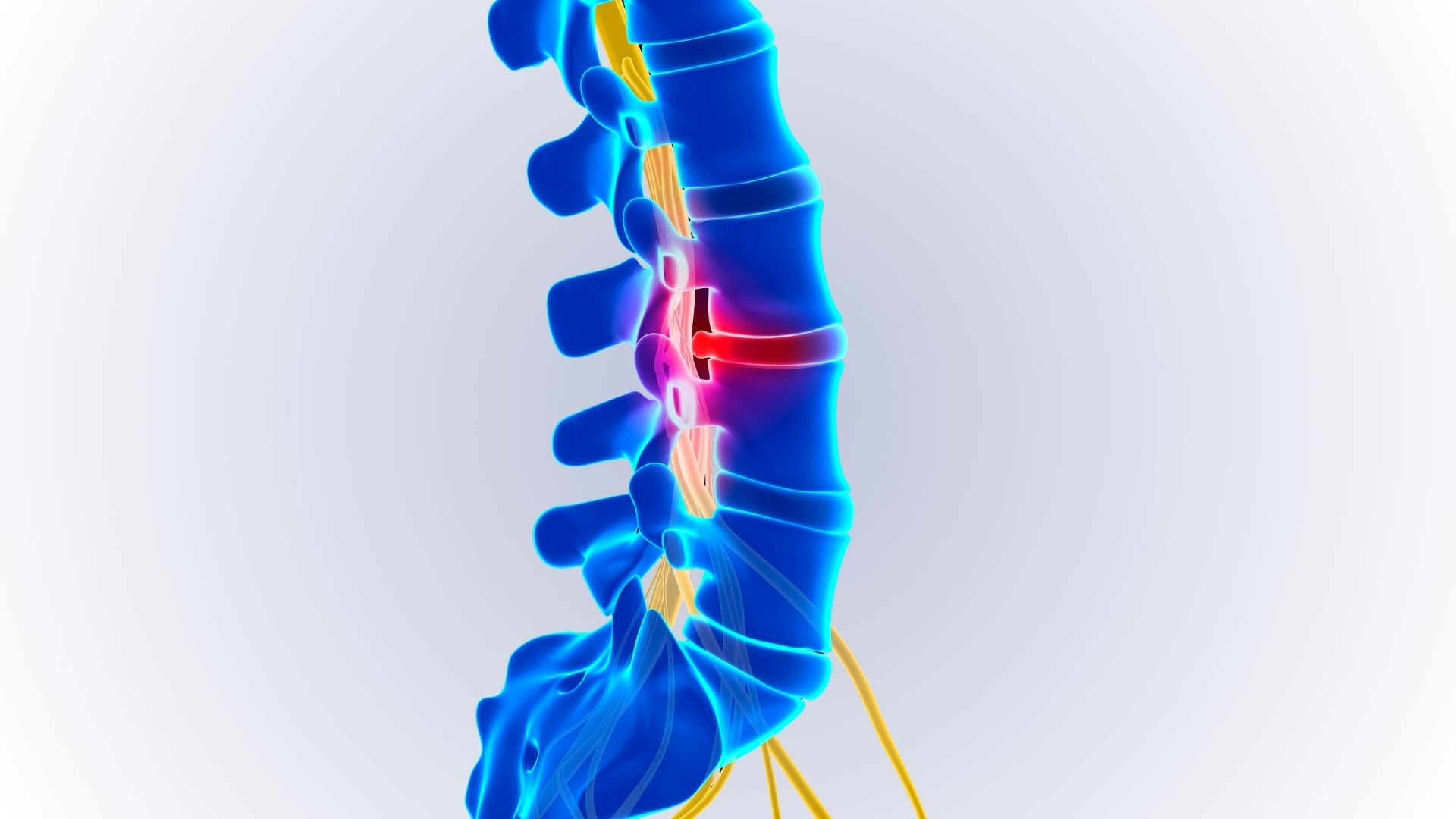
Before accepting a diagnosis, Dr. Bernard Lee ordered an MRI of her lumbar spine. The scan showed L4/5 disc degeneration with disc protrusion, spinal canal narrowing, and impingement on the right L5 nerve root.
That sounds conclusive. But Dr. Bernard Lee’s article makes a critical point that many patients — and even some clinicians — miss: an MRI finding is not the same as a diagnosis.
He noted that up to 30 per cent of lumbar spine abnormalities seen on MRI may cause no symptoms at all. Some are simply normal changes consistent with the patient’s age and physical condition. Investigations can be over-interpreted, and that over-interpretation leads to over-treatment.
The clinical challenge — and the expertise required — lies in determining whether the MRI finding actually corresponds to what the patient is experiencing. In this case, it did. But reaching that conclusion required careful clinical correlation, not just a scan report.
This is the kind of diagnostic rigour that Dr. Bernard Lee Mun Kam has built his clinical methodology around. His proprietary Painostic® framework — developed over more than 20 years of pain specialist practice — does exactly this: it integrates imaging findings with pain patterns, physical examination, and nerve response to arrive at a root-cause diagnosis rather than a scan-driven one.
Conservative Treatment First — Always
Once Dr. Bernard Lee confirmed that Mrs Tan’s MRI findings were clinically consistent with her symptoms, he did not immediately escalate to a procedure.
He first trialled conservative management with nerve stabiliser medication to address the L5 nerve root irritation. This approach — conservative before interventional, interventional before surgical — is a core principle of responsible pain management. It gives patients the least invasive option first, and escalates only when needed.
For Mrs Tan, conservative treatment produced some improvement in sleep quality but did not resolve her pain.
Surgery vs. Minimally Invasive Procedure — The Clinical Decision
With conservative treatment insufficient, Dr. Bernard Lee presented Mrs Tan with two options:
- Option 1: Open surgery. The traditional approach — opening the spine, removing the L4/5 spinal bone segment to reach and decompress the disc. Success rate for shrinking the disc and freeing the nerve: up to 90 per cent.
- Option 2: Minimally invasive procedure. Specialised needles are used to decompress the herniated disc directly, reducing internal pressure and causing the disc to shrink. Combined with a ballooning dilatation technique to free the compressed nerve. No incision. No bone removal. Performed under regional anaesthesia.
The comparison Dr. Bernard Lee laid out in his Straits Times column is instructive:
| Feature | Open Surgery | Minimally Invasive Procedure |
|---|---|---|
| Disc shrinkage / nerve decompression | Up to 90% | Around 80% |
| Risk of failed back surgery syndrome | Up to 25% | — |
| Anaesthesia | General | Regional |
| Hospital admission | Required | Day procedure |
| Recovery / downtime | Extended | Minimal |
The worst outcome of open surgery — failed back surgery syndrome — means the pain persists or returns after the procedure. The incidence, as Dr. Bernard Lee noted, can be as high as 25 per cent.
He contextualised this within a broader clinical analogy: minimally invasive procedures in spinal pain are comparable to angioplasty as an alternative to open heart bypass surgery. Both represent the evolution of medicine toward less invasive alternatives for conditions that once had only one surgical answer.
When Surgery Is Still the Right Choice
Dr. Bernard Lee was careful not to position minimally invasive procedures as universally superior. His column explicitly acknowledged that open surgical decompression remains the only appropriate option for some patients — specifically those with very large disc herniations or abnormal spinal canal narrowing that exceeds a threshold where needle-based decompression cannot achieve adequate relief.
This balanced, evidence-informed clinical position — not a promotion, but an honest clinical framework — is what marks the writing of a practitioner who has been doing this work for decades.
What Happened to Mrs Tan
Mrs Tan chose the minimally invasive route. The procedure took one hour. She was discharged the same day and was walking on discharge.
She underwent a rehabilitation and exercise programme and did not require further pain treatment.
About Dr. Bernard Lee Mun Kam (李文鉴医生)
Dr. Bernard Lee Mun Kam is the Founder and CEO of Singapore Paincare Holdings Limited — the first pain management group to list on the Singapore Exchange (SGX) in 2020.
He is a Consultant Pain Specialist with more than 20 years of clinical experience in the diagnosis and management of chronic and complex pain conditions.
His institutional career includes:
- Tan Tock Seng Hospital (2002–2007): Established the Chronic and Interventional Pain Management Service; served as Director of the Pain Management Unit (Department of Anaesthesia)
- KK Women’s and Children’s Hospital (2009–2018): Founded Singapore’s first Women’s Pain Centre
He developed the Painostic® diagnostic methodology — a registered proprietary framework that assesses pain across four dimensions: pain patterns, pathology, pain perception, and psychology. It is the diagnostic engine used across all Singapore Paincare clinical consultations.
His clinical specialties include spine and back pain, slipped disc, sciatica, nerve pain, shoulder pain, joint pain, headache, facial pain, musculoskeletal pain, and cancer pain.
He consults at Singapore Paincare Center @ Paragon and Singapore Paincare Center @ Novena.
Read the Original Article
The original DocTalk column — “Not all slipped disc conditions need open surgery” — was published in The Straits Times on 22 March 2016. It is available via The Straits Times archive for subscribers.
Speak to a Pain Specialist
If you have been told you need surgery for a slipped disc, it may be worth seeking a second opinion from a pain specialist before proceeding. Speak to a pain specialist to find out if a minimally invasive option is appropriate for your condition.
Frequently Asked Questions About Slipped Disc Treatment
Do I always need surgery for a slipped disc?
No. Many patients with a slipped disc can be managed without open surgery. Minimally invasive procedures — using specialised needles to decompress the disc and free the affected nerve — may achieve comparable results for suitable candidates. Whether surgery is needed depends on the size of the herniation and the degree of spinal canal narrowing.
What is minimally invasive slipped disc treatment?
A minimally invasive procedure for a slipped disc uses a needle — rather than an open incision — to decompress the herniated disc. The procedure reduces internal disc pressure, causing the disc to shrink and relieve nerve compression. It can be performed under regional anaesthesia as a day procedure, with no hospital stay required.
Is an MRI scan enough to diagnose a slipped disc?
An MRI scan shows structural changes in the spine, but a scan finding alone does not confirm the cause of a patient’s pain. Studies suggest that up to 30 per cent of lumbar spine abnormalities on MRI may cause no symptoms. A thorough clinical assessment — correlating imaging with symptoms and physical examination — is needed to determine whether the MRI finding is the actual pain source.
What is failed back surgery syndrome?
Failed back surgery syndrome refers to persistent or recurring pain after spinal surgery. It is not rare — Dr. Bernard Lee noted in his Straits Times DocTalk column that the incidence of pain persisting after open spinal decompression surgery can be as high as 25 per cent. It is one of the key reasons minimally invasive alternatives are evaluated seriously for appropriate candidates.
How do I know if I am suitable for a minimally invasive slipped disc procedure?
Suitability depends on the type and extent of your disc herniation, the degree of spinal canal narrowing, your overall health, and how you have responded to conservative treatment. A pain specialist will assess your clinical history, physical examination, and imaging before recommending a treatment pathway. Not all slipped disc cases are suitable for minimally invasive procedures — some do require surgical decompression.
What is the pain-free outcome rate for minimally invasive slipped disc procedures?
Based on clinical data cited by Dr. Bernard Lee Mun Kam in The Straits Times, minimally invasive procedures for slipped disc can achieve pain-free outcomes in 70 to 95 per cent of appropriate cases. Open surgery has a disc shrinkage and nerve decompression success rate of up to 90 per cent, but also carries a risk of failed back surgery syndrome of up to 25 per cent.
This article is intended for general informational purposes only and does not constitute medical advice. Please consult a qualified healthcare professional for diagnosis and treatment tailored to your individual condition.