
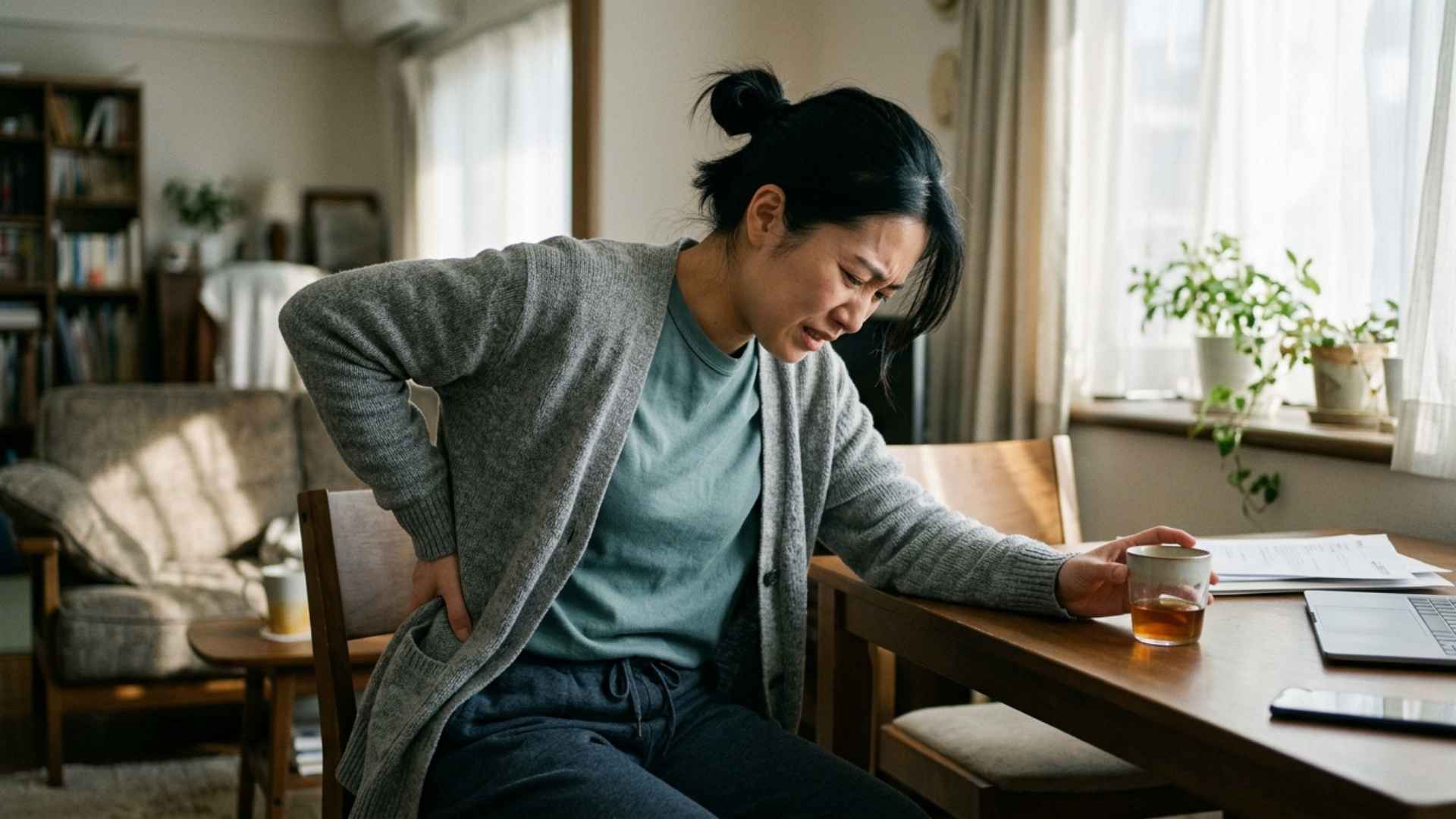
Who Should I See for Back Pain?
August 18, 2026
CONTENTS
Quick Answer:
Who to see for back pain depends on the cause. Mild, recent muscular pain often responds to a GP or physiotherapist, sometimes alongside TCM therapies like acupuncture or tuina. Pain that radiates down the leg or keeps recurring is best assessed by a pain specialist. A recent injury or clear structural damage is better suited to an orthopaedic doctor.
Back pain is uncomfortable enough without the added confusion of figuring out who to call. Should it be a GP, a physiotherapist, a TCM practitioner, an orthopaedic doctor, or a pain specialist? Singapore’s healthcare landscape offers all five, and each plays a genuine role depending on what’s actually causing your pain. This article walks through how to match your symptoms to the right type of care, how these providers typically work together rather than in competition, and what to expect once you do see a specialist.
Understanding Back Pain in Singapore
Back pain is one of the most common health complaints in Singapore. According to HealthHub Singapore, up to 80 per cent of Singaporeans experience low back pain at some point in their lives, and most cases are not serious or life-threatening [1]. The vast majority resolve within about six weeks with rest and self-management.
However, a meaningful number don’t. A Singapore population health study found that 8.1 per cent of adults reported chronic low back pain (lasting more than three months in the past six months), and among them, 80.5 per cent had already sought treatment at a primary care, specialist outpatient, or Traditional Chinese Medicine clinic [2]. Low back pain is also recognised as a leading cause of years lived with disability in Singapore, affecting working adults and seniors alike [3]. These numbers show that back pain isn’t just a nuisance — for a meaningful share of patients, it’s a recurring condition that needs the right specialist from the start, not just the most familiar one.
Who Should You See for Back Pain?
There isn’t one correct provider for every back — the right first stop depends on what’s actually driving your pain. Here are six common scenarios and who typically fits each one.
1. Muscular or Postural Strain
If your back pain came on after an awkward lift, a long day hunched at a desk, or an unfamiliar workout, it’s often muscular. This type of pain usually responds to rest, gentle movement, and physiotherapy. A GP or physiotherapist is a reasonable first stop, and most cases improve within a few weeks without needing a specialist referral at all.
2. Tension-Related or Stress-Linked Pain
For pain linked to muscle tension, stress, or general stiffness that isn’t severe or worsening, some patients find TCM approaches such as acupuncture, tuina, or cupping helpful alongside conventional care. TCM is often used as a complementary option — working alongside, not instead of, a proper diagnosis — to ease tension and support recovery.
3. Nerve-Related or Radiating Pain
When pain travels from your lower back into your buttock, thigh, or leg — or comes with tingling, numbness, or a burning sensation — the source is often a nerve, not just a muscle or joint. This is where a pain specialist is often a direct route to an accurate diagnosis, because their training centres on tracing pain signals back to their true origin, whether that’s a compressed nerve root, inflammation, or muscle spasm secondary to a spinal issue.
4. Recurring or Episodic Back Pain
Some back pain isn’t constant — it eases up, you feel fine for a few weeks or months, and then it returns. This pattern is extremely common, but it’s often a sign that the underlying cause was never fully identified, only the flare-up was treated. Each episode may respond to rest or physiotherapy on its own, but if the pattern keeps repeating, a pain specialist can assess what’s driving the recurrence and build a plan aimed at the root cause, not just the current flare.
5. A Recent Injury or Suspected Structural Damage
If your back pain followed a fall, an accident, or sudden trauma, or if imaging has already shown a fracture, significant deformity, or instability, an orthopaedic doctor is a well-suited specialist. Orthopaedic training is built around the structural integrity of bones and joints, making it a strong fit for injuries that may need mechanical correction.
6. Pain That Persists Despite Treatment
Some back pain doesn’t ease between episodes at all — it lingers continuously for months, or continues even after a structural issue identified on a scan has technically been “treated.” This is one of the more frustrating patterns seen in Singapore, and it’s exactly where seeing a pain specialist adds value: a thorough assessment can look beyond a single scan finding, or a single provider’s lens, to identify what is actually generating the ongoing pain.
Who Treats Back Pain in Singapore? A Quick Decision Guide
Singapore’s back pain care landscape includes several types of providers, and most patients move between more than one over the course of their recovery. None is inherently “better” — they serve different purposes, and understanding what each one actually does helps you get to the right care faster.
| Provider | What They Do | Best Suited For |
|---|---|---|
| GP (Family Physician) | First point of contact; assesses symptoms, rules out red flags, and refers onward if needed. | New, mild back pain without red-flag symptoms. |
| Physiotherapist | Provides guided exercise, manual therapy, and posture and movement retraining. | Muscle weakness, poor movement habits, or post-injury and post-treatment rehabilitation. |
| TCM Practitioner | Provides acupuncture, tuina, cupping, and other traditional therapies to ease muscle tension and support recovery. | Muscle tension, general stiffness, or as a complementary option alongside conventional care. |
| Pain Specialist | Diagnoses and treats the underlying source of pain, including nerve, muscle, joint, or centrally mediated pain, using non-surgical and often image-guided techniques. Specific diagnostic frameworks vary by clinic. | Radiating, nerve-related, or chronic pain that is not fully explained by a single scan finding. |
| Orthopaedic Doctor | Provides structural assessment of bones, joints, and discs, with surgical treatment when necessary. | Recent injury, trauma, fracture, or a clear structural finding that may require surgical correction. |
A note on overlap: many patients in Singapore benefit from more than one of these providers over the course of treatment — for example, physiotherapy alongside a pain specialist’s nerve-focused treatment, or an orthopaedic assessment to rule out a surgical cause before starting non-surgical pain management. A proper clinical assessment, not the specialty listed on the clinic signboard, should decide where your treatment starts.
Symptoms to Pay Attention To
Back pain can feel different depending on its cause. You may notice:
- A dull, persistent ache that doesn’t fully ease with rest
- Sharp, shooting pain that travels into your buttock, thigh, or leg
- Stiffness that is worse in the morning and loosens through the day
- Pain that worsens with prolonged sitting, standing, or specific movements
- Episodes that ease off completely, then return every few weeks or months
- Tingling, numbness, or a “pins and needles” feeling in your leg or foot
- Disrupted sleep because you can’t find a comfortable position
- Reduced flexibility or difficulty bending, twisting, or lifting
If your symptoms include any numbness, tingling, or weakness down your leg, this points to nerve involvement and is a signal to see a specialist rather than wait it out.
When to See a Specialist
Most back pain settles with self-care, but certain signs mean it’s time to book an assessment rather than wait:
- Pain has lasted more than four to six weeks despite rest and self-management
- Episodes keep coming back, or are becoming more frequent, longer, or more severe over time
- Pain radiates down one or both legs, especially past the knee
- You notice numbness, tingling, or weakness in your leg or foot
- Pain is worse at night or consistently disturbs your sleep
- You have unexplained weight loss, fever, or a history of cancer alongside the pain
- You notice new bladder or bowel changes (seek emergency care immediately — this can indicate a spinal emergency)
Early diagnosis matters because untreated nerve-related back pain can become harder to resolve the longer it’s left unaddressed, and pinpointing the true cause early avoids months of treating the wrong problem.
Once you’ve decided a pain specialist is the right next step, it’s worth knowing that diagnostic approaches differ from clinic to clinic — there’s no single industry-wide standard. Here’s how it works specifically at Singapore Paincare.
How Singapore Paincare Diagnoses Back Pain: The Painostic® Approach
Diagnosing back pain requires more than an X-ray. At Singapore Paincare, our pain specialists use the Painostic® methodology — a structured, three-protocol assessment designed to identify the true source of your pain before any treatment begins.
Diagnostic Formulation
A multi-dimensional assessment covering pain history, physical examination, imaging findings, and pain questionnaire. Differentiates mechanical from functional pain, and evaluates all potential pain generators. Goal: pinpoint the exact source before any treatment decision.
Injection Roadmap
Once the pain source is identified, a structured, evidence-based treatment plan is developed — combining minimally invasive procedures, physical therapy, and pharmacotherapy in a sequence tailored to the specific condition.
Injection Technique
Refined techniques determine precise needle depth and optimal placement to ensure medication is delivered accurately to the affected anatomical structure.
Where the pain source remains unclear, image-guided diagnostic nerve blocks can be used to confirm the true generator. Treating the wrong source — for example, focusing only on a scan finding that isn’t actually causing the pain — can mean months of ineffective treatment while the real issue goes unaddressed.
Treatment Options for Back Pain
Conservative (Non-Surgical) Approaches
- Physiotherapy and targeted core-strengthening exercises
- Short-term medication to interrupt inflammation and muscle spasm
- Activity and posture modification for desk-based or physically demanding work
- Weight management to reduce mechanical load on the spine
Minimally Invasive Procedures
When conservative care isn’t enough, Singapore Paincare offers a range of image-guided, minimally invasive procedures as an alternative to open surgery.
MYOSPAN — Soft Tissue & Joint Interventions
| Treatment | How It Helps |
|---|---|
| Coreflex Injections | Delivers a combination of local anaesthetic, anti-inflammatory agent, and muscle relaxant to the affected area to reduce muscle spasm and inflammation. [→ Learn more about Coreflex Injection] |
| Platelet-Rich Plasma (PRP) | Uses the patient’s own platelets to support tissue healing by triggering a controlled inflammatory response that may promote tissue repair. [→ Learn more about PRP] |
| Intra-Articular Injections | Delivers anti-inflammatory agents and hyaluronic acid directly into the joint to reduce pain and improve mobility. |
| Myofascial Block | Uses local anaesthetic, anti-inflammatory medication, and/or botulinum toxin injected into tense, knotted muscles to relieve chronic muscle spasm. |
| Botulinum Toxin Injections | Uses targeted injections to relax overactive muscles and reduce chronic muscle hyperactivity. |
NEUROSPAN — Spinal & Nerve Interventions
| Treatment | How It Helps |
|---|---|
| Radiofrequency Ablation (RFA) | Uses radiofrequency energy to disrupt painful nerve signal transmission from the affected nerves, providing longer-lasting relief for selected facet joint pain. [→ Learn more about RFA] |
| Pulsed Radiofrequency (PRF) | Uses lower-temperature radiofrequency energy to desensitise pain-signalling nerves while preserving normal nerve function. [→ Learn more about PRF] |
| Neuroplasty | Uses a catheter-based technique to create space around narrowed nerve pathways, freeing trapped nerves and delivering anti-inflammatory medication to the affected area. [→ Learn more about Neuroplasty] |
| Nucleoplasty | Uses controlled plasma ablation to decompress a herniated disc and reduce pressure on the affected nerve root. May be considered for selected cases of disc-related sciatica. |
| Endoscopic Laser Decompression | Uses a camera-guided port to precisely remove or ablate bone spurs and disc tissue compressing a nerve under direct vision. [→ Learn more about Endoscopic Laser Decompression] |
| Peripheral Nerve Block | Delivers local anaesthetic and anti-inflammatory medication around a specific nerve to interrupt pain signals, providing both diagnostic and therapeutic benefit. |
| Epidural Analgesia | Delivers epidural steroid and local anaesthetic at the appropriate spinal level to reduce inflammation and relieve spine-related back and leg pain. |
| Spinal Cord Stimulator | Uses an implantable device to deliver electrical stimulation that modifies pain signalling, providing an option for selected patients with complex, persistent pain. [→ Learn more about Spinal Cord Stimulator] |
| Intrathecal Pump Implant | Uses an implanted pump to deliver carefully controlled medication directly into the fluid surrounding the spinal cord, allowing treatment with smaller doses than systemic medication. |
| Trigeminal Ganglion RFA | Uses radiofrequency energy to modify pain signalling from the trigeminal nerve and may be considered for selected facial nerve pain conditions. |
| Ketamine Therapy | Uses intravenous ketamine under medical supervision for selected cases of refractory chronic or complex pain that have not responded adequately to standard treatments. |
Singapore Paincare has delivered minimally invasive pain treatments for over a decade, positioning these procedures as a middle ground between long-term medication reliance and open surgery.
Self-Management Tips
- Move regularly — prolonged sitting and complete bed rest can both worsen back pain; short, frequent movement breaks often help more than either extreme.
- Set up your workstation properly — adjust your chair, screen height, and desk to support a neutral spine, especially if you work long hours seated.
- Strengthen your core — a stronger core reduces the load carried by your lower back during everyday movement.
- Mind your lifting technique — bend at the knees, not the waist, and keep heavy objects close to your body.
- Prioritise sleep posture — a supportive mattress and a pillow between the knees (for side sleepers) can ease overnight strain on the spine.
Frequently Asked Questions
Who should I see for back pain in Singapore?
It depends on the cause. Mild, recent muscular pain can start with a GP, physiotherapist, or TCM practitioner. Pain that radiates down the leg or keeps recurring is best assessed by a pain specialist. A recent injury or clear structural damage is better suited to an orthopaedic doctor.
What’s the difference between a GP, physiotherapist, TCM practitioner, pain specialist, and orthopaedic doctor for back pain?
A GP screens and refers, a physiotherapist rebuilds strength and movement, and a TCM practitioner offers complementary therapies like acupuncture. A pain specialist diagnoses and treats the source of pain non-surgically, while an orthopaedic doctor addresses structural bone and joint problems, including surgery when needed.
Why does my back pain keep coming back, and how do I know it’s getting worse?
Recurring episodes usually mean the underlying cause was never fully identified, not just bad luck. Pain is likely worsening if it starts radiating down your leg, disturbs your sleep, or episodes become more frequent or severe — these are good reasons to get a proper diagnosis rather than treating each flare-up on its own.
Can minimally invasive procedures help with back pain instead of surgery?
For many patients, yes. Procedures such as nerve blocks, radiofrequency treatment, and nucleoplasty can reduce pain and improve function without open surgery, though suitability depends on the underlying cause.
Will I need surgery for my back pain?
Most back pain does not require surgery. Surgery is generally considered only when there’s a clear structural cause, such as significant nerve compression or instability, that hasn’t responded to non-surgical treatment.
Where can I see a back pain specialist in Singapore?
Singapore Paincare Medical Group offers back pain specialist consultations at its Paragon and Novena clinics, using the Painostic® methodology to identify the source of pain before recommending treatment.
Key Takeaways
- Most back pain is muscular and improves with rest, a GP, physiotherapy, or complementary TCM care.
- Nerve-related, recurring, or chronic back pain is often best assessed by a pain specialist, whose diagnostic approach looks beyond a single scan finding.
- Orthopaedic doctors remain the right first call for recent injuries, fractures, or clear structural damage, and many patients benefit from more than one provider working together.
- Red flag symptoms — leg weakness, bladder or bowel changes, fever — need urgent same-day assessment.
- The Painostic® methodology helps pinpoint the true source of back pain across nerve, muscle, joint, and structural causes before treatment begins.
Speak to a Back Pain Specialist in Singapore
Persistent or radiating back pain deserves more than guesswork. Our pain specialists at Singapore Paincare use the Painostic® methodology to assess your pain from multiple angles — history, physical findings, imaging, and pain patterns — before recommending a treatment path. This approach may help identify a source that other assessments have missed, though outcomes vary by individual condition.
References
- HealthHub Singapore — Low Back Pain: up to 80% of Singaporeans experience low back pain at some point in their lives.
- Ge L, Pereira MJ, Yap CW, Heng BH (2022). Scientific Reports — 8.1% of adults reported chronic low back pain, of whom 80.5% sought treatment at primary care, specialist outpatient, or TCM clinics.
- SingHealth — Managing Low Back Pain in Primary Care: low back pain is a leading cause of years lived with disability in Singapore.
- Ministry of Health Singapore, National Health Survey — cited prevalence data on acute low back pain among the Singapore adult population.
- Tay KH. Annals of the Academy of Medicine, Singapore — Pain Prevalence in Singapore, National University Hospital.
- Singapore Medical Journal — Acute Low Back Pain: Diagnosis and Management.
This article is intended for general informational purposes only and does not constitute medical advice. Please consult a qualified healthcare professional for diagnosis and treatment tailored to your individual condition.