
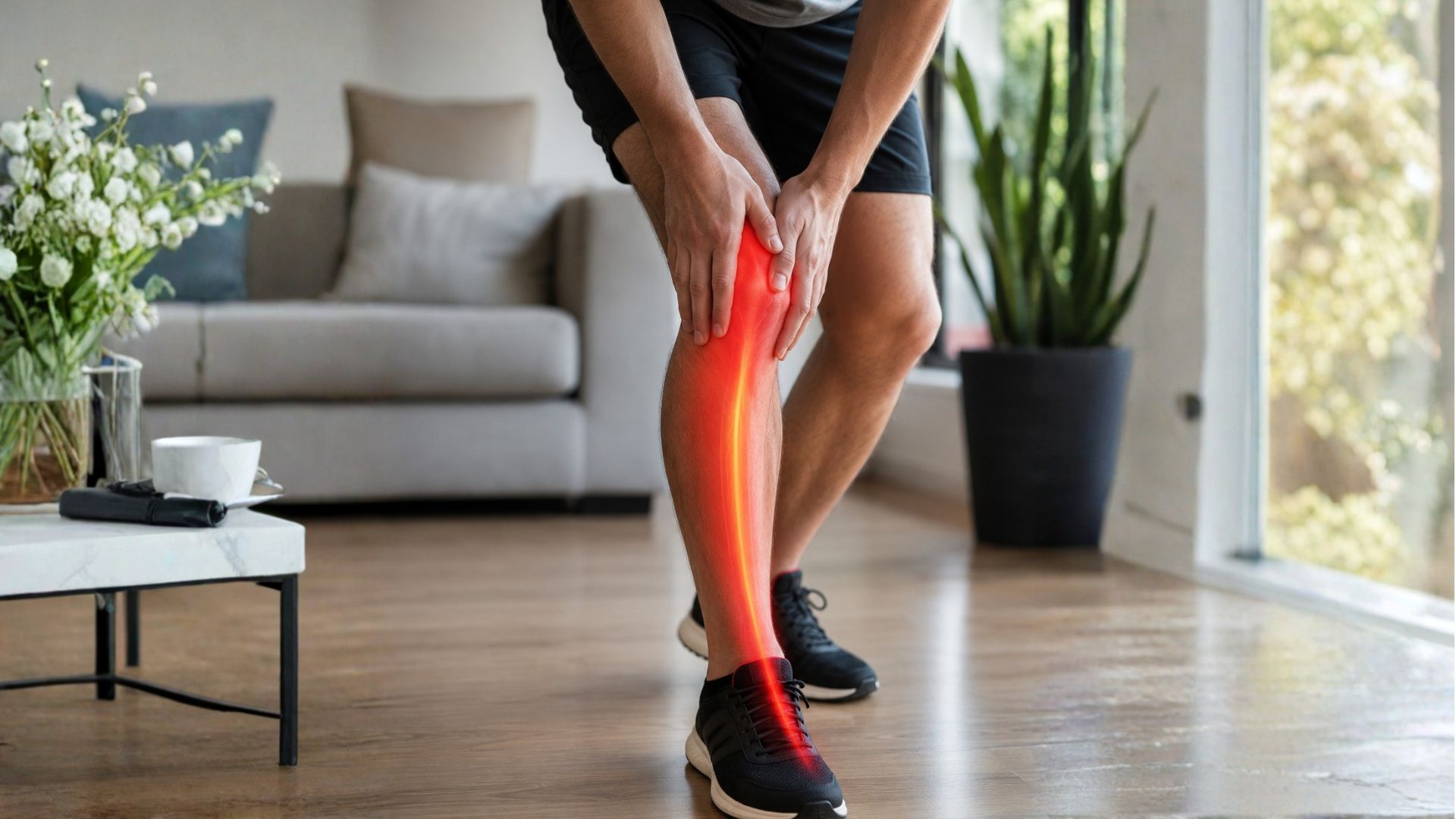
Can Knee Arthritis Pain Radiate Down the Leg?
May 14, 2026
CONTENTS
- What Is Knee Arthritis?
- Can Knee Arthritis Pain Radiate Down the Leg?
- How to Recognise Radiating Knee Arthritis Pain vs. Nerve Pain
- Symptoms of Knee Arthritis That Radiates Down the Leg
- When Should You See a Pain Specialist?
- How Is Radiating Knee Pain Diagnosed?
- Treatment Options for Knee Arthritis and Radiating Leg Pain
- Living With Knee Arthritis in Singapore: Practical Steps
- Frequently Asked Questions
- Key Takeaways
- Speak to a Knee Pain Specialist in Singapore
Quick Answer:
Yes, knee arthritis pain can radiate down the leg. Inflammation in the knee joint can irritate nearby nerves, cause referred pain, and trigger compensatory muscle strain in the thigh, calf, and shin. In some cases, the radiating pain may also signal a coexisting condition such as sciatica or hip arthritis. Accurate diagnosis is key because the treatment approach differs depending on the true source of the pain.
If you have knee arthritis and are feeling aches, tightness, or a dull throb extending down your lower leg — you are not imagining it. Knee arthritis does not always confine its pain to the knee joint itself. For many patients, discomfort travels into the thigh, shin, calf, or even the foot.
Understanding why this happens — and whether it is truly coming from the knee or from another source entirely — is one of the most important steps toward getting the right treatment.
This article explains the mechanisms behind radiating leg pain in knee arthritis, how to recognise the difference between arthritis pain and nerve pain, and what your options are for managing it effectively here in Singapore.
What Is Knee Arthritis?
Knee arthritis is a condition in which the cartilage inside the knee joint breaks down over time, causing the bones to lose their smooth cushioning. Without that protective layer, the joint becomes inflamed, stiff, and painful.
The most common forms are:
- Osteoarthritis (OA) — gradual wear-and-tear degeneration of cartilage, most often seen in adults over 50. Singapore’s Ministry of Health estimates that approximately 40% of those above 70 years old suffer from knee osteoarthritis. Prevalence in Singapore has nearly doubled over the past three decades, rising from 4.52% in 1990 to 8.83% in 2019 (Osteoarthritis and Cartilage, 2025).
- Rheumatoid arthritis (RA) — an autoimmune condition in which the body attacks the joint lining (synovium), causing chronic inflammation and structural damage.
- Post-traumatic arthritis — arthritis that develops following a knee injury, such as a ligament tear or fracture.
Importantly, knee arthritis is not purely a disease of old age. A 2007 MOH National Health Surveillance Survey found that 23.7% of Singaporean adults between 18 and 50 reported arthritis or chronic joint problems — a stark rise from 7.4% just six years prior (Mount Elizabeth Hospital, 2024).
Can Knee Arthritis Pain Radiate Down the Leg?
Yes, it can — and it does so through four main mechanisms.
1. Referred Pain From the Knee Joint
Pain signals in the body are not always perfectly localised. When inflammation is present in the knee, it can cause the nervous system to perceive discomfort in areas that share the same nerve pathways — even though those areas are not directly injured.
This is called referred pain, and it explains why some patients feel aching in the shin or calf without any visible problem in that area. The knee is inflamed; the brain interprets some of those signals as originating further down the leg.
2. Nerve Irritation From Swelling or Joint Misalignment
As arthritis progresses, persistent joint swelling and structural changes within the knee can place pressure on the nerves running around and through the joint. The common peroneal nerve, the tibial nerve, and other small branches in and around the knee can become irritated — sending shooting or tingling pain down the leg.
This is not the same as sciatica (see below), but it can feel similar: a burning or sharp sensation that runs from the knee toward the ankle.
3. Altered Gait and Compensatory Muscle Strain
When the knee hurts, you naturally adjust the way you walk to protect it. You may shift more weight to one side, take shorter steps, or favour the opposite leg. Over weeks and months, these small compensations cause overuse strain in the:
- Quadriceps and hamstrings (front and back of the thigh)
- Calves and shin muscles (lower leg)
- Hip flexors and glutes
Muscle fatigue and tightness in these areas can cause a dull, nagging pain that runs the length of the leg — even when you are resting.
4. Coexisting Conditions: Sciatica or Hip Arthritis
In some patients, knee arthritis and leg pain exist alongside — but are caused by — a separate condition. The two most common are:
Sciatica (Lumbar Radiculopathy)
The sciatic nerve originates in the lower back and travels through the buttocks, down the back of the thigh, past the knee, and into the calf and foot. When nerve roots at the second, third, or fourth lumbar vertebrae are compressed — by a slipped disc, spinal stenosis, or arthritic changes in the spine — pain can radiate all the way down the leg and be felt at the knee or below it.
Sciatica-related leg pain is typically described as sharp, shooting, electric, or burning, often with numbness or tingling. It usually follows a specific pathway rather than spreading diffusely.
Hip Osteoarthritis
Arthritis in the hip can cause pain that travels to the thigh and sometimes the knee. If your knee pain began without injury and is accompanied by groin stiffness or difficulty rotating the hip, your hip joint may be contributing to the symptoms you feel in your leg.
How to Recognise Radiating Knee Arthritis Pain vs. Nerve Pain
| Feature | Knee Arthritis Radiating Pain | Sciatica / Nerve Pain |
|---|---|---|
| Origin | Knee joint and surrounding tissues | Lower back or spine |
| Character | Dull ache, stiffness, heaviness | Sharp, burning, shooting, electric |
| Location | Thigh, shin, calf — diffuse | Specific path down back of leg |
| Numbness/Tingling | Uncommon | Common |
| Triggered by | Activity, weight-bearing, stairs | Sitting, bending forward, coughing |
| Morning stiffness | Yes, typically improves with movement | Variable |
| Worsens with rest | May stiffen after inactivity | Variable |
Important: These features overlap, and both conditions can occur at the same time. A clinical assessment — not just imaging — is often necessary to identify the true source.
Symptoms of Knee Arthritis That Radiates Down the Leg
If knee arthritis is the root cause of your radiating leg pain, you may notice:
- A dull or aching pain that starts at the knee and travels down the shin or into the calf
- Stiffness and heaviness in the lower leg after walking, climbing stairs, or prolonged standing
- Pain or tightness in the thigh during or after activity
- Muscle fatigue in the lower leg, especially if you have been favouring one side
- Swelling around the knee that worsens after activity
- Creaking or grinding in the knee when you move it
- Reduced ability to fully extend or bend the knee
If you notice sharp shooting pain, numbness, or tingling extending below the knee toward the foot, this suggests nerve involvement and warrants a more detailed assessment of the spine and hip.
When Should You See a Pain Specialist?
You should seek a professional evaluation if you experience any of the following:
- Knee and leg pain that has persisted for more than 6 weeks
- Pain that is worsening over time despite rest or simple pain relief
- Leg pain that prevents you from completing your daily activities or disturbs your sleep
- Numbness, tingling, or weakness in the leg or foot
- Swelling that does not resolve after a few days of rest
- Uncertainty about whether the pain is coming from the knee, hip, or back
Early diagnosis matters. Knee osteoarthritis is a progressive condition — cartilage does not regenerate on its own. Accurate identification of the pain source allows targeted treatment that can slow progression, relieve discomfort, and restore function more effectively than a general approach.
How Is Radiating Knee Pain Diagnosed?
Diagnosing knee arthritis pain that extends down the leg requires more than an X-ray. At Singapore Paincare, our pain specialists use the Painostic® methodology — a structured, three-protocol assessment designed to identify the true source of your pain before any treatment begins.
Diagnostic Formulation
A multi-dimensional assessment covering your pain history, physical examination, imaging findings, and pain questionnaire. This protocol differentiates mechanical from functional pain, and evaluates both local pathology at the knee and referred pain pathways — giving equal consideration to the spine, hip, and nerves as potential pain generators. The goal is to pinpoint the exact source before any treatment decision is made.
Injection Roadmap
Once the pain source is identified, a structured, evidence-based treatment plan is developed. This roadmap combines minimally invasive procedures, physical therapy, and pharmacotherapy in a sequence tailored to your specific condition — whether the pain originates from the knee joint, a compressed nerve, or a spinal structure.
Injection Technique
Where interventional treatment is appropriate, refined techniques determine the precise needle depth and optimal placement to ensure medication is delivered accurately to the affected anatomical structure — not the surrounding area.
Where the source of pain remains unclear after clinical assessment and imaging, image-guided diagnostic nerve blocks can be used to confirm precisely whether the knee joint, a specific nerve, or a spinal structure is generating the symptoms.
This level of diagnostic precision matters. Treating the wrong source — injecting the knee when the real problem is in the back — will not provide lasting relief.
Treatment Options for Knee Arthritis and Radiating Leg Pain
Treatment depends on the confirmed source and severity of your pain. Options range from conservative to minimally invasive.
Conservative (Non-Surgical) Management
- Physiotherapy — targeted strengthening of the quadriceps, hamstrings, and hip stabilisers to offload the knee joint; gait retraining to correct compensatory patterns
- Anti-inflammatory medications (NSAIDs) — reduce joint swelling and pain; used short-term or as needed
- Knee brace or orthotics — redistribute load away from the most affected compartment of the knee
- Weight management — each kilogram of body weight reduction reduces knee joint load by approximately four kilograms during walking
Minimally Invasive Procedures at Singapore Paincare
For patients whose pain persists despite conservative care, or whose symptoms are moderate to severe, minimally invasive procedures offer targeted relief without surgery.
For the Knee Joint (MYOSPAN):
| Procedure | How It Helps |
|---|---|
| Intra-Articular Injections | Anti-inflammatory agents and hyaluronic acid delivered directly into the knee joint to reduce inflammation and restore lubrication |
| Coreflex Injections | Local anaesthetic and anti-inflammatory agents delivered to break the pain cycle in affected soft tissues around the knee |
For Nerve and Spinal Sources (NEUROSPAN):
| Procedure | How It Helps |
|---|---|
| Peripheral Nerve Block | Targets the specific nerve transmitting pain signals down the leg, providing both diagnostic clarity and therapeutic relief |
| Radiofrequency Ablation (RFA) | Disrupts pain signal transmission from the affected nerve; provides longer-lasting relief than injections alone |
| Epidural Analgesia | Used when radiating leg pain originates from the lumbar spine, delivering anti-inflammatory medication at the correct spinal level |
| Pulsed Radiofrequency (PRF) | Desensitises pain-causing nerves without ablation, preserving nerve function while reducing pain signals |
Living With Knee Arthritis in Singapore: Practical Steps
Beyond clinic-based treatment, several daily habits can help reduce radiating leg pain:
- Low-impact exercise — swimming, cycling, and walking on flat surfaces maintain joint mobility without overloading the knee
- Avoid prolonged sitting or standing in one position — move every 30–45 minutes to prevent stiffness from setting in
- Use supportive footwear — well-cushioned shoes with good arch support reduce shock transmission to the knee
- Apply heat before activity — loosens stiff joints and improves circulation; apply cold after activity to reduce swelling
- Sleep positioning — a pillow between the knees when lying on your side reduces rotational stress on the knee and hip joint
Frequently Asked Questions
Can knee arthritis pain really travel down to my calf or shin?
Yes. Inflammation in the knee can irritate nearby nerves and cause referred pain that is felt in the shin, calf, or even the ankle — without any injury to those areas. Altered walking patterns caused by knee pain also lead to muscle strain in the lower leg over time.
How do I know if my leg pain is from my knee or my spine?
Knee arthritis pain tends to be diffuse, achy, and worsened by weight-bearing activity. Spinal or sciatic pain is typically sharper, follows a specific nerve pathway down the back of the leg, and may include numbness or tingling. Both can coexist. A clinical examination — including possibly image-guided nerve blocks — is the most reliable way to identify the source.
Is radiating knee pain a sign that my arthritis is getting worse?
Not necessarily. Radiating leg pain can occur even in early arthritis due to nerve irritation or compensatory muscle strain. However, persistent or worsening leg pain should always be assessed, as it may indicate nerve involvement or progression of the underlying joint condition.
Can minimally invasive procedures help knee arthritis pain that goes down the leg?
Yes. Intra-articular injections and nerve blocks are commonly used to address both the knee joint and the radiating pain pathway. Treatment is most effective when the true source of the pain — joint, nerve, or spine — is confirmed through proper diagnosis first.
Do I need surgery if my knee arthritis is causing leg pain?
Not necessarily. Many patients with knee arthritis and associated leg pain respond well to a combination of physiotherapy, joint injections, and nerve-targeted minimally invasive procedures. Surgery is typically considered only when conservative and minimally invasive options have been exhausted over an extended period.
Where can I see a knee pain specialist in Singapore?
Singapore Paincare has specialist clinics at Paragon (Orchard Road) and Novena. No referral is needed. You can book a consultation directly to have your knee and leg pain properly assessed.
Key Takeaways
- Knee arthritis pain can and does radiate down the leg through referred pain, nerve irritation, and compensatory muscle strain
- Radiating pain below the knee with numbness or tingling may suggest nerve involvement from the spine — a separate but related issue that requires its own evaluation
- Early, accurate diagnosis of the pain source leads to more targeted and effective treatment
- Minimally invasive procedures are available as an alternative to surgery for both knee joint pain and associated nerve pain
- Singapore Paincare’s Painostic® methodology identifies the true pain generator — not just the most obvious location of discomfort
Speak to a Knee Pain Specialist in Singapore
Persistent knee pain and leg pain that does not resolve with rest deserves proper assessment. At Singapore Paincare, our pain specialists conduct a thorough evaluation to identify whether your pain is coming from the knee joint, the surrounding soft tissues, the nerves, or the spine — and develop a treatment plan that addresses the actual source.
Book a consultation with our pain management team at Singapore Paincare.
Medical Disclaimer:
This article is intended for general informational purposes only and does not constitute medical advice. Please consult a qualified healthcare professional for diagnosis and treatment tailored to your individual condition.