
What Is a Degenerative Slip Disc, and How Is It Treated in Singapore?
July 20, 2026
CONTENTS
You’ve noticed your lower back feels stiffer in the morning, or a dull ache after a long day at your desk has started shooting down one leg. This is a common story at our clinic, and it often points to a degenerative slip disc, a gradual wearing down of the spinal disc that can eventually press on a nerve.
Many people assume disc degeneration only affects older adults, but it’s not the case. In Singapore, it commonly shows up in working adults in their 30s and 40s. Long hours of sitting speed up wear that would otherwise take decades to appear.
It’s also different from a sudden injury. Degenerative changes build up slowly, often over years, before symptoms become noticeable. Some people feel a dull, constant ache. Others develop sharp, electric pain that travels down the leg or arm once a nerve becomes involved.
This article explains what a degenerative slip disc is, why it develops, how doctors in Singapore diagnose it, and the treatment options available today. We’ll also cover when your symptoms need urgent attention.
Understanding the Spinal Disc and Why It Degenerates
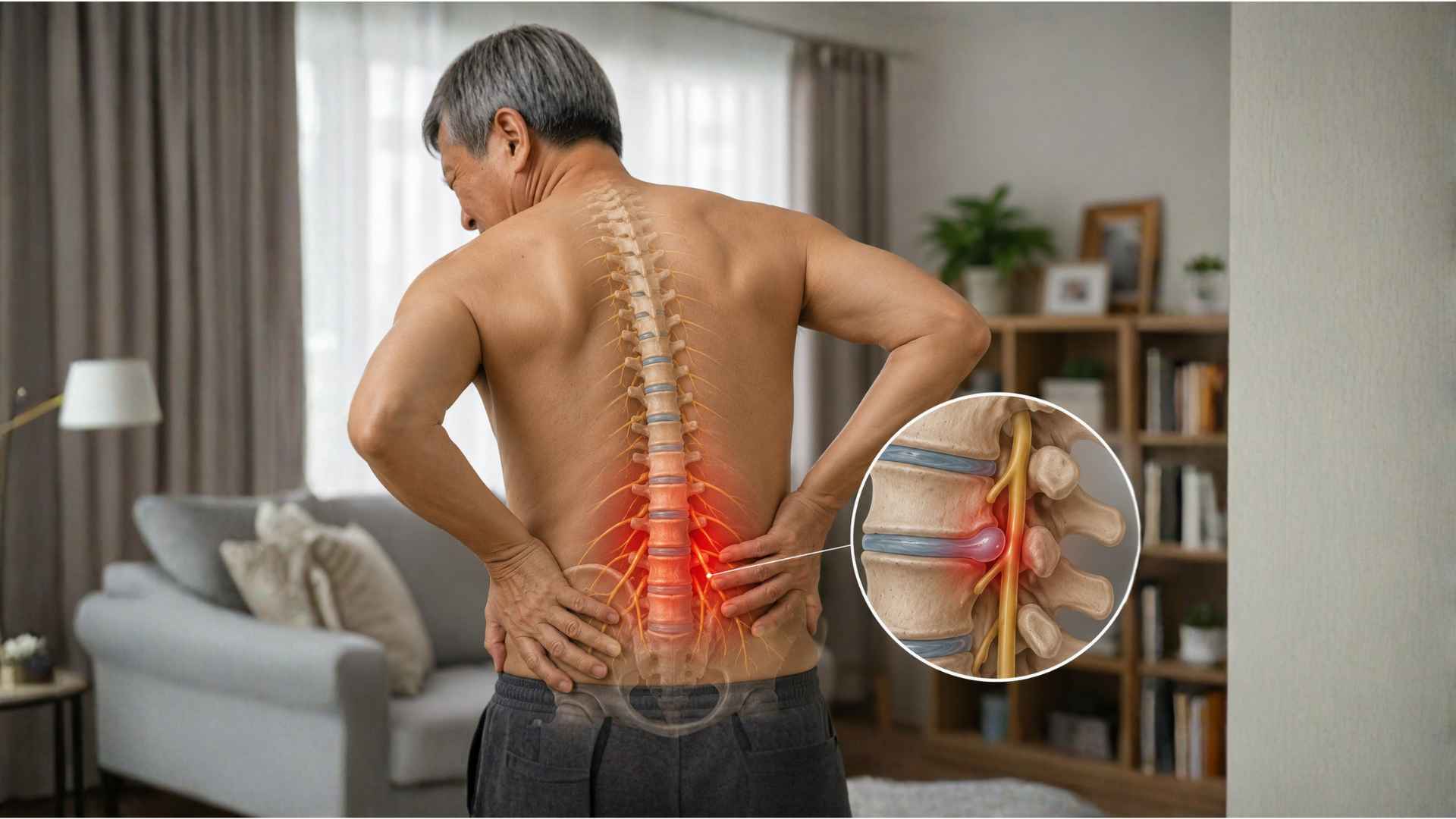
Your spine is made up of vertebrae stacked on top of each other, cushioned by discs that absorb shock and allow movement. Each disc has a tough outer ring, called the annulus fibrosus, wrapped around a soft, gel-like centre known as the nucleus pulposus.
Disc degeneration is part of normal ageing. Discs lose water content over time, becoming thinner, stiffer, and less able to absorb impact. As the outer ring weakens, small tears can form, and the inner gel may bulge or herniate through, pressing on a nearby nerve root.
In Singapore, back pain is extremely common. Up to 80 percent of adults experience low back pain at some point in their lives, according to HealthHub. A degenerative slip disc is one possible structural contributor, though not every case of back pain involves a disc problem.
Degenerative slip discs are also roughly twice as common in men as in women. They most often develop in the lower back, though they can also occur in the neck.
What Causes a Degenerative Slip Disc?
Disc degeneration rarely has one single cause. It usually develops from a combination of ageing and everyday mechanical stress on the spine.
Age-Related Wear and Tear
This is the most common underlying cause. As discs age, they naturally dry out and lose flexibility, making them more prone to small tears that can progress into a bulge or herniation over time.
Prolonged Sitting and Desk Work
Singapore’s desk-heavy work culture and long commutes mean many adults sit for hours with little postural variation. Sustained sitting increases pressure on the lower lumbar discs more than standing or walking does.
Improper Lifting Technique
Bending and twisting at the same time, such as lifting a heavy box off the floor without engaging the core, transfers force directly onto the disc rather than the stronger muscles of the legs.
Excess Body Weight
Carrying extra weight increases the compressive load the lumbar discs must bear throughout the day, accelerating wear on an already ageing structure.
Weak Core and Back Muscles
A sedentary lifestyle weakens the muscles that normally support the spine. Without this support, the discs absorb more mechanical stress during ordinary movement.
Smoking
Tobacco use reduces blood and nutrient flow to disc tissue, which has a limited blood supply to begin with. This speeds up degeneration, a risk factor many patients don’t expect.
Previous Disc Injury
A disc that has partially herniated before is structurally weaker and more likely to worsen under the same everyday strain.
Referred Pain from Nearby Structures
Sometimes what feels like disc pain is partly driven by the facet joints or surrounding ligaments, which degenerate alongside the disc and contribute to overall spinal wear.
Is a Degenerative Slip Disc Different from a Regular Slipped Disc?
Not every slipped disc is degenerative. Doctors generally recognise two patterns, and understanding which one applies to you helps shape the right treatment plan.
A degenerative slip disc develops gradually. The disc has already lost water content and elasticity through years of wear. It can bulge or tear even during an ordinary movement, such as bending to tie your shoes. Patients often recall weeks or months of mild stiffness before symptoms became noticeable.
An acute slipped disc, by contrast, usually follows a specific incident, such as a heavy lift, a fall, or a sudden twisting movement. It can happen to a disc that was previously healthy, or one that had some degeneration but had not yet caused symptoms. Pain typically appears suddenly and intensely, right after the triggering event.
In practice, many cases sit somewhere between the two. Years of gradual wear can leave a disc vulnerable, and a single awkward movement then triggers the herniation. Your specialist will consider both your history and your imaging findings to determine which pattern fits. This can affect how quickly symptoms are expected to settle, and which treatments are prioritised.
Symptoms That Accompany a Degenerative Slip Disc
Beyond localised back or neck pain, several accompanying symptoms help your doctor understand how much the nerve is involved. Numbness or a “pins and needles” sensation in the leg, foot, arm, or hand often means a nerve is being irritated or compressed.
Muscle weakness is a more significant symptom. It can show up as reduced grip strength, or difficulty lifting the front of the foot, sometimes called foot drop. Pain that disrupts sleep or limits how far you can walk or sit comfortably also signals that the condition is affecting daily function, not just causing discomfort.
A small number of symptoms need urgent medical attention rather than a routine appointment. These are warning signs of a rare but serious condition called cauda equina syndrome:
Seek Emergency Care If You Notice
- Sudden loss of bladder or bowel control
- Numbness in the groin or inner thighs (saddle numbness)
- Rapidly worsening weakness or paralysis in the legs
- Sudden loss of balance or coordination when walking
If you experience any of these, seek emergency medical care immediately rather than waiting for a scheduled consultation.
How Is a Degenerative Slip Disc Diagnosed in Singapore?
Diagnosis begins with a detailed conversation about your pain, its history, and how it behaves during the day. Your specialist will also examine your posture, movement, and reflexes, and test muscle strength and sensation to identify which nerve level may be affected.
Imaging then confirms what the clinical picture suggests. An MRI scan is the standard tool for visualising disc degeneration, herniation, and any nerve compression, while X-rays help rule out fractures or significant joint changes. It’s worth knowing that MRI findings don’t always match symptoms. Many people have visible disc wear on a scan with no pain at all, which is why imaging alone is never the full picture.
At Singapore Paincare, our specialists use the Painostic® methodology, developed by Dr Bernard Lee Mun Kam, to identify the true source of your pain. This means looking beyond a scan finding that may not fully explain your symptoms.
Painostic® guides treatment through three linked pathways. Diagnostic formulation brings together your clinical history, examination findings, and imaging to identify both the local source of pain and referred pain from nearby structures. Once the diagnosis is clear, an injection roadmap maps out a personalised treatment plan. This step-by-step plan combines the most suitable minimally invasive procedures with physiotherapy and medication where needed. Finally, injection technique refers to the precision with which a procedure is carried out, ensuring the needle depth and placement deliver treatment where it’s needed.
Slipped Disc Treatment in Singapore: What Are Your Options?
Treatment for a degenerative slip disc should start with an accurate diagnosis. At Singapore Paincare, our approach is Painostic-guided and prioritises the least invasive option that is likely to help, moving toward more targeted procedures if needed.
Activity Modification and Rest
Activity modification and rest during a painful flare, paired with proper lifting mechanics, can reduce the mechanical stress placed on the affected disc. Complete bed rest is generally discouraged, as staying gently active tends to support faster recovery.
Physiotherapy and Rehabilitation
Physiotherapy and rehabilitation form the foundation of long-term management for many patients. Targeted core strengthening, stretching, and low-impact activities such as swimming or brisk walking help maintain spinal flexibility and reduce the chance of recurrence.
Anti-Inflammatory Medication
Anti-inflammatory medication, such as NSAIDs, and in some cases nerve pain medication, can help reduce inflammation and interrupt the pain cycle in the short term. Medication works best alongside, not instead of, active rehabilitation.
Epidural Analgesia
Epidural analgesia involves delivering a steroid and local anaesthetic to the precise spinal level affected, reducing inflammation around the compressed nerve root. It’s suitable for patients whose radiating leg or arm pain has not responded to conservative care alone.
Nucleoplasty
Nucleoplasty uses a fine needle and radiofrequency energy to remove a small volume of disc material. This reduces internal pressure and allows the herniation to retract away from the nerve. It’s performed as an outpatient procedure and suits a confirmed disc bulge causing sciatica-type symptoms.
Neuroplasty
Neuroplasty guides a specialised catheter into the epidural space to free a nerve trapped by scar tissue or adhesions. This often results from chronic disc-related inflammation. It can help patients with persistent nerve irritation that hasn’t settled with earlier treatments.
Radiofrequency Ablation (RFA)
Radiofrequency Ablation (RFA) uses radiofrequency energy to disrupt pain signal transmission from the facet joints affected by degenerative change, offering longer-lasting relief than medication alone. It’s often considered when facet-related pain is contributing alongside disc degeneration.
If symptoms persist despite these measures, or if there is significant nerve compression, your specialist may discuss surgical options such as microdiscectomy or spinal fusion. Surgery is generally reserved for cases where conservative and minimally invasive approaches have not provided sufficient relief. For nerve pain that radiates into the leg, our sciatica page covers this related condition in more detail.
A Pain Specialist’s Perspective
In our clinic, we see two patterns that can look similar on paper but need different management. The first is the older patient, often in their 50s or 60s, with years of gradual central back stiffness and mild aching, but little to no leg pain. This usually reflects widespread disc and joint wear rather than active nerve compression, and tends to respond well to physiotherapy and activity-based management.
The second pattern is the desk-bound professional in their 30s or 40s who develops sudden, sharp leg pain after months of low-grade back discomfort they’d been ignoring. This often signals that a degenerating disc has progressed to an actual herniation pressing on a nerve root, a different clinical problem that may need targeted injections or a procedure like nucleoplasty rather than exercise alone.
The distinction matters because treating nerve compression the same way you’d treat general stiffness delays real relief, and treating simple wear-and-tear as if it were a nerve emergency can lead to unnecessary anxiety or invasive treatment. This is exactly why we don’t rely on imaging alone. A disc that looks degenerated on a scan isn’t automatically the source of your symptoms.
Our takeaway for patients is simple: don’t wait months hoping a persistent ache resolves on its own, especially if it starts radiating into a limb. Earlier assessment gives you more treatment options and generally leads to a faster, more complete recovery.
Managing a Degenerative Slip Disc Day-to-Day: Practical Tips
Staying moderately active, rather than resting completely, supports disc health and prevents surrounding muscles from weakening further. Gentle activities like walking or swimming are usually well tolerated even during a flare-up.
Setting up your workstation properly, with your monitor at eye level and your lower back supported, reduces sustained strain during long desk hours. Taking a short break to stand or stretch every 30 to 45 minutes also helps offset the effects of prolonged sitting.
When lifting anything heavy, bend at the knees rather than the waist, keep the object close to your body, and engage your core. Maintaining a healthy weight and, if you smoke, working toward quitting, both support long-term disc health. These are supportive measures, not substitutes for a proper diagnosis.
When Should You See a Specialist for a Degenerative Slip Disc in Singapore?
You don’t need a referral to see a pain specialist in Singapore, so there’s no need to wait for a GP visit before seeking a clearer diagnosis. Consider booking an assessment if back or neck pain has lasted more than a few weeks, if you notice numbness or tingling spreading into a limb, or if pain is starting to limit your sleep, work, or daily movement.
Earlier assessment generally means more treatment options and a better chance of avoiding escalation to more invasive care. If you’re experiencing any red-flag symptoms described earlier, such as loss of bladder or bowel control, seek emergency care right away rather than scheduling a routine visit.
For ongoing or worsening symptoms, speak to a pain specialist to find out if this treatment is right for you. Learn more on our slipped disc page, or book a consultation with our pain management team.
Conclusion
A degenerative slip disc is a common part of spinal ageing, and for many people it causes little more than occasional stiffness. For others, it progresses to nerve compression that needs proper attention. The key message is that most cases, even those involving nerve pain, can be managed without surgery when the true source of pain is identified early.
If your back or neck pain has been lingering, or has started to radiate into a limb, don’t wait it out indefinitely. Find out more about your options. Consult a specialist today to get a clear diagnosis and a treatment plan suited to your specific condition.
Frequently Asked Questions
What does a degenerative slip disc usually mean?
A degenerative slip disc means the spinal disc has worn down with age, causing its outer ring to weaken and its soft inner core to bulge or push through. This can happen with no symptoms at all, or it may press on a nearby nerve and cause back pain, stiffness, or pain radiating into a limb. It’s a common finding, especially in adults over 30.
Can a degenerative slip disc go away on its own?
Mild cases often improve within 6 to 12 weeks with conservative care such as activity modification, physiotherapy, and medication. The underlying disc wear itself doesn’t reverse, but inflammation and nerve irritation frequently settle down. More severe cases involving significant nerve compression may need further evaluation and targeted treatment.
What are the red flags to watch for?
Seek emergency care immediately if you experience sudden loss of bladder or bowel control, numbness in the groin or inner thighs, rapidly worsening leg weakness, or sudden loss of balance. These may indicate cauda equina syndrome, a rare condition requiring urgent treatment to prevent lasting nerve damage.
What treatments are available without surgery?
Most patients start with activity modification, physiotherapy, and anti-inflammatory medication. If symptoms persist, minimally invasive options such as epidural analgesia, nucleoplasty, neuroplasty, or radiofrequency ablation can target the specific source of pain. Surgery is generally only considered when these approaches haven’t provided enough relief.
How is a degenerative slip disc diagnosed at Singapore Paincare?
Our specialists combine a detailed clinical history, physical and neurological examination, and imaging such as MRI where needed. We also apply the Painostic® methodology, which looks at pain patterns, pathology, pain perception, and psychological factors, to identify the true source of pain rather than relying on scan findings alone.
About Singapore Paincare
Singapore Paincare Medical Group is a pain management group with clinics in Paragon and Novena. Our specialists use the proprietary Painostic® methodology to diagnose and treat spinal, nerve, and musculoskeletal pain conditions, offering minimally invasive procedures alongside physiotherapy and medication-based care.
Medical Disclaimer: This article is intended for general informational purposes only and does not constitute medical advice. Please consult a