
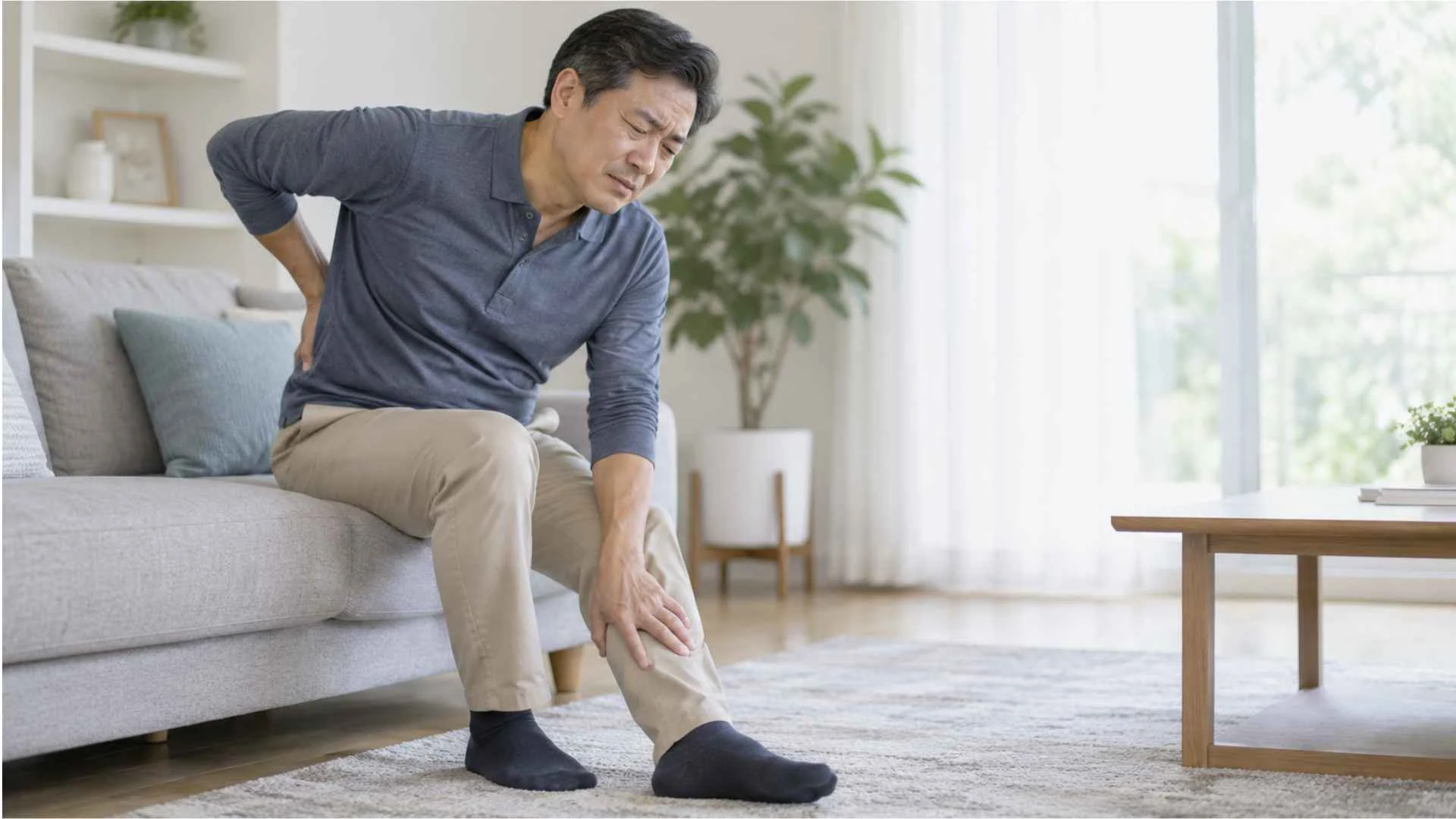
Left Leg Pain from a Herniated Lumbar Disc: A Case Study in Laser Disc Decompression
September 8, 2026

Written by Dr Bernard Lee Mun Kam,
Founder & Consultant Pain Specialist, Singapore Paincare Center
MBBS (NUS) · M Med (Anaesthesiology) (NUS) · FFPMANZCA (ANZCA)
Last updated: 8 Sept 2026
Presenting Complaint:
A 53-year-old patient presented with a several-month history of soreness and aching along the outer aspect of the left foot, at times extending to numbness in the foot. The discomfort was worse with prolonged standing and physical exertion, and was aggravated rather than relieved by sitting down to rest. At its most severe, the patient rated the pain at 8 out of 10. Sleep was significantly disrupted, with the patient repeatedly woken through the night by the pain.
The patient had previously tried oral medication and injections from a general practitioner, and separately a course of acupuncture and tuina; neither produced lasting relief, with the traditional Chinese medicine treatments giving only one to two days of improvement before symptoms returned.
Diagnostic Findings
I ordered an MRI because the patient described pain that grew worse with sitting, was not relieved by rest, and extended into a sensation in the foot, a pattern that pointed to nerve root involvement rather than simple muscular strain. The scan showed a bony spur (osteophyte) at the L4 vertebra with approximately 40% posterior protrusion. On reviewing the images, however, I identified the true source of the left sided symptoms as a disc herniation at the L5-S1 level, protruding by approximately 50% and narrowing the spinal canal at that level. This finding, rather than the L4 bone spur, shaped my treatment decision, because the L5-S1 nerve root compression correlated directly with the patient’s leg and foot symptoms.
Treatment Approach
Based on the MRI findings, I proceeded with a minimally invasive, image-guided laser disc decompression targeting the L5-S1 disc. My approach followed these steps:
- I confirmed the target level (L5-S1) and mapped the herniation’s relationship to the compressed nerve root using the MRI.
- The patient was positioned to allow precise needle placement into the affected disc under imaging guidance, as a day procedure.
- I used laser energy to vaporise a small volume of disc tissue, reducing internal disc pressure and drawing the herniated portion away from the compressed nerve root.
- The patient was observed in the ward before being discharged the same day.
- I prescribed a short course of anti-inflammatory medication and referred the patient for physiotherapy to support recovery and restore function.
Outcome
The patient went home the same evening and reported a comfortable night’s sleep for the first time in months. Over the following weeks, the patient completed three physiotherapy sessions and a one-month course of anti-inflammatory medication. At follow-up, the patient reported approximately 90% improvement in the left foot symptoms, with only occasional residual soreness or cramping after prolonged walking. The patient has since been maintained on annual follow-up review, with no recurrence of the original nerve compression symptoms reported to date.
This outcome reflects one individual case. Treatment suitability and results depend on each patient’s specific diagnosis and clinical assessment.
Ask the Doctor
“If my back problem is in the lower spine, why do I feel pain in my buttock and leg as well?”
This happens because the nerve roots that exit the lower spine, particularly at the L4-L5 and L5-S1 levels, travel down through the buttock and into the leg and foot. When one of these nerve roots is compressed, by a disc herniation or a bone spur, the irritation is felt not just at the spine but anywhere along that nerve’s path, which is what we call sciatica. Patients with this pattern often find sitting more uncomfortable than standing or walking, because sitting increases pressure on the affected disc and nerve root, and that is usually why they need to shift position or stand up again after only a short time seated.
Related Reading
- Understanding Sciatica: Causes, Symptoms and When to See a Specialist
- What Is Endoscopic Laser Decompression?
- Lumbar Disc Herniation: Diagnosis and Treatment Options
— Dr Bernard Lee Mun Kam, Pain Specialist