
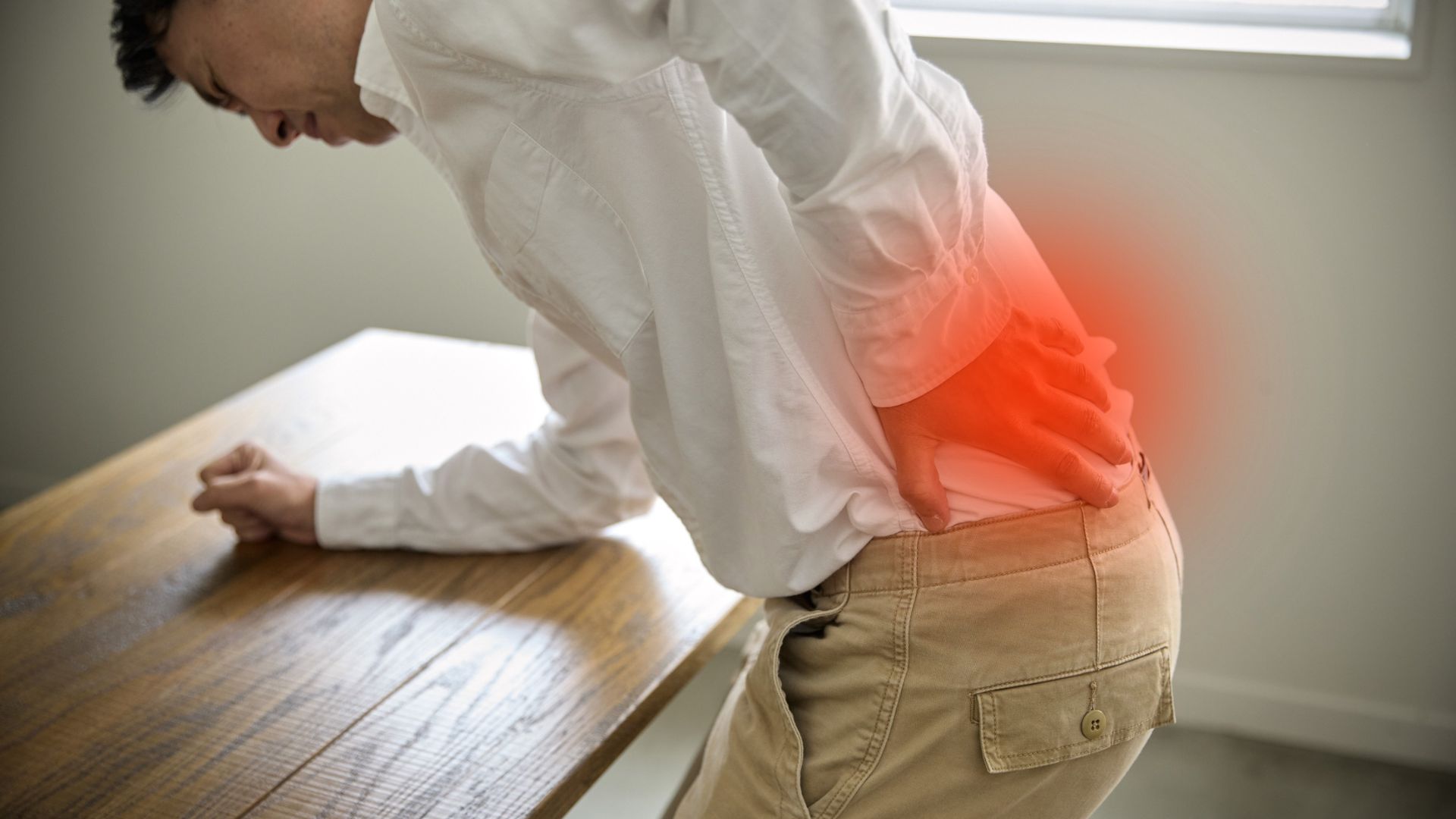
What Is Throbbing Back Pain a Sign Of and How Can You Find Relief?
March 30, 2026
CONTENTS
Quick Answer
Throbbing back pain is a rhythmic, pulsating sensation in the spine that typically signals tissue inflammation, muscle spasm, nerve-root irritation, or, in rare cases, a vascular problem. Most cases in Singapore are driven by disc pathology, facet joint inflammation, or muscle spasm, and respond well to targeted minimally invasive treatment once the pain source is confirmed. Persistent, nocturnal, or position-independent throbbing warrants specialist assessment to rule out serious causes.
Introduction
You notice it most at night or when you sit still for too long. A rhythmic pulse, timed almost with your heartbeat, spreading through your lower back or up between your shoulder blades. It is not the familiar dull ache of a tired back. It feels deeper, more urgent, and oddly alive.
Throbbing back pain is one of the more unsettling presentations a patient can describe to a pain specialist. Unlike a mechanical ache that eases when you change position, the throbbing quality carries a different message. It suggests that tissue in or around the spine is actively inflamed, under pressure, or closely linked to a vascular or nervous structure that is being irritated. In some circumstances, it can point to something that requires prompt medical attention.
This article explains the anatomy behind the pulsing sensation, the most common causes seen in Singapore clinical practice, how to interpret your symptoms by their location, the warning signs that should prompt urgent review, and how Singapore Paincare investigates and treats this presentation using the Painostic® diagnostic methodology.
Why Back Pain Can Feel Like It Is Throbbing
The spine is richly supplied with blood vessels, nerves, and nociceptive fibres, the pain-sensing endings that monitor tissue health. When any of these structures becomes inflamed, the local blood supply increases as part of the healing response. The rhythmic pressure generated by each heartbeat is then transmitted through engorged local vessels, producing a pulsing or throbbing sensation that patients often describe as their back beating in time with their heart.
Muscle spasm produces throbbing through a slightly different mechanism. A sustained or overloaded muscle contracts forcefully and repeatedly, compressing its own capillary network in the process. Each brief relaxation between contractions allows blood to surge back into the starved tissue, and that cyclical rush is perceived as a throb. Trigger points, which are hyperirritable knots within the muscle belly, are a particularly common generator of this pattern in the mid and lower back.
Nerve-root irritation adds a third dimension. When a spinal nerve is compressed or chemically irritated, it can fire rhythmically, producing electric-like pulses that some patients interpret as throbbing. This variant often travels along the nerve’s distribution rather than staying localised.
According to data from the Global Burden of Disease Study 2021, low back pain accounts for approximately 9.5% of total years lived with disability in Singapore, making it one of the leading contributors to pain burden locally.
Common Causes of Throbbing Back Pain
Facet Joint Inflammation
The small facet joints that interlock adjacent vertebrae can become inflamed through osteoarthritis, repetitive loading, or acute injury. Inflamed facet joints produce a localised, sometimes throbbing pain that is typically worse on spinal extension and rotation. The inflammatory cascade increases local blood flow to the joint capsule, which contributes directly to the pulsing quality many patients describe.
Muscle Spasm and Myofascial Trigger Points
Sustained or overloaded paraspinal muscles can enter a self-perpetuating cycle of spasm. The continuous contraction compresses local capillaries; the episodic relaxation allows blood to surge back in, producing the characteristic throbbing sensation. Trigger points within the muscle belly are a common source of localised, reproducible throbbing pain in the mid and lower back, particularly in desk workers who maintain prolonged static postures.
Intervertebral Disc Pathology
A disc bulge or herniation releases inflammatory mediators, particularly cytokines and prostaglandins, that chemically irritate the surrounding pain fibres. This inflammation, combined with the pressure changes that accompany movement and posture shifts, can produce a throbbing pattern. The pain is often at its worst after prolonged sitting or in the early morning, when disc hydration is at its peak and internal disc pressure is highest.
Sacroiliac Joint Dysfunction
The sacroiliac joints sit at the junction of the sacrum and pelvis, transferring load between the spine and the lower limbs. Dysfunction at these joints can produce a throbbing ache in the lower back and buttock, often on one side only, aggravated by walking, climbing stairs, or lying on the affected side. It is a frequently underdiagnosed cause of lower back pain in Singapore patients, particularly postpartum women and those who work in physically demanding roles.
Spinal Infection or Inflammatory Arthritis
Conditions such as discitis, vertebral osteomyelitis, or inflammatory spondyloarthropathy (including ankylosing spondylitis and psoriatic arthritis) can produce a persistent, deep throbbing pain that is notably worse at rest and at night. This nocturnal pattern, the reverse of most mechanical back pain, is an important clinical red flag. These conditions require urgent workup and disease-specific treatment.
Abdominal Aortic Aneurysm
In rare but serious circumstances, throbbing back pain can originate not from the spine at all, but from the aorta itself. A large abdominal aortic aneurysm can press against spinal structures and produce a deep, pulsatile pain in the lower back that is synchronous with the heartbeat and completely unaffected by position. Any patient over 60 with new, deep, pulsating lower back pain, particularly with a history of cardiovascular disease or smoking, requires urgent vascular imaging.
How Location Shapes the Diagnosis
The location of throbbing back pain provides a meaningful clinical shorthand, though it should always be interpreted alongside associated symptoms and examination findings rather than in isolation.
Throbbing in the upper back, around the thoracic spine, often reflects paraspinal muscle spasm from postural overload or facet joint irritation from sustained desk work. Singapore’s office worker population, a significant proportion of whom spend eight or more hours daily at a workstation, is particularly prone to this pattern. In older patients, a vertebral compression fracture from osteoporosis can present as a sharp-to-throbbing pain at a thoracic level, often after a minor fall or an innocuous bending movement.
Mid-back throbbing is less common as a musculoskeletal presentation and should always prompt consideration of referred pain from the kidney, pancreas, or lung. Pain that does not vary with movement or posture, that is accompanied by urinary symptoms, or that appears after a fever, warrants assessment beyond the spine.
Lower back throbbing is by far the most frequent presentation in pain specialist practice. It spans a wide differential, from simple muscle spasm and facet joint arthritis through disc herniation and sacroiliac dysfunction to the more serious vascular and infectious causes described above. Singaporean patients doing heavy manual work, enduring long MRT and bus commutes, or sitting through extended office shifts are particularly susceptible to the kind of sustained spinal loading that drives lower back inflammatory pain.
Symptoms That Accompany Throbbing Back Pain
Throbbing back pain rarely appears in isolation, and the pattern of associated symptoms is often the most informative aspect of the clinical history.
Pain that throbs more intensely after prolonged sitting, or that eases briefly when the patient first stands up but then returns, typically implicates disc or facet joint involvement. Pain that is worse at rest, that wakes the patient in the second half of the night, or that takes more than 30 minutes of morning movement to settle is more consistent with an inflammatory process or infection.
Radiation of pain down the leg alongside throbbing in the lower back points strongly to nerve-root involvement, most commonly a herniated disc pressing on the L4, L5, or S1 nerve root. When the throb is accompanied by a burning or electric quality that tracks from the spine to the foot, nerve sensitisation has usually developed alongside the structural cause.
Systemic features such as fever, night sweats, unexpected weight loss, or a recent skin or dental infection should never be dismissed alongside back pain. These combinations may indicate spinal infection or malignancy, and they change the urgency of assessment entirely.
⚠️ Seek urgent medical attention if your throbbing back pain is accompanied by any of the following:
- Numbness, weakness, or tingling in both legs
- Loss of bladder or bowel control
- Fever, chills, or recent serious infection
- A pulsating sensation in the abdomen alongside the back pain
- Progressive neurological deficit that is worsening over hours or days
- Unexplained weight loss or night sweats
How Throbbing Back Pain Is Diagnosed
A thorough clinical history remains the most important first step. The pain specialist will characterise the throbbing in detail: is it truly synchronous with the pulse? Does it change with position or movement? Is it present at rest or only with activity? Are there night symptoms? The answers to these questions narrow the differential considerably and determine which investigations are most useful.
Physical examination includes palpation of the paraspinal muscles and spinous processes, assessment of spinal range of motion, neurological testing of lower limb reflexes and dermatomal sensation, and specific manoeuvres to screen for sacroiliac joint involvement. Tenderness directly over a vertebral body, rather than over the surrounding muscles, raises concern for bony pathology, including fracture, infection, or malignancy.
Imaging is guided by clinical findings. Plain X-rays can reveal disc space narrowing, vertebral collapse, or osteophyte formation. MRI is the investigation of choice for soft tissue pathology, including disc herniation, nerve-root compression, spinal infection, and inflammatory arthritis. Doppler ultrasound or CT angiography is requested when an aortic cause is under consideration. Blood tests including full blood count, ESR, CRP, and uric acid are added when infection, inflammatory arthritis, or systemic disease is suspected.
Singapore Paincare’s Painostic® methodology brings these threads together in a structured, multi-dimensional assessment that examines pain patterns, pathology, pain perception, and psychological context. Rather than treating the symptom with a generalised protocol, the approach is to identify the specific pain generator and build a treatment plan around that confirmed source.
Throbbing Back Pain Treatment in Singapore: What Are Your Options?
Treatment is always matched to the confirmed pain source identified through assessment. Singapore Paincare’s follows a graduated approach: the least invasive, most targeted intervention that addresses the root cause.
Activity Modification and Rest
In the acute phase, modifying activities that aggravate throbbing pain is an important first step. This does not mean complete bed rest, which often prolongs recovery. Rather, it means avoiding sustained static loading, heavy lifting, and postures that specifically worsen the pain. Short walks and gentle movement help maintain spinal blood flow and prevent deconditioning.
Physiotherapy and Rehabilitation
A structured physiotherapy programme, including manual therapy, thermal modalities, and progressive core stabilisation exercises, is central to managing most mechanical causes of throbbing back pain. For many patients with muscle spasm, disc irritation, or facet joint inflammation, a well-supervised physiotherapy course produces meaningful improvement within four to eight weeks.
Anti-Inflammatory Medication
Short-course non-steroidal anti-inflammatory drugs such as diclofenac or celecoxib can reduce inflammatory pain and break the spasm cycle in many patients. For nerve-sensitisation components, low-dose anticonvulsants such as gabapentin or pregabalin may be added under specialist guidance. Medication is generally prescribed as a short-term bridge to support active rehabilitation rather than as a long-term solution.
Coreflex Injections
For patients whose throbbing pain is driven by muscle spasm, myofascial trigger points, or early facet joint inflammation, Coreflex Injections deliver a precisely targeted mixture of local anaesthetic, anti-inflammatory agent, and muscle relaxant directly into the affected tissue. This interrupts the spasm-pain-spasm cycle and provides a window of reduced pain in which rehabilitation can progress more effectively. Coreflex Injections are a Myospan procedure suitable for many patients as a first-step minimally invasive intervention.
Myofascial Block
Where trigger points are the dominant pain generator, a Myofascial Block delivers local anaesthetic, anti-inflammatory medication, and, where appropriate, botulinum toxin into the tense, knotted muscle tissue. This flushes accumulated inflammatory metabolites, reduces chronic muscle hyperactivity, and provides sustained relief. It is particularly useful for patients with mid-back and paraspinal trigger point pain that has not fully responded to physiotherapy alone.
Epidural Analgesia
For throbbing back pain with a confirmed disc or nerve-root component, Epidural Analgesia delivers a carefully selected anti-inflammatory and local anaesthetic combination to the correct spinal level. This reduces nerve-root swelling and inflammatory sensitisation, allowing the patient to engage actively in rehabilitation with substantially reduced pain. Find out more about and whether they may be appropriate for your presentation.
Radiofrequency Ablation (RFA)
For patients where facet joint inflammation is the confirmed source of throbbing back pain, and where diagnostic medial branch blocks have produced significant but temporary relief, Radiofrequency Ablation uses precisely directed radiofrequency energy to disrupt the pain signal pathway from the facet joint. The procedure may provide relief lasting from several months to over a year, and can be repeated if required. It is a Neurospan intervention suitable for carefully selected patients with confirmed facet-mediated pain.
A Pain Specialist’s Perspective
💡 Doctor’s Insight
In clinical practice, the vast majority of patients presenting with throbbing back pain have a musculoskeletal or disc-related cause. These cases are eminently treatable when the pain source is accurately identified. The challenge is that the throbbing quality itself carries diagnostic information that patients and treating doctors sometimes overlook in favour of imaging findings.
The most important clinical question is whether the throb modifies with position and movement. A musculoskeletal throb almost invariably does. Lying flat relieves muscle spasm; spinal extension worsens facet joint pain; forward flexion aggravates disc pain. A throb that is completely position-independent, present whether the patient is lying, sitting, or standing, and synchronous with the heartbeat, should prompt vascular screening before physiotherapy or injections are initiated. Treating an abdominal aortic aneurysm as a muscle spasm is a preventable clinical error.
A second pattern I see regularly in Singapore’s population is inflammatory spondyloarthropathy presenting in younger patients, often in their 20s or 30s, as a deep, throbbing lower back pain that is notably worse after rest and improves after 30 to 60 minutes of movement. This is the reverse of almost every other mechanical back pain pattern, and it is the diagnostic key. Ankylosing spondylitis and related conditions require early disease-modifying treatment to prevent irreversible spinal fusion.
Throbbing back pain deserves characterisation, not just symptom relief. Understanding the quality, timing, position-dependence, and associated features of the throb provides the diagnostic roadmap that makes targeted, durable treatment possible.
Managing Throbbing Back Pain Day-to-Day
For throbbing pain that is clearly muscular or positional in nature, several evidence-based self-management measures can provide meaningful relief between specialist consultations.
Heat application to the affected area, using a warm pack or a warm shower, increases local circulation, relaxes paraspinal muscle spasm, and often reduces the throbbing quality within 15 to 20 minutes. It is most effective when applied early, before the spasm cycle becomes entrenched. Cold application may be more appropriate in the first 24 to 48 hours following an acute injury.
Gentle, consistent movement is generally preferable to complete rest. Short walks, gentle lumbar mobility exercises, and deliberate breaks from prolonged sitting help prevent the accumulation of inflammatory metabolites in the affected tissue and maintain the spinal hydration that discs depend on. Avoiding prolonged static postures is particularly relevant for Singapore office workers, who are prone to sustained lumbar loading.
Psychological stress activates the sympathetic nervous system and heightens central pain perception, which can amplify the throbbing quality in already-sensitised tissue. Attention to sleep quality, stress management, and regular physical activity supports the nervous system’s ability to modulate pain signals effectively.
These are supportive measures and are not substitutes for a proper diagnosis.
When Should You See a Back Pain Specialist in Singapore?
Throbbing back pain that persists beyond two to three weeks without clear improvement, that recurs frequently, that is present at rest or at night, or that is accompanied by any of the red flags described above, warrants assessment by a specialist rather than continued self-management.
No referral is needed to see a back pain specialist in Singapore. Speak to a back pain specialist at Singapore Paincare to take the first step toward a clearer diagnosis. The first consultation involves a comprehensive assessment using the Painostic® methodology, identifying the specific pain generator and designing a personalised treatment plan around that confirmed source.
Conclusion
Throbbing back pain is rarely without explanation, and that explanation matters. The pulsing quality of this pain pattern carries diagnostic information that, interpreted correctly, guides the clinician toward the pain generator rather than simply suppressing the symptom. While most cases are musculoskeletal in origin and respond well to targeted, minimally invasive treatment, a careful assessment is always required to rule out the serious vascular and infectious causes that demand a different pathway entirely.
If your back pain is throbbing, persistent, waking you at night, or accompanied by any neurological or systemic symptoms, do not wait. Book a consultation with the Singapore Paincare pain management team to find out what is driving your pain and what can be done about it.
Frequently Asked Questions
Why does my back pain throb at night?
Night-time throbbing that is present at rest and worsens when lying down often indicates an inflammatory or infectious process rather than a mechanical cause. Inflammatory spondyloarthropathy, spinal infection, and in rare cases malignancy tend to produce pain that is unrelieved or worsened by lying still. Mechanical back pain typically eases with rest. If your back pain consistently wakes you at night or is at its worst in the early morning hours, specialist evaluation is warranted rather than watchful waiting.
Can throbbing back pain go away on its own?
Many cases caused by acute muscle spasm, minor disc irritation, or transient facet joint inflammation do settle with rest, gentle movement, and anti-inflammatory medication over one to two weeks. However, pain that persists beyond two to three weeks, that is progressive, or that is accompanied by neurological or systemic symptoms is unlikely to resolve without identifying and treating the underlying cause. Persistent throbbing should be assessed rather than managed indefinitely with over-the-counter remedies.
Is throbbing back pain a sign of a kidney problem?
Kidney stones or kidney infections can cause a deep, sometimes throbbing pain in the flank and lower back that may radiate toward the groin. Kidney pain typically does not change significantly with spinal movement or position, which helps distinguish it from musculoskeletal back pain. Accompanying symptoms such as blood in the urine, painful or frequent urination, fever, or nausea alongside back pain warrant prompt medical assessment to exclude a renal cause.
What treatments are available for throbbing back pain without surgery?
A range of non-surgical options is available depending on the confirmed pain source. Conservative measures including physiotherapy, heat therapy, and short-course anti-inflammatory medication are appropriate first-line treatments. When these are insufficient, minimally invasive procedures such as Coreflex Injections, Myofascial Blocks, Epidural Analgesia, or Radiofrequency Ablation can be selected based on the specific cause identified through the Painostic® assessment at Singapore Paincare.
How is throbbing back pain diagnosed at Singapore Paincare?
At Singapore Paincare, throbbing back pain is assessed using the Painostic® methodology, a multi-dimensional diagnostic approach that evaluates pain patterns, structural pathology, pain perception, and psychological factors. The initial consultation involves a detailed pain history, physical examination, and review of relevant imaging. Where needed, targeted diagnostic nerve blocks or additional blood tests confirm the pain generator. A personalised treatment plan is designed around the confirmed source, prioritising minimally invasive options.