
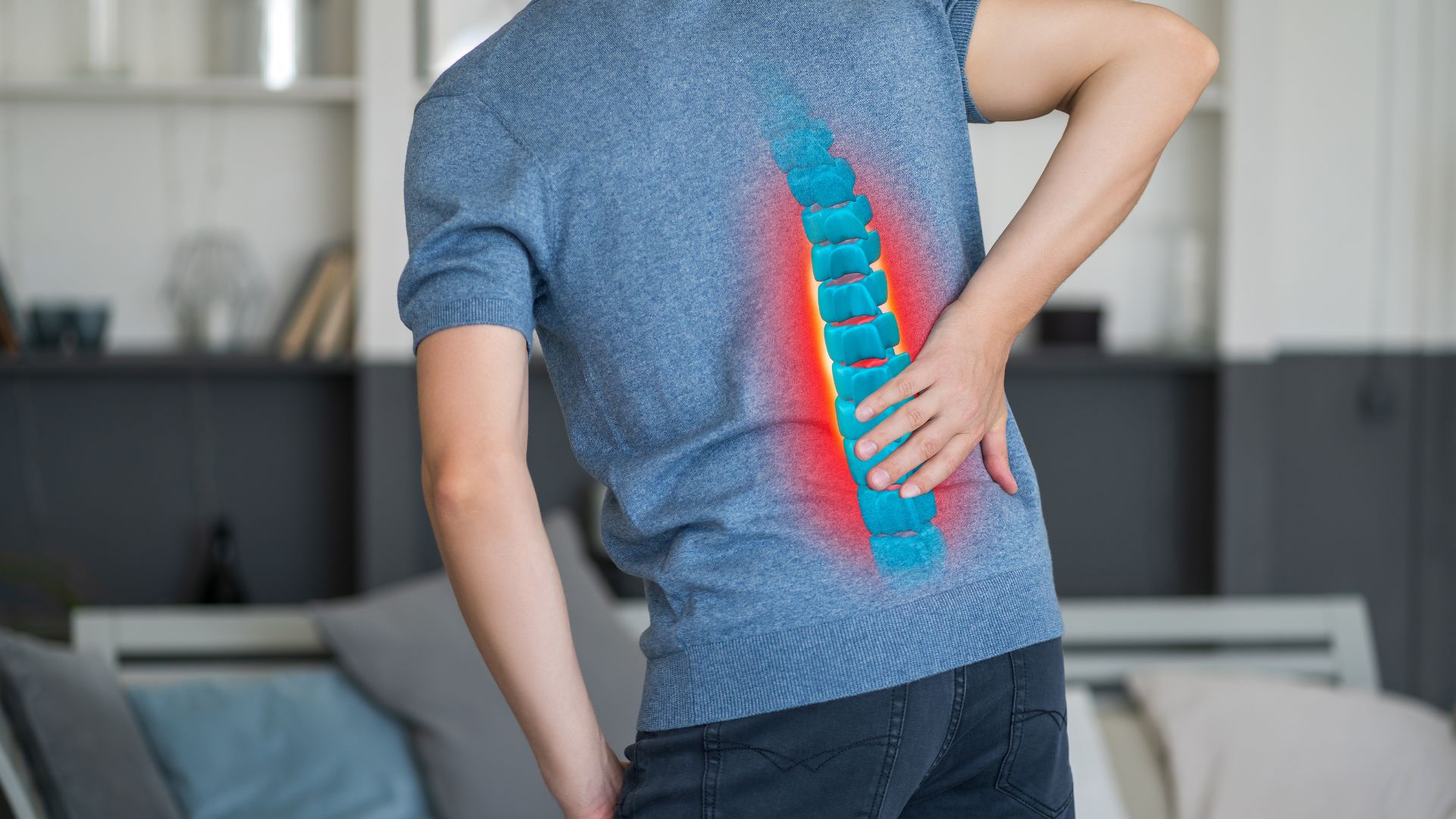
When to See a Pain Specialist for Back Pain in Singapore
April 17, 2026
CONTENTS
Quick Answer: A pain specialist for back pain focuses on diagnosing and treating the underlying source of pain using non-surgical, minimally invasive methods. In Singapore, seeing a pain specialist is recommended when back pain has persisted beyond three months, radiates into the leg, or has not responded to physiotherapy or medication. Pain specialists offer targeted interventions such as nerve blocks, radiofrequency procedures, and spinal decompression that address the root cause rather than managing symptoms alone.
Back pain is one of the most common reasons adults in Singapore visit a doctor. According to HealthHub Singapore, up to 80 per cent of Singaporeans experience low back pain at some point in their lives. For most people, the discomfort eases within a few weeks with rest, gentle movement, and basic pain relief. For a significant proportion, however, the pain persists, deepens, and begins to limit daily activities in ways that are no longer manageable on their own.
When back pain moves beyond the acute phase and starts affecting sleep, work performance, or the ability to walk comfortably, it becomes a signal worth taking seriously. The challenge many patients face is not knowing which type of doctor to see, or whether they even need a specialist at all. This article explains the role of a pain specialist in treating back pain, how their approach differs from other medical options, and what patients in Singapore can realistically expect from a pain-focused consultation.
What a Pain Specialist Does Differently
A pain specialist, formally known as a pain management physician, is a doctor who has undergone subspecialty training focused specifically on the diagnosis and treatment of pain conditions. In Singapore, pain specialists are typically trained in anaesthesiology with advanced fellowships in interventional pain medicine. Their clinical expertise lies in understanding how pain is generated, transmitted, and maintained in the body, particularly when standard treatments have not produced lasting relief.
What distinguishes a pain specialist from a general practitioner or orthopaedic surgeon is the depth of their focus on the pain mechanism itself. Rather than approaching the spine primarily as a structural problem to be corrected surgically, a pain specialist evaluates the interplay between the affected tissues, nerve pathways, and how the patient’s nervous system is processing pain signals. This multi-dimensional perspective allows for more targeted, less invasive treatment options in many cases.
For patients whose back pain has not resolved with physiotherapy, medication, or initial GP care, a pain specialist consultation can provide a clearer diagnostic picture and a structured path toward relief that avoids unnecessary surgery.
Recognising When Back Pain Needs Specialist Attention
Not all back pain requires specialist input, and knowing the difference can save time and unnecessary worry. Mild back pain from muscle strain or a poorly positioned workstation often improves within two to six weeks with activity modification and over-the-counter anti-inflammatory medication.
Specialist attention becomes appropriate when certain patterns emerge. Pain that has persisted for more than three months without meaningful improvement is considered chronic and warrants a more thorough assessment. Pain that radiates from the lower back into the buttock, thigh, calf, or foot, particularly when accompanied by tingling, numbness, or a burning sensation, often indicates nerve involvement that may not respond to general measures alone.
Other indicators that a pain specialist consultation is warranted include pain that significantly worsens at night or at rest, pain following a back injury that has not improved as expected, and any sensation of weakness or heaviness in the legs. Patients who have already undergone surgery for back pain and continue to experience persistent discomfort are also well served by a pain specialist review.
Red Flag Symptoms Requiring Urgent Medical Attention
The following symptoms alongside back pain require prompt evaluation rather than a routine appointment:
🚨 Urgent Red Flags — Seek Medical Attention Immediately
- Sudden loss of bladder or bowel control
- Progressive weakness or numbness spreading into both legs
- Severe pain following a fall or impact
- Back pain accompanied by unexplained weight loss or fever
- Pain that is constant, severe, and unresponsive to any position or rest
These red flags signal the need for urgent medical assessment to rule out serious underlying conditions before a pain management pathway is considered.
The Diagnostic Difference: Understanding the Source of Back Pain
Back pain is not a single condition. It is a symptom that can arise from several different structures in the spine and surrounding tissues, and the source varies considerably between patients. Muscles and ligaments can be strained or inflamed. The intervertebral discs can herniate or degenerate, placing pressure on adjacent nerve roots. Facet joints, the small joints connecting the vertebrae, can become arthritic and painful. The nerve roots themselves can be compressed, irritated, or sensitised in ways that generate pain far from the spine.
This anatomical complexity is one reason why back pain can be so difficult to treat through general measures alone. When a treatment targets one structure and the pain originates from another, relief will be incomplete or temporary. Accurate source-identification is therefore the foundation of effective pain management.
At Singapore Paincare, the diagnostic approach is guided by the Painostic® methodology, developed by Dr. Bernard Lee Mun Kam over more than two decades of clinical practice in interventional pain management. Painostic® evaluates pain through four dimensions: Pain Patterns, Pathology, Pain Perception, and Psychology. This four-pillar framework moves beyond imaging alone to assess how the pain behaves, which structures are affected, how the nervous system is processing the signals, and whether psychological factors such as anxiety or fear-avoidance are contributing to the experience of pain.
Where imaging provides insufficient diagnostic clarity, targeted diagnostic nerve blocks can be performed to pinpoint the specific disc, facet joint, or nerve root responsible for generating pain.
Pain Specialist Treatment Options for Back Pain in Singapore
Once the source of pain has been accurately identified, a pain specialist can select from a range of minimally invasive procedures that target the problem directly. For a complete overview of how each treatment tier compares, read the full back pain treatment options guide for Singapore patients.
Epidural Analgesia
An epidural procedure delivers a combination of steroid and local anaesthetic medication to the precise spinal level where a nerve root is inflamed or compressed. This reduces swelling around the nerve, providing relief from radicular pain that radiates into the leg. Epidural analgesia is commonly used for back pain associated with slipped discs, spinal stenosis, and post-surgical nerve inflammation.
Radiofrequency Ablation (RFA)
Radiofrequency ablation uses controlled thermal energy to disrupt the nerve signals responsible for transmitting facet joint pain. The affected nerves are targeted precisely using image guidance, and the procedure provides longer-lasting relief than repeated steroid injections for patients with confirmed facet-mediated back pain. Relief can last twelve months or more in suitable candidates.
Pulsed Radiofrequency (PRF)
Pulsed radiofrequency applies a lower-temperature energy to desensitise pain-causing nerves without the ablative effect of conventional RFA. It is particularly suited to treating nerve root pain without permanently disrupting nerve function, preserving sensation while reducing the amplified pain signals that characterise chronic nerve irritation.
Nucleoplasty
For patients with herniated or bulging discs causing nerve root compression, nucleoplasty decompresses the disc from within using a fine needle and controlled plasma ablation technology. By reducing the internal pressure of the disc, the herniated material retracts slightly, relieving pressure on the adjacent nerve root. The procedure is image-guided, performed through a small needle, and does not require open surgical access to the spine.
Neuroplasty
Neuroplasty addresses back pain caused by nerve root entrapment from adhesions, scarring, or tissue swelling within the spinal canal. A small tube is inserted under image guidance to mechanically break down adhesions around the compressed nerve while simultaneously delivering anti-inflammatory medication. It is particularly useful for patients with spinal stenosis or failed back surgery syndrome.
Endoscopic Laser Decompression
For back pain caused by bone spurs pressing on spinal nerves or by disc material occupying the spinal canal, endoscopic laser decompression allows direct visualisation and precise laser ablation through a 1cm entry point. Dr. Bernard Lee is one of Singapore’s early adopters of this technique, having introduced it into clinical practice as part of his pioneering work in knifeless interventional procedures. Because the procedure is performed under direct camera view, the surgeon can target compressed tissue accurately while avoiding damage to surrounding structures.
How a Pain Specialist Consultation Differs from an Orthopaedic Consultation
Many patients in Singapore see an orthopaedic surgeon for back pain as a first specialist step. This is appropriate in certain situations, particularly when there is clear structural deformity, fracture, or progressive neurological compromise that may require surgical correction.
For chronic back pain without clear surgical indication, however, a pain specialist consultation often provides a more directly relevant assessment. A pain specialist is trained to evaluate whether pain is amenable to non-surgical intervention, to identify the specific structures generating pain, and to apply targeted procedures that can provide relief without the recovery demands of surgery.
In practice, pain specialists and orthopaedic surgeons often work collaboratively. A patient may be assessed by both, with the orthopaedic surgeon confirming that surgery is not immediately required and the pain specialist developing a targeted intervention plan for ongoing pain management.
To understand this distinction in more depth, read Singapore Paincare’s comparison of pain specialist and orthopaedic doctor roles.
About Dr. Bernard Lee Mun Kam: Singapore’s Specialist for Back Pain
Dr. Bernard Lee Mun Kam is the Consultant Pain Specialist at Singapore Paincare Center and the Founder and CEO of Singapore Paincare Holdings Limited. With over 20 years of clinical experience in interventional pain management, he holds a Bachelor of Medicine and Surgery (MBBS) and a Master of Medicine in Anaesthesiology, both from the National University of Singapore, as well as a Fellowship with the Faculty of Pain Medicine of the Australian and New Zealand College of Anaesthetists (FFPM ANZCA). This subspecialty fellowship is one of the highest qualifications available in pain medicine, reflecting advanced training in the diagnosis and management of complex pain conditions.
Dr. Lee is widely recognised as one of Singapore’s pioneer interventional pain specialists. In 2002, he established the Chronic and Interventional Pain Management Service at Tan Tock Seng Hospital and served as Director of the Pain Management Unit under the Department of Anaesthesia from 2002 to 2007. In that role, he created Singapore’s first intensive rehabilitation programme for difficult pain conditions and implemented the “Pain as the 5th Vital Sign” training module across the hospital. In 2009, he founded Singapore’s first Women’s Pain Centre at KK Women’s and Children’s Hospital, where he served as Director until 2018.
His academic contributions are equally extensive. Dr. Lee served as a Clinical Lecturer at the National University of Singapore from 2011 to 2017 and as an Associate Professor in the Faculty of Medicine and Surgery at the University of Santo Tomas, Philippines from 2011 to 2018. He has reviewed research for the ASEAN Journal of Anaesthesiology and the Singapore Medical Journal, and has published professional articles with the Singapore Medical Association. He founded the Singapore Chronic Pain Society to advance public awareness of pain management in Singapore.
View Dr. Bernard Lee’s full credentials and clinical profile
💡 Pain Specialist Insight
One of the most consistent findings in clinical practice is that patients with persistent back pain have almost always had the pain itself treated, but not the source of it. Physiotherapy, painkillers, and even surgery are frequently directed at the symptom rather than the confirmed anatomical generator. When a patient has been managing for two or three years without lasting relief, the most important first step is not another treatment but a proper diagnostic formulation. Using the Painostic® framework, we look at how the pain behaves, which structures are involved, how sensitised the nervous system has become, and whether psychological factors are amplifying the experience. In the majority of cases, once the true source is clearly identified, a minimally invasive procedure resolves the pain that years of generalised management have not been able to address. Surgery is rarely the answer when accurate diagnosis is the foundation.
Singapore Paincare Center
Back Pain in the Singapore Context
Singapore’s working environment presents specific risk factors for back pain. Long hours at desks with inadequate ergonomic support, frequent commuting on public transport in fixed seated positions, and the increasing prevalence of sedentary work among office professionals all contribute to elevated rates of chronic lumbar strain and disc degeneration.
Physical activity levels also play a role. Singaporeans in their thirties and forties who adopt high-impact exercise to compensate for sedentary work hours, such as distance running or heavy weightlifting without proper conditioning, are at elevated risk of disc and facet injuries. Older adults managing age-related spinal stenosis or spondylosis often find that pain interferes substantially with their ability to walk comfortably around their estates or continue recreational activities.
Seeking a specialist opinion does not require a GP referral at Singapore Paincare. Patients can book directly, which removes a barrier that often causes people to delay proper assessment.
What to Expect at Your First Consultation with Dr. Bernard Lee
A first appointment with Dr. Bernard Lee at Singapore Paincare begins with a detailed clinical history covering the onset, character, and behaviour of your pain. Questions focus on whether the pain radiates, what aggravates or relieves it, how it affects daily function, and what treatments have been tried previously. A physical examination assesses lumbar range of motion, neural tension signs, and muscle function.
If you have existing imaging such as an MRI or X-ray, this will be reviewed and incorporated into the Painostic® assessment. If additional diagnostic imaging or targeted nerve block procedures are required to confirm the pain source, these will be explained and planned as part of your personalised treatment roadmap before anything is scheduled.
At the end of the consultation, Dr. Lee will explain his assessment, the likely source of your pain, and the minimally invasive treatment options most suited to your specific condition. Fees, Medisave eligibility, and the sequence of any planned procedures are discussed transparently. No treatment is performed at the initial consultation without your full informed consent.
To find out whether a pain specialist is the right next step for your back pain, speak to the team at Singapore Paincare. You can also learn more about lower back pain conditions and treatment at Singapore Paincare or review what a consultation with a back pain specialist involves.
Conclusion
Back pain affects the majority of Singaporeans at some point in their lives, but chronic or radiating back pain that has not responded to standard care deserves a more specific assessment. A pain specialist brings subspecialty expertise in diagnosing the precise source of pain and applying minimally invasive interventions that can produce meaningful, lasting relief without surgery.
The key difference a pain specialist offers is diagnostic precision followed by targeted treatment. For the large number of patients whose pain originates from nerve compression, facet joint disease, disc herniation, or spinal adhesions, the procedures available through interventional pain management are safe, evidence-based, and performed on an outpatient basis with minimal downtime.
If your back pain has persisted for months, is affecting your quality of life, or has not responded to physiotherapy and medication, a consultation with Dr. Bernard Lee at Singapore Paincare is a logical and informed next step. Speak to the team today to find out what treatment options may be appropriate for your condition.
Frequently Asked Questions
What does a pain specialist do for back pain?
A pain specialist focuses on identifying the underlying source of back pain through a multi-dimensional clinical assessment and then applying targeted, minimally invasive treatments to relieve it. Rather than managing symptoms with painkillers alone, a pain specialist uses procedures such as nerve blocks, radiofrequency ablation, and spinal decompression techniques to address the structure or nerve pathway generating the pain. At Singapore Paincare, this process is guided by the Painostic® diagnostic methodology developed by Dr. Bernard Lee Mun Kam, which evaluates pain patterns, pathology, nerve perception, and psychological factors to build an accurate and personalised treatment plan.
Can back pain go away on its own without seeing a specialist?
Acute back pain, which is pain lasting less than three months, often resolves on its own with rest, gentle activity, and anti-inflammatory medication. According to HealthHub Singapore, the majority of acute low back pain cases improve within six weeks. However, pain that persists beyond three months, radiates into the leg with numbness or tingling, or significantly disrupts sleep and daily function is less likely to resolve without targeted intervention. In these cases, a specialist assessment can identify the specific source of pain and offer treatments that general measures cannot provide.
What are the red flags for back pain in Singapore?
Red flag symptoms alongside back pain require urgent medical assessment rather than a routine specialist appointment. These include sudden loss of bladder or bowel control, progressive weakness or numbness spreading into both legs, severe pain after a fall or impact, back pain accompanied by unexplained weight loss or persistent fever, and pain that is constant and unresponsive to rest or any change in position. Seek medical help promptly if you experience any of these symptoms.
What back pain treatments are available without surgery in Singapore?
A range of non-surgical and minimally invasive treatments are available for back pain in Singapore through a pain specialist. These include epidural analgesia to reduce nerve root swelling, radiofrequency ablation to disrupt pain signals from facet joints, pulsed radiofrequency to desensitise compressed nerve roots, nucleoplasty to decompress herniated discs, neuroplasty to free entrapped nerves from adhesions, and endoscopic laser decompression for bone spurs or disc tissue pressing on spinal nerves. Most of these procedures are performed on an outpatient basis under image guidance, without hospital admission, and with minimal recovery time.
How is back pain diagnosed and treated at Singapore Paincare?
At Singapore Paincare, back pain is assessed using the Painostic® methodology, a proprietary diagnostic framework developed by Dr. Bernard Lee Mun Kam. The initial consultation includes a detailed pain history, physical examination, and review of any existing imaging. Where the source of pain is not clearly identified from standard assessment, diagnostic nerve blocks may be used to pinpoint the specific spinal level or structure responsible. Treatment is then tailored to the confirmed pain source, drawing from the Neurospan suite of minimally invasive spinal procedures. No referral is required to book a consultation, and Medisave may be applicable to certain procedures.
About Singapore Paincare
Dr. Bernard Lee Mun Kam is a Consultant Pain Specialist and Founder of Singapore Paincare Medical Group, Singapore’s first SGX-listed pain management group. He holds an MBBS and MMed (Anaesthesiology) from the National University of Singapore and a Fellowship with the Faculty of Pain Medicine, Australian and New Zealand College of Anaesthetists. He pioneered Singapore’s Chronic and Interventional Pain Management Service at Tan Tock Seng Hospital, founded Singapore’s first Women’s Pain Centre at KK Women’s and Children’s Hospital, and developed the proprietary Painostic® diagnostic methodology. No referral is required to book a consultation at Singapore Paincare.
Medical Disclaimer: This article is intended for general informational purposes only and does not constitute medical advice. Please consult a qualified healthcare professional for diagnosis and treatment tailored to your individual condition.