
What Causes Nerve Pain in the Leg and How Do You Know If It Is Sciatica?
April 9, 2026
CONTENTS
- Introduction
- Understanding the Sciatic Nerve and Why It Is So Vulnerable
- What Causes Nerve Pain in the Leg?
- Interpreting Your Symptoms: Where Does It Hurt and What Does That Tell You?
- How Do You Know If It Is Sciatica? A Practical Guide to Self-Assessment
- Symptoms That Accompany Nerve Pain in the Leg
- How Do You Know If It Is Sciatica? A Practical Guide to Identifying the Signs
- How Is Sciatica Diagnosed?
- Sciatica Treatment in Singapore: What Are Your Options?
- A Pain Specialist’s Perspective on Sciatica in Singapore
- Managing Sciatica Day-to-Day: Evidence-Based Guidance
- When Should You See a Sciatica Specialist in Singapore?
- Frequently Asked Questions
- About Singapore Paincare
- Medical Disclaimer
Nerve pain in the leg that travels from the lower back through the buttock and down one leg is often sciatica, a condition caused by compression or irritation of the sciatic nerve. The most common causes include a herniated disc, bone spur, or spinal stenosis pressing on a lumbar nerve root. Sciatica typically affects one side of the body, producing shooting, burning, or electric-shock sensations alongside numbness or weakness. A pain specialist can confirm the diagnosis and recommend targeted treatment to relieve nerve compression and restore function.
Introduction
You wake up one morning and something feels different. There is a sharp, shooting sensation running from your lower back, through your buttock, and down the back of your thigh. It catches you off guard when you stand, flares when you sit too long at your desk, and seems to worsen when you cough or sneeze. For many people across Singapore, from office professionals spending long hours at their workstations to parents lifting young children, this pattern of leg pain is a familiar and deeply disruptive experience.
Not all leg pain originates in the leg itself. When pain travels along a predictable nerve pathway rather than staying local to a muscle or joint, it signals that a nerve is being compressed, irritated, or inflamed somewhere along its course. The most well-known form of this radiating nerve pain is sciatica, though it is frequently misidentified, self-treated incorrectly, or simply waited out until it becomes chronic.
This article explains what causes nerve pain in the leg, how to recognise the specific pattern of sciatica, when the pain suggests something else entirely, and what sciatica treatment options are available in Singapore for patients who want to address the root cause rather than manage symptoms indefinitely.
Understanding the Sciatic Nerve and Why It Is So Vulnerable
The sciatic nerve is the longest and widest nerve in the human body. It originates from five nerve roots in the lower lumbar spine (L3 to S3), converges into a single nerve trunk in the pelvis, passes through the deep buttock, and travels down the back of the thigh before branching into the lower leg and foot. Because it traverses such a long and anatomically complex course, it is exposed to potential compression at multiple points, from the spinal canal itself all the way down to the piriformis muscle deep in the gluteal region.
Lower back pain is extremely prevalent in Singapore. Studies and national health surveys consistently identify it as among the most common musculoskeletal complaints presenting to primary care and specialist clinics in the country. While not all lower back pain involves the sciatic nerve, a significant proportion of patients who experience persistent back-related leg pain will have some degree of sciatic nerve involvement. Understanding where along this pathway the nerve is being irritated is the first and most important step toward effective treatment.
What Causes Nerve Pain in the Leg?
Nerve pain in the leg can arise from a range of underlying conditions, some spinal in origin and others arising from structures outside the spine entirely. The cause matters enormously because it determines which treatment will be effective.
Herniated or Slipped Disc
A herniated disc, also referred to as a slipped disc, is the most common cause of sciatica in Singapore. Each intervertebral disc functions as a cushioned shock absorber between the bony vertebrae of the spine. When the outer fibrous ring of a disc tears or weakens, the soft inner nucleus can protrude and press directly against an adjacent nerve root. In the lumbar spine, this pressure on the L4, L5, or S1 nerve roots produces the characteristic radiating pain, numbness, and weakness that travels down the leg along the sciatic pathway. Prolonged sitting, forward bending under load, and repeated heavy lifting are common contributing factors, all of which are highly relevant to the everyday demands of working life in Singapore.
Bone Spurs and Spinal Stenosis
As the spine ages, the vertebral joints and the edges of the vertebral bones can develop bony outgrowths called osteophytes, more commonly known as bone spurs. These hard protrusions can narrow the space through which the nerve roots exit the spinal canal, a condition called foraminal stenosis, or compress the spinal canal more broadly in the case of lumbar spinal stenosis. The resulting nerve pain tends to develop gradually, worsening with standing or walking and often relieved temporarily by sitting or leaning forward.
Spondylolisthesis
Spondylolisthesis occurs when one vertebra slips forward over the vertebra below it, disrupting the alignment of the spinal column. This misalignment can pinch the nerve roots in the lower lumbar spine, producing sciatica-type pain along one or both legs. It may develop as a result of degenerative changes in older adults or, in younger patients, as a consequence of stress fractures in the vertebral arch.
Piriformis Syndrome
Not all sciatica originates in the spine. In approximately 30% of cases, according to the clinical experience at Singapore Paincare, sciatic nerve irritation arises outside the spine from the piriformis muscle, a deep gluteal muscle through which the sciatic nerve passes in many individuals. When this muscle becomes tightened, inflamed, or injured, it can compress the nerve directly, producing buttock pain and leg symptoms that mimic spinal sciatica. This is clinically important because piriformis syndrome requires a different treatment approach from disc-related or bone-related nerve compression.
Degenerative Disc Disease
Over time, the intervertebral discs lose hydration and height, reducing the cushioning they provide between vertebrae. This degenerative process narrows the foraminal spaces through which nerve roots exit, making them more susceptible to irritation. Degenerative disc disease often underlies other causes of sciatica such as stenosis and spondylolisthesis, particularly in patients over 40.
Trauma and Spinal Injury
A fall, road traffic accident, or sports injury can damage the lumbar spine or surrounding soft tissues in ways that directly compress or inflame the sciatic nerve. In some cases, acute spinal fractures or severe disc disruptions may cause rapid onset of radiating leg pain alongside significant neurological symptoms, which require prompt medical evaluation.
Less Common Causes
In rare instances, a spinal tumour, cyst, or infection can compress the nerve roots and produce sciatic-type leg pain. These conditions are uncommon but important to identify early, which is one of the reasons a thorough clinical assessment rather than self-diagnosis is always recommended for persistent or worsening nerve pain.
Interpreting Your Symptoms: Where Does It Hurt and What Does That Tell You?
The specific location and character of your leg pain offers meaningful clinical clues about which nerve root is involved and where along the course of the sciatic nerve the compression is occurring.
Pain and numbness that radiate down the outer side of the lower leg and into the top of the foot or the big toe tend to suggest involvement of the L5 nerve root. Pain that travels down the back of the thigh and calf, or into the heel and outer edge of the foot, more commonly points to S1 nerve root involvement. Pain primarily in the front of the thigh and inner leg may suggest higher lumbar compression at L3 or L4, a pattern that does not follow the classic sciatic pathway and may indicate a different nerve is being compressed.
Buttock-predominant pain that does not extend clearly below the knee, particularly when it worsens with sustained sitting and is associated with tenderness deep in the gluteal region, is more consistent with piriformis syndrome than with spinal nerve root compression. Pain that appears on both sides simultaneously, or that is associated with heaviness and fatigue in both legs when walking, may suggest central spinal stenosis or a condition requiring broader evaluation.
These patterns are offered as general guidance, not as a substitute for clinical examination. Two patients can have the same MRI finding and present with very different symptoms, and conversely, patients with significant nerve pain sometimes have imaging that appears relatively normal. A specialist assessment that considers the full pattern of symptoms alongside examination findings and imaging is the most accurate route to diagnosis.
How Do You Know If It Is Sciatica? A Practical Guide to Self-Assessment
This is the question most patients carry into a clinic but rarely get answered directly. The honest answer is that only a specialist can confirm sciatica with certainty, because several other conditions produce very similar leg pain. But there are clear patterns that distinguish sciatica from the most common alternatives, and understanding them helps you know whether what you are experiencing fits the profile.
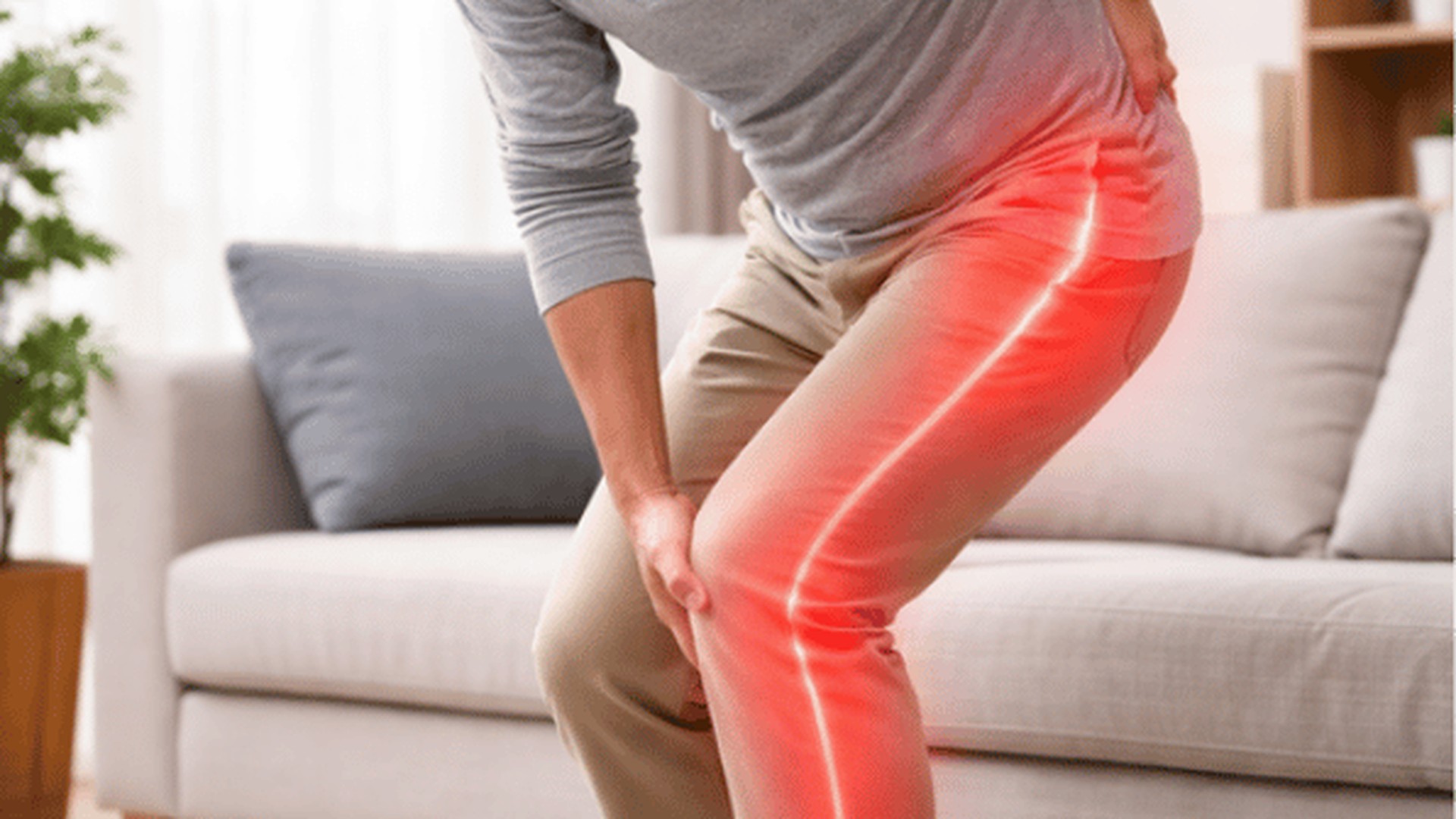
The single most telling feature of sciatica is that the pain follows a specific route. It does not stay in one spot. It travels, typically from the lower back or deep in the buttock, into the back or side of the thigh, continuing down the calf and sometimes reaching the foot or specific toes. This pathway matches the anatomical course of the sciatic nerve, and it is the defining characteristic that separates sciatica from most other causes of leg pain. If your pain starts in the buttock alone, or in the calf alone, without connecting back to the lower spine, sciatica is less likely to be the primary cause.
The second key feature is that it is almost always one-sided. Sciatica caused by a herniated disc or bone spur typically compresses a nerve root on one side of the spine, producing symptoms in one leg only. Bilateral leg pain, affecting both sides simultaneously, can occur but usually points to a different and broader problem such as central spinal stenosis or cauda equina involvement.
The third feature is that certain movements or positions make it predictably worse. Sitting on a hard surface for a sustained period, coughing, sneezing, or bearing down as if straining commonly intensifies sciatica. This happens because these actions increase pressure within the spinal canal, pushing against the already-compressed nerve. If your leg pain has no relationship to posture, movement, or spinal loading, the cause may be vascular or peripheral rather than nerve root compression.
Sciatica vs. Other Common Causes of Leg Pain
Sciatica is frequently confused with a few other conditions, and distinguishing them matters for treatment. Hamstring strain produces pain in the back of the thigh, but it is local, provoked by stretching or contracting the hamstring, and does not travel into the calf or foot. Deep gluteal or hip pain from the sacroiliac joint or hip bursitis can radiate partway down the leg, but rarely past the knee in a clean nerve-pathway pattern. Vascular claudication, where leg pain arises from insufficient blood supply, typically causes cramping that develops during walking and relieves with rest, rather than pain that worsens with sitting.
Peripheral neuropathy, such as diabetic nerve damage, produces burning, tingling, and numbness in both feet and lower legs symmetrically, without a clear connection to spinal movements or loading. If you have been diagnosed with diabetes and have bilateral leg symptoms that feel nerve-like, this distinction is important to raise with a specialist.
The practical self-assessment question to ask is this: does the pain follow a line from your lower back through your buttock and into one leg, is it worse when you sit or strain, and is it accompanied by tingling, numbness, or weakness along that same route? If the answer to all three is yes, the pattern is strongly consistent with sciatica and warrants specialist assessment to identify the underlying cause and determine appropriate treatment.
Symptoms That Accompany Nerve Pain in the Leg
The hallmark of sciatic nerve pain is its radiating, pathway-specific character. Unlike a muscular ache that stays in one location or a joint pain that is provoked only by movement of that joint, sciatica travels along the nerve’s route in a way that patients often describe as an electric shock, a burning current, or a deep aching current running down the leg.
Alongside this radiating pain, patients commonly experience tingling and pins-and-needles sensations in the leg, foot, or toes. Numbness, described as a loss of normal sensation or a deadness in the skin, may develop along the outer leg, sole of the foot, or a specific zone of the calf. Muscle weakness, particularly difficulty lifting the front of the foot (foot drop) or weakness when pushing up onto the toes, indicates that the motor fibres of the nerve are being affected and warrants prompt assessment.
The pain is typically aggravated by sitting for long periods, particularly on hard surfaces, and by actions that increase intra-abdominal pressure such as coughing, sneezing, or straining during a bowel movement. Many patients find some relief from walking slowly or lying in a specific position that reduces pressure on the affected nerve root.
Red Flags: Seek Immediate Medical Attention If You Experience:
– Sudden loss of control over your bladder or bowel function
– Numbness or tingling in the inner thighs, groin, or perianal region (saddle area)
– Rapid worsening of leg weakness, particularly if affecting both legs
– Leg pain following significant trauma such as a fall or road accident
– Sciatica accompanied by fever, unexplained weight loss, or night sweats
How Do You Know If It Is Sciatica? A Practical Guide to Identifying the Signs
This is the question most patients ask themselves before they ever see a doctor, and it is worth answering clearly. Sciatica has a distinctive clinical fingerprint that separates it from other common causes of leg pain such as muscle strain, knee problems, hip arthritis, or peripheral neuropathy from diabetes. Understanding this fingerprint helps you communicate your symptoms accurately to a specialist and gives you a clearer sense of whether your leg pain needs prompt attention.
The pain follows a route, not just a location. The single most identifying feature of sciatica is that the pain travels. It does not sit in one spot like a bruise or a pulled muscle. It moves along a path, typically from the lower back or deep buttock, down the back or outer side of the thigh, and into the calf, shin, foot, or toes. Patients often describe this as the pain “running down” or “shooting through” the leg. If your leg pain stays local to the thigh, knee, or calf without any connection to your lower back or buttock, sciatica is less likely to be the cause.
One side is affected, not both. Sciatica characteristically affects one leg at a time, because the nerve root being compressed is usually on one side of the spine. If both legs hurt simultaneously in a similar radiating pattern, this may suggest a different problem such as central spinal stenosis or, rarely, a more serious spinal condition, and warrants prompt evaluation.
The pain worsens with sitting and pressure. Sciatic nerve pain is notoriously aggravated by sitting, particularly for extended periods on a hard surface. Many patients notice the pain flares after a long car ride, a flight, or a day at their desk. It also intensifies when you cough, sneeze, or bear down, because these actions briefly increase the pressure within the spinal canal and momentarily compress the nerve root further. If your leg pain consistently worsens with exactly these triggers, sciatic nerve involvement is strongly suggested.
There is more than just pain. Pure muscle pain from a strain or a torn ligament typically stays as pain. Sciatic nerve involvement almost always adds other sensations alongside the pain: tingling, pins-and-needles, numbness, or a feeling of electrical current running through the limb. Some patients describe patches of skin on the outer calf or the sole of the foot that feel deadened or hypersensitive. If your leg pain is accompanied by these neurological sensations, this strongly points to nerve rather than muscle or joint as the source.
It is not sciatica if the pain is in the front of the thigh only. Pain confined to the front or inner thigh, with no radiation below the knee and no connection to the lower back or buttock, more commonly reflects femoral nerve involvement, hip joint pathology, or referred pain from the lumbar facet joints. These conditions require different assessment and treatment from sciatica, and are one reason self-diagnosis can lead patients to seek the wrong treatment for months before getting relief.
It may not be sciatica if there is no back component at all. While some patients with sciatica experience predominantly leg symptoms with minimal back pain, a complete absence of any lower back, buttock, or hip involvement alongside isolated calf or foot nerve symptoms should raise the possibility of peripheral nerve pathology rather than spinal nerve root compression. Diabetic peripheral neuropathy, tarsal tunnel syndrome, and peroneal nerve entrapment at the knee can all produce lower leg and foot tingling that patients sometimes misidentify as sciatica.
A useful self-check: if you can draw a line from your lower back through your buttock and down the back or outer side of your leg tracing where your pain lives, and if that pain is accompanied by tingling, numbness, or weakness, and if it reliably flares when you sit or cough, your symptoms are consistent with sciatica. That does not replace clinical assessment, but it gives you a meaningful starting point for the conversation with your specialist.
How Is Sciatica Diagnosed?
An accurate diagnosis of sciatica requires more than identifying that leg pain is present. The clinical priority is to determine where the nerve is being compressed, why, and whether there are any neurological deficits that need urgent attention.
At Singapore Paincare, the assessment process begins with a comprehensive pain history guided by the Painostic® methodology, developed by Dr. Bernard Lee Mun Kam. Rather than treating leg pain as a single-dimensional problem, the Painostic® four-pillar assessment evaluates pain patterns, the underlying pathology, the patient’s pain perception profile, and psychological factors that may be amplifying the experience of pain. This multi-dimensional approach allows the team to identify not only the structural cause of nerve compression but also any sensitisation patterns or emotional contributors that would affect how treatment should be planned.
Physical examination typically includes neurological testing of reflexes, muscle strength, and sensation in the affected leg. The straight leg raise test, in which the examiner lifts the patient’s extended leg while lying flat, reproduces sciatic pain when a lumbar disc herniation is compressing the nerve root and provides a rapid clinical indicator of the likely level of involvement.
Imaging with lumbar spine X-ray and MRI is usually requested to visualise the discs, nerve root exit channels, and spinal canal. In selected cases, diagnostic nerve blocks or electromyography (EMG) may be used to confirm the specific nerve root involved, particularly when imaging findings and clinical symptoms do not clearly align.
Sciatica Treatment in Singapore: What Are Your Options?
Effective sciatica treatment in Singapore begins with an accurate diagnosis. The choice of treatment depends on the underlying cause of nerve compression, the duration and severity of symptoms, and the patient’s functional goals. At Singapore Paincare, the approach is always guided by the Painostic® framework: starting with the least invasive option that matches the identified pathology, escalating only when conservative measures are insufficient.
Activity Modification and Posture Correction
In the early stages of sciatica, modifying the activities and positions that aggravate nerve compression can help reduce irritation and allow the natural healing process to begin. Ergonomic adjustments to workstation height and seating, particularly relevant for desk-bound professionals in Singapore, along with guidance on safe movement and posture, form the foundation of conservative management. Prolonged bed rest is not recommended, as gentle movement helps reduce nerve inflammation.
Physiotherapy and Rehabilitation
Structured physiotherapy targets the muscles and movement patterns that contribute to nerve compression. For disc-related sciatica, specific directional exercises can help centralise pain and reduce disc pressure on the nerve root. Core stabilisation programmes build the muscular support around the lumbar spine, reducing the likelihood of recurrence. Stretching of the piriformis and hip rotators is particularly relevant for patients where piriformis syndrome is contributing to symptoms.
Anti-Inflammatory Medication and Nerve Stabilisers
Non-steroidal anti-inflammatory drugs (NSAIDs) can reduce nerve root inflammation in acute sciatica. Nerve-stabilising medications such as gabapentin or pregabalin may be prescribed for patients with significant neuropathic pain components, particularly burning, tingling, or electric-type sensations. These are supportive tools used alongside physical and interventional treatments rather than as standalone management.
Epidural Analgesia
For patients with significant lumbar nerve root compression causing severe or persistent radiating leg pain, epidural steroid injection delivers anti-inflammatory medication directly to the affected nerve root at the correct spinal level. This targeted approach reduces perineural inflammation and can provide meaningful relief that allows physiotherapy and rehabilitation to proceed more effectively.
Pulsed Radiofrequency (PRF)
Pulsed Radiofrequency uses low-temperature radiofrequency energy to desensitise pain-causing nerve fibres without ablating them, preserving nerve function while reducing the nerve’s capacity to transmit pain signals. PRF is particularly suitable for patients where nerve sensitisation is playing a significant role in perpetuating pain, and has an established role in managing chronic sciatica where conservative treatments have not provided adequate relief.
Nucleoplasty
For patients whose sciatica is directly caused by a herniated disc compressing a nerve root, Nucleoplasty uses controlled plasma ablation to decompress the disc from within. By reducing the volume of the disc’s inner nucleus, pressure on the adjacent nerve root is relieved without open surgery. This minimally invasive procedure is performed under image guidance and is suitable for selected patients with confirmed disc-related sciatica who have not responded to conservative treatment.
Neuroplasty
In cases where scarring or adhesions within the spinal canal are contributing to nerve compression alongside disc or bone changes, Neuroplasty involves placing a small catheter into the affected area to mechanically free trapped nerves and deliver anti-inflammatory medication directly to the site of compression. This procedure is particularly relevant for patients with epidural fibrosis following previous spinal interventions or with complex multi-level nerve involvement.
For more information about minimally invasive procedures for nerve pain, the Singapore Paincare team is available for consultation at both the Paragon and Novena clinic locations.
A Pain Specialist’s Perspective on Sciatica in Singapore
Dr. Bernard Lee Mun Kam, Consultant Pain Specialist and Founder, Singapore Paincare
One pattern I see repeatedly in Singapore patients is what I would call the “delayed sciatica.” A patient has had intermittent lower back discomfort for months, perhaps years, attributing it to the long hours of desk work or the commute. They tolerate it with paracetamol and occasional stretching. Then, one day, the pain changes character: it starts shooting into the leg, and suddenly it is no longer ignorable. By the time they come to see me, the disc herniation causing the problem has often been progressing for some time, and there is already some degree of nerve sensitisation layered on top of the structural compression.
This matters clinically because the treatment for a fresh, acutely compressed nerve root is quite different from treatment for a nerve that has become sensitised over months of ongoing irritation. With acute compression, well-targeted intervention at the source of pressure can produce rapid improvement. With sensitised nerves, we need to address both the structural problem and the central pain processing changes simultaneously. Patients in the second group often tell me they have already had injections elsewhere that “did not work.” In many of these cases, the injections were anatomically appropriate, but the sensitisation component was not addressed alongside the structural one.
The other group I see underdiagnosed in Singapore is the piriformis syndrome patient. Because their MRI often looks relatively unremarkable compared to how much pain they are in, they are sometimes told nothing is wrong. A pain specialist who evaluates the piriformis through physical examination and, where indicated, diagnostic nerve blocks, will find the true source of pain and apply an entirely different and far more targeted treatment.
My strong recommendation is this: do not wait for weakness to develop before seeking assessment. Weakness in the leg means the motor fibres of the nerve are being affected, and the longer motor compression continues, the longer recovery takes. Early specialist assessment, even for what feels like straightforward back and leg pain, gives patients far more treatment options and far better outcomes.
Managing Sciatica Day-to-Day: Evidence-Based Guidance
While awaiting a specialist consultation or undergoing treatment, a number of measures may help reduce the severity of sciatic symptoms in daily life. Heat applied to the lower back and buttock can help relax muscle spasm around the nerve. Cold therapy to the same area in the first 48 to 72 hours of an acute flare can help reduce local inflammation. Gentle walking, particularly at a slow and comfortable pace, is often better tolerated than sitting and helps prevent the nerve from becoming further sensitised by prolonged immobility.
Sitting postures that maintain a slight lumbar curve, using a lumbar support cushion if necessary, tend to reduce disc pressure on the nerve roots compared with slumped or flexed postures. Avoiding prolonged sitting without movement breaks, particularly during long MRT or car journeys, can reduce symptom aggravation. Sleep position matters: lying on the side with a pillow between the knees often reduces pressure on the lumbar nerve roots.
These are supportive measures, not substitutes for a proper diagnosis. They may help manage discomfort day to day, but they will not resolve the underlying source of nerve compression. If sciatic symptoms are persisting beyond two to four weeks, worsening despite self-care, or accompanied by weakness or changes in bladder and bowel function, a specialist consultation is the appropriate next step.
When Should You See a Sciatica Specialist in Singapore?
Most people who develop leg pain hope it will resolve on its own. For mild sciatica caused by a small disc bulge or muscle spasm, this is sometimes the case. However, there are clear situations where waiting is not appropriate and where early specialist assessment leads to significantly better outcomes.
You should consult a sciatica specialist if your leg pain has persisted for more than four weeks without meaningful improvement, if the pain is severe enough to disrupt sleep or prevent you from carrying out daily activities, or if you have noticed any weakness, foot drop, or reduced sensation in the affected leg. Pain that worsens with each flare, rather than settling back to a comfortable baseline, suggests ongoing nerve irritation that is likely to worsen without targeted intervention.
At Singapore Paincare, no referral is needed to book a consultation. Dr. Bernard Lee Mun Kam brings over 20 years of pain management experience, having established the Chronic and Interventional Pain Management Service at Tan Tock Seng Hospital and founded Singapore’s first Women’s Pain Centre at KK Women’s and Children’s Hospital. His clinical focus includes spinal and nerve pain, and he has developed the Painostic® methodology specifically to ensure that patients with conditions like sciatica receive a multi-dimensional diagnosis rather than a one-size treatment approach.
Speak to a sciatica specialist in Singapore today to take the first step toward a clearer diagnosis and a personalised plan for lasting relief. Book a consultation at sgpaincare.com/pain-conditions/sciatica/.
Frequently Asked Questions
What is the difference between nerve pain in the leg and sciatica?
Nerve pain in the leg is a broad category that includes any pain arising from nerve irritation, compression, or damage along the leg’s neural pathways. Sciatica is a specific form of nerve pain caused by irritation or compression of the sciatic nerve, the body’s largest nerve, which runs from the lower lumbar spine through the buttock and down the back of the leg. The distinguishing feature of sciatica is its characteristic pathway: pain that radiates from the lower back or buttock into the thigh and calf, often accompanied by numbness, tingling, or weakness along the same route. Not all leg pain that feels like nerve pain is sciatica. A pain specialist can determine whether the symptoms originate from the sciatic nerve, another lumbar nerve root, or a different structure entirely.
Can sciatica go away on its own without treatment?
Mild to moderate sciatica caused by a small disc bulge or acute muscle spasm may improve over several weeks with rest, gentle movement, and anti-inflammatory medication. However, sciatica that persists beyond six weeks, worsens progressively, or is associated with neurological symptoms such as weakness or loss of sensation is unlikely to resolve without targeted treatment. Waiting too long when nerve compression is significant can lead to persistent nerve sensitisation and, in severe cases, lasting neurological deficit. If you are uncertain whether your symptoms are improving appropriately, a specialist assessment provides clarity on whether further intervention is needed.
What are the red flags for sciatica that require urgent medical attention?
Certain symptoms alongside sciatica require immediate medical attention. Loss of bladder or bowel control, numbness in the inner thighs or groin area, rapidly progressing weakness in one or both legs, and sciatica that follows significant trauma such as a fall or road accident all indicate potentially serious nerve compromise that should not wait for a routine appointment. These symptoms may suggest cauda equina syndrome, a condition in which multiple nerve roots in the lower spinal canal are being compressed simultaneously, which is a medical emergency requiring urgent evaluation and treatment.
What sciatica treatments are available in Singapore without surgery?
There is a wide range of non-surgical options for sciatica treatment in Singapore, from conservative physiotherapy and anti-inflammatory medication to minimally invasive interventional procedures. For patients where conservative measures are insufficient, options include epidural analgesia to deliver anti-inflammatory medication directly to the compressed nerve root, Pulsed Radiofrequency (PRF) to desensitise the affected nerve, Nucleoplasty for disc-related compression, and Neuroplasty for complex cases involving adhesions or scarring. Surgery is considered only when non-surgical treatment has failed or when there is severe, progressive neurological deficit. Singapore Paincare’s approach prioritises the least invasive effective treatment at each stage.
How is sciatica diagnosed at Singapore Paincare?
Sciatica assessment at Singapore Paincare begins with a comprehensive consultation guided by the Painostic® methodology developed by Dr. Bernard Lee Mun Kam. This four-pillar framework evaluates pain patterns, the structural pathology, the patient’s pain perception profile, and any psychological factors contributing to pain amplification. Physical examination, including neurological assessment of reflexes, strength, and sensation, is followed by imaging such as lumbar MRI to visualise the discs and nerve root exit channels. In selected cases, diagnostic nerve blocks are used to precisely identify the source of compression. This multi-dimensional assessment allows for a personalised treatment plan that addresses both the structural cause of sciatica and any sensitisation patterns that may otherwise limit recovery.
About Singapore Paincare
Singapore Paincare Medical Group is a SGX-listed pain management group with specialist clinics at Paragon and Novena. Led by Consultant Pain Specialist Dr. Bernard Lee Mun Kam, the group has over a decade of experience in minimally invasive pain procedures. No referral is needed. Book a consultation at sgpaincare.com.
Medical Disclaimer
This article is intended for general informational purposes only and does not constitute medical advice. Please consult a qualified healthcare professional for diagnosis and treatment tailored to your individual condition.