
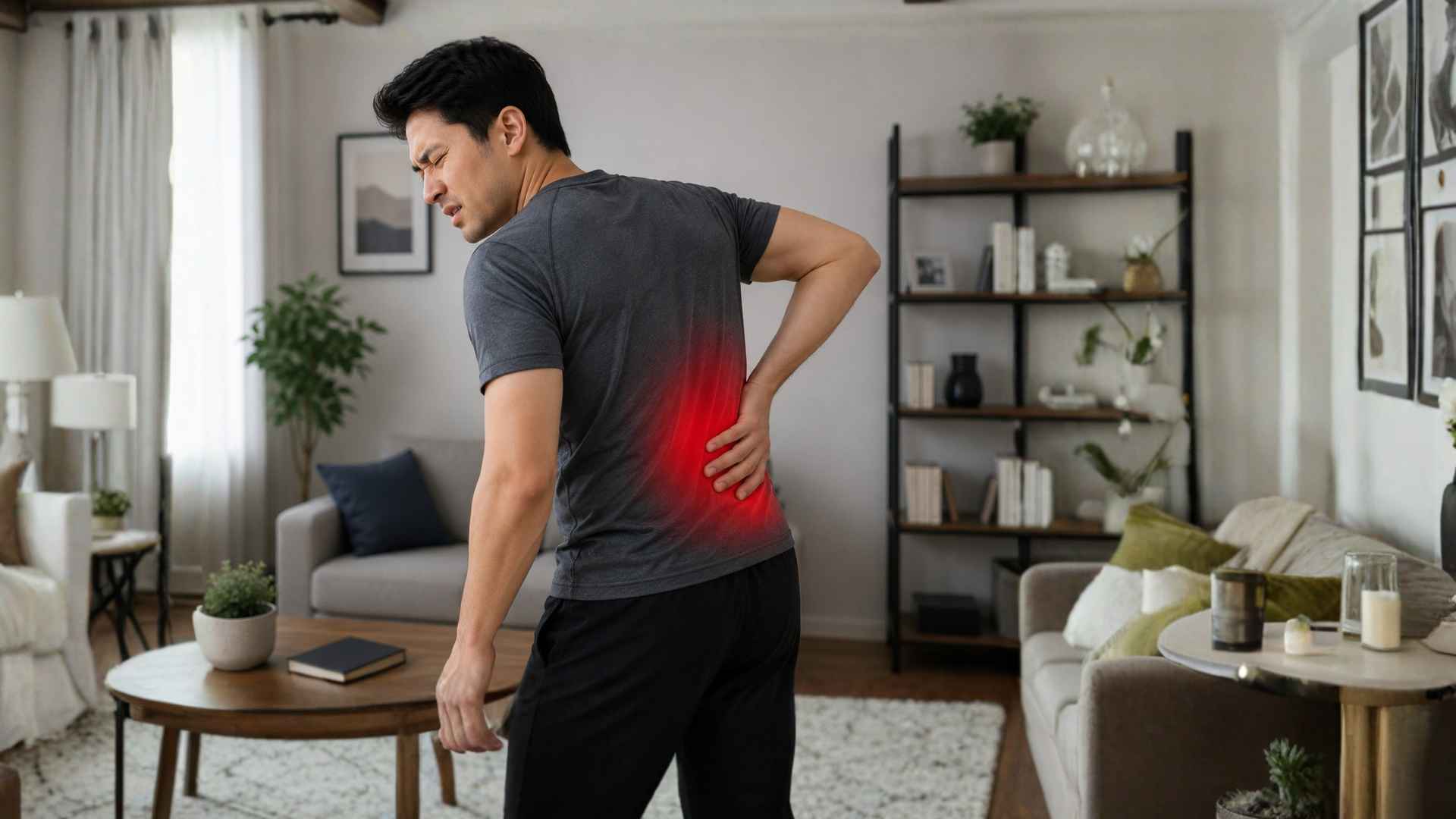
Slipped Disc or Pulled Muscle? How to Tell the Difference
July 15, 2026
CONTENTS
Quick Answer:
A pulled back muscle usually causes a dull, localised ache that eases within one to two weeks with rest. A slipped disc is more likely if the pain feels sharp or burning, spreads into the buttock or leg, or comes with numbness, tingling, or weakness. Because a slipped disc or pulled muscle can feel almost identical in the first day or two, a pain specialist can confirm which one you have through a physical examination and, if needed, an MRI scan.
You bend down to pick up your bag, or twist suddenly while carrying groceries up the stairs to your HDB flat. A sharp pain grips your lower back. The question that follows is almost always the same: is this a slipped disc or pulled muscle? In the first day or two, both conditions can feel surprisingly similar. This is why so many people in Singapore simply rest and hope the pain passes on its own.
Up to 80% of Singaporeans experience low back pain at some point in their lives, according to HealthHub. Most cases are not serious or life-threatening. However, telling a pulled muscle apart from a slipped disc still matters.
A muscle strain generally heals on its own within a few weeks. A slipped disc that presses on a nerve may need targeted treatment to stop the pain from spreading or getting worse. This article explains how each condition feels, what causes it, and when to see a pain specialist in Singapore for a clear diagnosis.
Slipped Disc or Pulled Muscle? Understanding Your Spine and Back Muscles
Your lower back is supported by two very different structures. This is exactly why a slipped disc or pulled muscle can produce such different kinds of pain.
The muscles and ligaments along your spine work constantly to keep you upright. This is true whether you’re standing at a hawker centre stall or sitting through a long meeting. One key group, called the erector spinae, does much of this work. These muscles can tire, overstretch, or tear when asked to do too much too quickly.
Between each pair of spinal bones, called vertebrae, sits a disc that acts as a shock absorber. Each disc has a tough outer ring, known as the annulus fibrosus, and a soft, gel-like centre. When the outer ring weakens from age, injury, or years of cumulative strain, the inner material can bulge or push through. Patients often describe this simply as a “slipped disc.” If that bulge presses on a nearby nerve, the pain travels well beyond the back itself.
This structural difference, muscle versus disc, is the reason the two conditions need different care. A strained muscle is a soft tissue problem. A slipped disc is a mechanical one that also involves the nervous system.
What Causes a Slipped Disc or Pulled Muscle?
Common Causes of a Pulled Back Muscle
A pulled back muscle is usually the result of asking soft tissue to do more than it’s prepared for. Sudden, forceful movements, such as twisting to catch a falling object or lifting a heavy suitcase into an overhead compartment, are common triggers.
Repetitive strain plays a role too. Office workers who spend long hours hunched over a laptop can gradually fatigue the same muscle groups. So can delivery riders who lift and carry throughout the day. Eventually, even a minor movement is enough to cause a strain.
Poor conditioning is another frequent factor. Weak core and back muscles from prolonged sitting leave you unprepared for sudden activity. A weekend gym session or a hike up Bukit Timah can then easily overstretch unprepared muscle fibres. Poor posture also plays a role, whether from slouching at a desk or carrying a heavy bag on one shoulder on the MRT. Over time, this places uneven load on the back and increases strain risk.
Common Causes of a Slipped Disc
A slipped disc develops differently. Age-related degeneration is the single biggest contributor. Over time, discs naturally lose water content and elasticity, making the outer ring stiffer and more prone to tearing. This is one reason slipped discs are most common in adults between 30 and 50 years old, and roughly twice as common in men.
Mechanical stress accelerates this process. Improper lifting technique, especially bending and twisting from the waist at the same time, transfers force onto the disc instead of the stronger leg muscles. Long hours of sitting, common in Singapore’s desk-heavy work culture, increases pressure on the lumbar discs throughout the day.
Excess body weight adds further compressive load, while smoking reduces nutrient delivery to disc tissue and speeds up degeneration. Occasionally, back pain that seems disc-related is actually referred pain from the hip or sacroiliac joint. This is one more reason a proper clinical assessment matters before starting treatment.
Where Does It Hurt? Interpreting Your Symptoms by Location
The location and behaviour of your pain often provides useful clues, though this should never replace a proper clinical assessment. Pain that stays confined to one side of the lower back often points to a muscle strain. It typically feels like a deep ache or tight band, and it worsens when you press directly on the area. It typically eases when you lie down and rest.
Pain that starts in the lower back but travels into the buttock, thigh, calf, or foot suggests nerve involvement from a slipped disc. This pattern is commonly known as sciatica. If the affected disc is in your neck, the pain may instead radiate into the shoulder, arm, or fingers. Pain that worsens when you cough, sneeze, or sit for long periods is another clue. If it also comes with numbness or tingling in the limb, it’s more consistent with a slipped disc than a simple muscular strain.
If you’re unsure which pattern matches your symptoms, a pain specialist can pinpoint the source through examination rather than guesswork.
Symptoms That Accompany a Slipped Disc or Pulled Muscle
Beyond pain location, a few accompanying symptoms help distinguish the two conditions. Muscle strains often come with visible muscle spasm, tenderness to touch, and stiffness that limits how far you can bend or twist. They rarely cause any nerve-related symptoms. A slipped disc, on the other hand, can trigger numbness, tingling, or measurable muscle weakness, such as difficulty lifting your foot or gripping firmly. This happens because the compressed nerve affects more than just the local area.
Most cases of either condition are not medical emergencies. However, a small number of slipped disc cases involve significant nerve compression that needs urgent attention. Seek immediate medical care if you experience any of the following:
Seek Immediate Medical Care If You Experience:
- Loss of bladder or bowel control
- Numbness in the groin or inner thighs (saddle numbness)
- Sudden weakness or difficulty walking
- Severe back pain together with fever
These symptoms may indicate a rare but serious condition called cauda equina syndrome, which requires prompt treatment to prevent lasting nerve damage.
How Is a Slipped Disc Diagnosed in Singapore?
Diagnosing a slipped disc, or confirming that your pain is in fact a pulled muscle, begins with a detailed conversation about your symptoms. Your specialist will ask how the pain started, how it behaves, and what makes it better or worse. Your pain specialist will then carry out a physical examination. This checks your posture, range of motion, reflexes, and muscle strength to identify whether a specific nerve level is affected.
At Singapore Paincare, this process is guided by the Painostic® method, a diagnostic framework developed by Dr Bernard Lee Mun Kam. It looks at four dimensions of your pain. These are the pattern it follows, the underlying pathology, how your nervous system perceives the signal, and any psychological factors that may be amplifying it. This multi-dimensional approach goes beyond a scan alone.
Imaging is used selectively rather than automatically. An MRI scan remains the most reliable way to visualise a disc herniation and confirm nerve compression. However, findings on a scan don’t always match the severity of symptoms. Diagnostic nerve blocks may also be used to confirm exactly which structure is generating your pain before a treatment plan is finalised.
Slipped Disc Treatment in Singapore: What Are Your Options?
Getting the diagnosis right is the first step to effective care. This holds whether you’re dealing with a straightforward muscle strain or need more comprehensive slipped disc treatment in Singapore. Once your specialist has confirmed the source of your pain, treatment generally follows a step-up approach. It starts with the least invasive options and progresses only if needed, guided by the Painostic® roadmap.
For most muscle strains and many mild slipped discs, conservative care is enough. Persistent or more severe nerve-related pain from a slipped disc may call for a targeted, minimally invasive procedure to relieve pressure on the affected nerve.
Activity Modification and Rest
Pacing your activity during a flare-up, avoiding prolonged sitting, and using proper lifting mechanics reduces stress on the affected muscle or disc. Complete bed rest is generally discouraged, as gentle movement supports healing better than prolonged inactivity.
Physiotherapy and Core Strengthening
Targeted stretching, core strengthening, and low-impact aerobic exercise such as swimming or brisk walking help both a strained muscle and a mild slipped disc recover. Physiotherapy also lowers the likelihood of the same injury recurring.
Pharmacotherapy (Pain Medication)
NSAIDs, muscle relaxants, or nerve pain medication may help reduce inflammation and interrupt the pain cycle in the short term. Short courses of stronger medication are occasionally used under close supervision, though medication alone does not address the underlying cause.
Epidural Analgesia
For slipped disc pain that involves nerve root irritation, an epidural steroid and local anaesthetic can be delivered to the affected spinal level. This helps reduce inflammation around the compressed nerve. This may suit patients who have not fully responded to medication and physiotherapy alone.
Peripheral Nerve Block
A peripheral nerve block delivers local anaesthetic and anti-inflammatory medication around a specific nerve to interrupt pain signals before they reach the brain. It’s used both to help confirm the diagnosis and, in some cases, to provide therapeutic relief.
Neuroplasty
When scar tissue or adhesions are trapping a nerve around a slipped disc, Neuroplasty can help. A specialised catheter is guided into the epidural space to free the nerve and deliver anti-inflammatory medication directly to the area. This procedure suits patients with persistent, well-localised nerve compression.
Nucleoplasty
Nucleoplasty uses a fine needle and radiofrequency energy to remove a small volume of disc material. This reduces internal disc pressure and allows the herniation to retract away from the nerve. It’s performed as an outpatient procedure and may suit patients whose slipped disc hasn’t responded to conservative care but who wish to avoid open surgery.
In more complex or long-standing cases, symptoms can overlap with nerve-related leg pain. Further assessment for sciatica may then be recommended, since the two conditions are closely linked.
A Pain Specialist’s Perspective on Slipped Disc and Pulled Muscle
Our specialists often see a familiar pattern in Singapore. A patient assumes a new episode of back pain is “just my old muscle strain acting up again.” This assumption is understandable, especially for office workers or delivery workers who have had recurrent muscular back pain before.
However, that familiar ache can be joined by something new, such as pain travelling down one leg past the knee, or numbness in the foot. When this happens, the underlying problem is often no longer muscular. It has shifted to nerve compression from a slipped disc.
The distinction that matters clinically is between mechanical pain and nerve-related pain. Mechanical pain, whether from a strained muscle or an irritated joint, tends to stay localised and responds predictably to rest and movement. Nerve-related pain from a slipped disc behaves differently. It can worsen with coughing or prolonged sitting, disturb sleep, and fail to settle with the same home measures that worked for previous muscle strains.
The risk of waiting is usually not about missing an emergency, since most slipped discs are not dangerous. The real risk is that a nerve left irritated for months can take longer to recover, even after appropriate treatment begins. This is why we encourage an early assessment whenever back pain behaves differently from before, rather than assuming it’s the same old strain.
Managing Back Pain Day-to-Day: Practical Tips
While you’re recovering or waiting for your appointment, a few supportive habits can help. Applying a cold pack in the first 48 hours after a suspected muscle strain can ease inflammation. Gentle heat, on the other hand, may help relax the muscle guarding that often accompanies a slipped disc. Gentle movement, such as short walks, is generally more helpful than prolonged bed rest for either condition, provided the movement doesn’t sharply worsen your symptoms.
At night, try side-sleeping with a pillow between your knees, or lying on your back with a pillow under your knees. Both positions reduce pressure on the lower spine. During the day, take regular breaks from sitting; even standing for a minute or two every 30 to 45 minutes helps offload the lumbar discs. If your work involves lifting, bend at the knees and keep the load close to your body rather than bending from the waist.
These are supportive measures, not substitutes for a proper diagnosis.
When Should You See a Slipped Disc Specialist in Singapore?
Most muscle strains improve within one to two weeks with rest and simple care, so a brief period of self-management is reasonable. However, it’s worth arranging an assessment if your pain hasn’t improved after two to three weeks, or if it radiates down an arm or leg. It’s also worth checking if you notice numbness, tingling, or weakness that wasn’t there before.
You don’t need a referral to consult a slipped disc specialist in Singapore directly, which means you can seek a clear diagnosis without delay. This is especially important if your pain is disrupting sleep or daily function. It also matters if the pain keeps recurring despite previous treatment for what you assumed was a simple strain.
Not sure whether your pain is a slipped disc or pulled muscle? Speak to a pain specialist to find out, and take the first step toward a clearer diagnosis.
Conclusion
Back pain that appears suddenly can be unsettling, especially when you’re not sure whether you’re dealing with a slipped disc or pulled muscle. The good news is that both conditions are common, well understood, and manageable once properly diagnosed. A pulled muscle usually settles with rest and simple care within a couple of weeks. A slipped disc may need a more targeted approach, but the majority of cases in Singapore are treated successfully without surgery.
The most useful step you can take is not to guess, but to get a clear answer. Book a consultation with our pain management team to identify the true source of your back pain and start on the right treatment path.
Frequently Asked Questions
What does it usually mean if my back pain radiates down my leg?
Pain that travels from your lower back into your buttock, thigh, calf, or foot usually means a nerve is being irritated or compressed, most often by a slipped disc pressing against a nearby nerve root. This pattern, commonly called sciatica, differs from a muscle strain, which typically stays localised to the back itself. If you notice radiating pain along with numbness or tingling, it’s worth having a pain specialist assess the affected nerve level rather than waiting for it to resolve on its own.
Can a slipped disc go away on its own?
Some slipped discs do improve without surgery, particularly milder disc bulges managed with rest, physiotherapy, and medication. The body can gradually reabsorb some of the herniated disc material over weeks to months. However, symptoms that are severe, worsening, or accompanied by numbness or weakness are less likely to resolve without proper treatment. A pain specialist can advise whether your specific case is likely to settle with conservative care or needs further intervention.
What are the red flag symptoms I should never ignore?
Seek immediate medical attention if you experience loss of bladder or bowel control, numbness in the groin or inner thighs, sudden weakness or difficulty walking, or severe back pain together with fever. These symptoms may point to cauda equina syndrome, a rare but serious complication of a severely slipped disc that requires urgent treatment to prevent lasting nerve damage. These red flags are uncommon, but they should never be managed with rest alone.
What treatments are available for a slipped disc without surgery?
Most slipped discs in Singapore are managed without surgery. Options include activity modification, physiotherapy, and medication for milder cases, progressing to minimally invasive procedures such as epidural analgesia, peripheral nerve block, Neuroplasty, or Nucleoplasty for more persistent nerve-related pain. These procedures target the source of nerve irritation directly and are typically performed as outpatient procedures. Surgery is generally reserved for cases with significant nerve damage or when other treatments haven’t provided sufficient relief.
How is a slipped disc diagnosed at Singapore Paincare?
Diagnosis begins with a detailed history and physical examination, including tests of reflexes, strength, and range of motion to identify the affected nerve level. Singapore Paincare’s specialists use the Painostic® method, which assesses pain patterns, underlying pathology, nerve sensitisation, and psychological factors together, rather than relying on imaging alone. An MRI scan may be used to confirm disc herniation and nerve compression when clinically indicated, guided by your specialist’s assessment.
About Singapore Paincare
Singapore Paincare Medical Group is a Singapore-listed pain management group with pain specialists across multiple locations island-wide, including Paragon and Novena. The group’s Painostic® methodology guides multi-dimensional diagnosis and treatment planning, with a focus on minimally invasive procedures for conditions including slipped disc and related spinal pain.
Medical Disclaimer
This article is intended for general informational purposes only and does not constitute medical advice. Please consult a qualified healthcare