
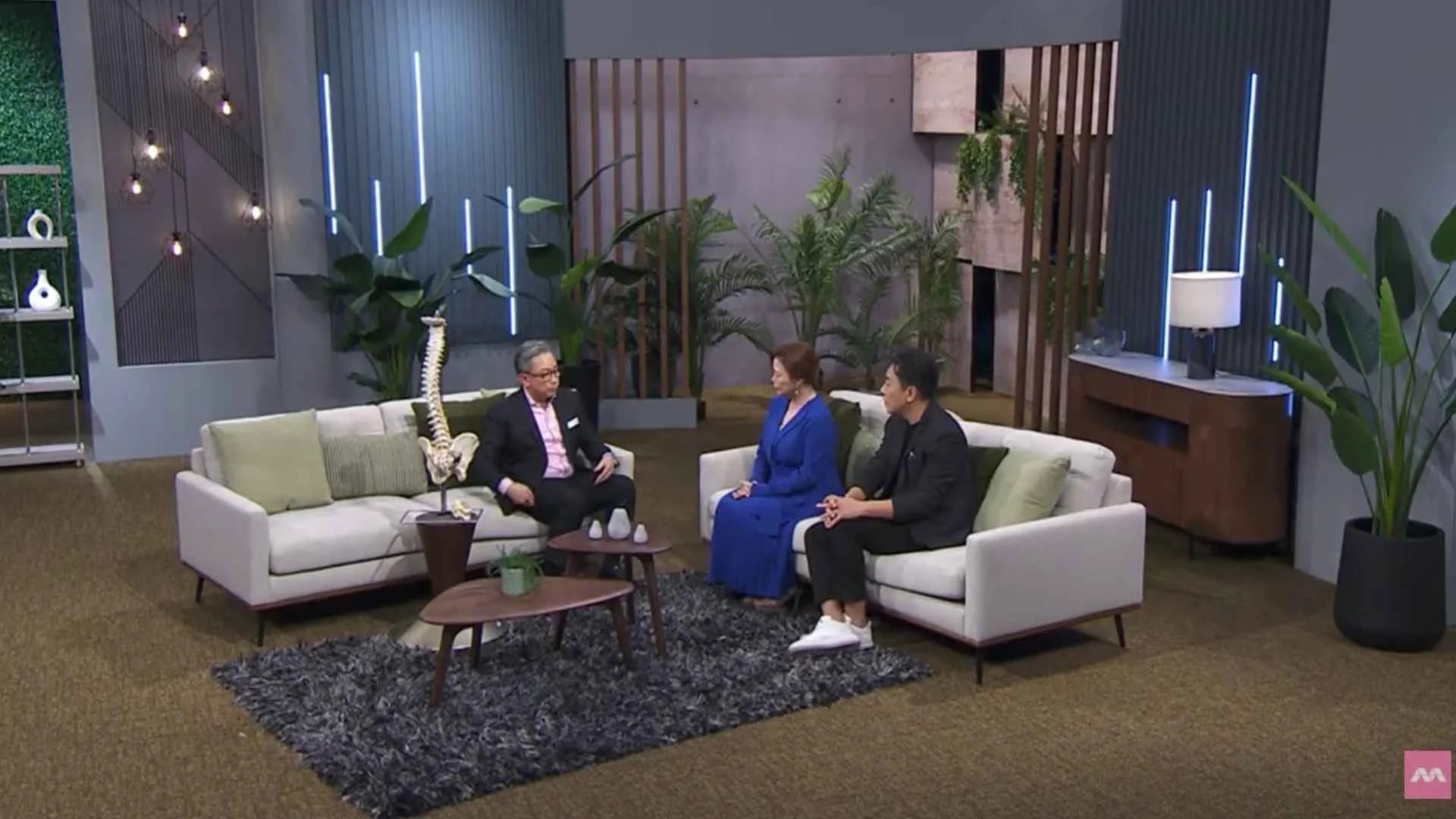
Dr Bernard Lee on Sciatica: Featured on Mediacorp’s Silver Carnival 2024
September 1, 2026
CONTENTS
Pain that starts in the lower back or buttock and travels down the leg can be difficult to make sense of. Is it a slipped disc? A muscle problem? A hip issue? Or is it sciatica?
That uncertainty matters because several conditions can produce similar symptoms. Treating the pain without identifying where it comes from may not address the underlying problem.
This was the focus of a 2024 Mediacorp television segment in which Consultant Pain Specialist Dr Bernard Lee Mun Kam (李文鉴医生) explained what sciatica is, why pain can travel down the leg, what can mimic it, and when nerve compression may require closer medical attention.
Dr Bernard Lee Discusses Sciatica on Silver Carnival 2024
Dr Bernard Lee appeared in Mediacorp’s Silver Carnival 2024 银色嘉年华 2024, Episode 7, published by Entertainment – Mediacorp on 27 May 2024. The episode introduced Dr Lee as a Consultant Pain Specialist and invited him to explain sciatica for a general audience.
The discussion covered several practical questions patients often have: where sciatic pain comes from, how a slipped disc or narrowing around the spinal nerves can contribute, why some buttock and leg pain may have another cause, how doctors assess the problem, and how activity and core strength fit into long-term back health.
The original episode can be viewed here:
What Is Sciatica?
Sciatica describes pain caused by irritation or compression of nerve roots in the lower back that contribute to the sciatic nerve. The pain often travels from the lower back or buttock into the thigh, calf, foot or toes.
Some people mainly feel pain. Others may also notice tingling, numbness or weakness in the affected leg.
During the Silver Carnival interview, Dr Bernard Lee used a spine model to show how a problem in the lower back can create symptoms much farther down the leg. This is an important point for patients. The place where you feel pain is not always the place where the problem begins.
Can a Slipped Disc Cause Sciatica?
Yes. A herniated or “slipped” disc is one of the common causes of sciatica.
The discs between the spinal bones act as cushions. If part of a disc bulges or herniates near a nerve root, it can irritate or compress that nerve. Pain may then travel from the back or buttock down the leg.
The 2024 programme also discussed age-related narrowing around the spinal nerves. Today, this is commonly described as spinal stenosis. Bone and joint changes can reduce the space available for nerves and may produce leg pain, tingling, numbness or weakness.
A scan finding alone, however, does not automatically explain a person’s symptoms. The location of the pain, physical examination, neurological findings and imaging need to make sense together.
Is Every Pain From the Buttock Down the Leg Sciatica?
No. This was one of the most useful points raised in the Mediacorp discussion.
Dr Bernard Lee explained that pain beginning around the buttock and travelling into the leg can sometimes come from structures outside the spine. He discussed piriformis-related pain as one possible lookalike. The piriformis is a deep buttock muscle that lies close to the sciatic nerve. When it becomes irritated or tight, symptoms can resemble sciatica.
The programme also discussed hip joint problems that may cause pain around the buttock, hip or thigh.
For patients, the practical lesson is simple: similar pain patterns can have different causes. A person with spinal nerve irritation may need a different treatment plan from someone whose pain comes mainly from a muscle or joint.
Do You Need an X-Ray, CT Scan or MRI for Sciatica?
The 2024 Silver Carnival segment discussed X-rays and CT scans as ways doctors may investigate spinal problems. Imaging practices depend on the clinical situation, and not every patient with sciatica needs a scan immediately.
Current clinical guidance recommends that imaging should not be routine for every episode of low back pain or sciatica. In a specialist setting, imaging may be considered when the result is likely to change treatment, when symptoms are persistent or severe, or when a more serious cause is suspected.
This is also why a clinical assessment remains important. A scan may show disc or joint changes that are not actually responsible for the pain. The findings need to be matched with the patient’s symptoms and examination.
When Can Sciatica Become Serious?
Most cases of sciatica are not medical emergencies. Some symptoms, however, need urgent assessment because they can indicate significant nerve compression.
Seek urgent medical attention if back or leg pain is accompanied by new difficulty controlling the bladder or bowel, numbness around the groin or saddle area, severe or rapidly worsening weakness, or major symptoms affecting both legs.
These warning signs are uncommon, but they should not be ignored.
In the Mediacorp interview, Dr Bernard Lee also highlighted the importance of recognising neurological changes rather than treating every episode as ordinary muscle pain.
Does Sciatica Always Need a Procedure or Surgery?
No. Many people with sciatica improve with time and appropriate non-surgical care.
Depending on the cause and severity, management may include staying active within comfortable limits, physiotherapy, an exercise programme and medication where clinically appropriate. For some people with severe or persistent nerve pain, a specialist may consider targeted injections or other procedures. Surgery is generally reserved for selected cases, such as significant neurological problems or symptoms that do not improve with appropriate non-surgical care and match the imaging findings.
During the 2024 television segment, Dr Bernard Lee discussed both conservative care and minimally invasive needle-based procedures as part of the treatment spectrum available at that time.
The specific procedures described in the 2024 programme should be understood in their historical context and should not be taken as a current treatment recommendation for an individual patient. Treatment should be selected only after a current clinical assessment.
Can Exercise Help With Sciatica and Back Health?
The Silver Carnival discussion also moved beyond treatment and looked at prevention and physical conditioning.
Dr Bernard Lee spoke about staying active, walking, swimming or water-based exercise, and strengthening the muscles that support the trunk. He also discussed posture and how prolonged sitting can place additional strain on the lower back and surrounding muscles.
Current guidance similarly encourages people with low back pain or sciatica to remain active where possible rather than relying on prolonged bed rest.
The right exercise depends on the person’s symptoms, fitness level and underlying condition. Someone with increasing leg weakness or severe nerve symptoms should be medically assessed before pushing through an exercise programme.
Why Finding the Source of the Pain Matters
A recurring theme in Dr Bernard Lee’s Mediacorp interview was the need to identify where the pain actually comes from.
Sciatica may be related to a herniated disc, narrowing around a spinal nerve or another source of nerve irritation. Sciatica-like pain may also come from the piriformis muscle or a nearby joint. These conditions can overlap in how they feel, especially when pain spreads from the buttock into the leg.
Dr Bernard Lee currently practises as a Consultant Pain Specialist at Singapore Paincare Center and has more than 20 years of clinical experience in pain medicine. He holds a Master of Medicine in Anaesthesiology and is a Fellow of the Faculty of Pain Medicine, Australian and New Zealand College of Anaesthetists. His earlier hospital work included establishing the Chronic and Interventional Pain Management Service at Tan Tock Seng Hospital and helping establish the Women’s Pain Centre at KK Women’s and Children’s Hospital.
He also developed Singapore Paincare’s Painostic® assessment approach, which combines clinical history, pain patterns, physical assessment and relevant investigations to help identify the source of pain before treatment is considered.
Singapore Paincare Holdings Limited, where Dr Lee serves as Chief Executive Officer, has been listed on the Catalist Board of the Singapore Exchange since 30 July 2020.
Frequently Asked Questions About Sciatica
What does sciatica pain feel like?
Sciatica commonly causes pain that starts in the lower back or buttock and travels into the thigh, calf, foot or toes. It may feel sharp, burning, electric or aching. Some people also develop tingling, numbness or weakness. The exact pattern depends on which nerve root is irritated or compressed.
Can you have sciatica without lower back pain?
Yes. Some people feel most of their symptoms in the buttock or leg and have little obvious back pain. Because sciatic symptoms follow a nerve pathway, the pain can be felt some distance from the lower spine. A clinical assessment helps determine whether the source is spinal or another condition that mimics sciatica.
How can I tell sciatica from piriformis syndrome?
Both can cause buttock pain that travels down the leg, so symptoms alone may overlap. Sciatica often begins with irritation of a nerve root in the lower spine, while piriformis syndrome involves irritation around a deep buttock muscle close to the sciatic nerve. Examination and, when appropriate, imaging help distinguish them.
Do I need an MRI if I have sciatica?
Not everyone with sciatica needs an MRI. Current guidelines advise against routine imaging for uncomplicated low back pain or sciatica. A specialist may recommend imaging when symptoms are severe or persistent, when neurological changes are present, when a serious cause is suspected, or when the result would affect the treatment plan.
When should I seek urgent medical help for sciatica?
Seek urgent medical attention if sciatica occurs with new bladder or bowel control problems, numbness around the groin or saddle area, severe or rapidly worsening leg weakness, or significant symptoms in both legs. These can indicate serious nerve compression and require prompt assessment rather than routine self-management.
About Dr Bernard Lee Mun Kam
Dr Bernard Lee Mun Kam (李文鉴医生) is the Founder and Consultant Pain Specialist at Singapore Paincare Center and Chief Executive Officer of Singapore Paincare Holdings Limited. He has more than 20 years of experience in pain medicine and has held pain management leadership roles at Tan Tock Seng Hospital and KK Women’s and Children’s Hospital.
His current clinical work includes the assessment and management of persistent back pain, nerve-related pain and musculoskeletal pain, including sciatica and disc-related conditions.
Medical Disclaimer: This article is intended for general informational purposes only and does not constitute medical advice. Please consult a qualified healthcare professional for diagnosis and treatment tailored to your individual condition.