
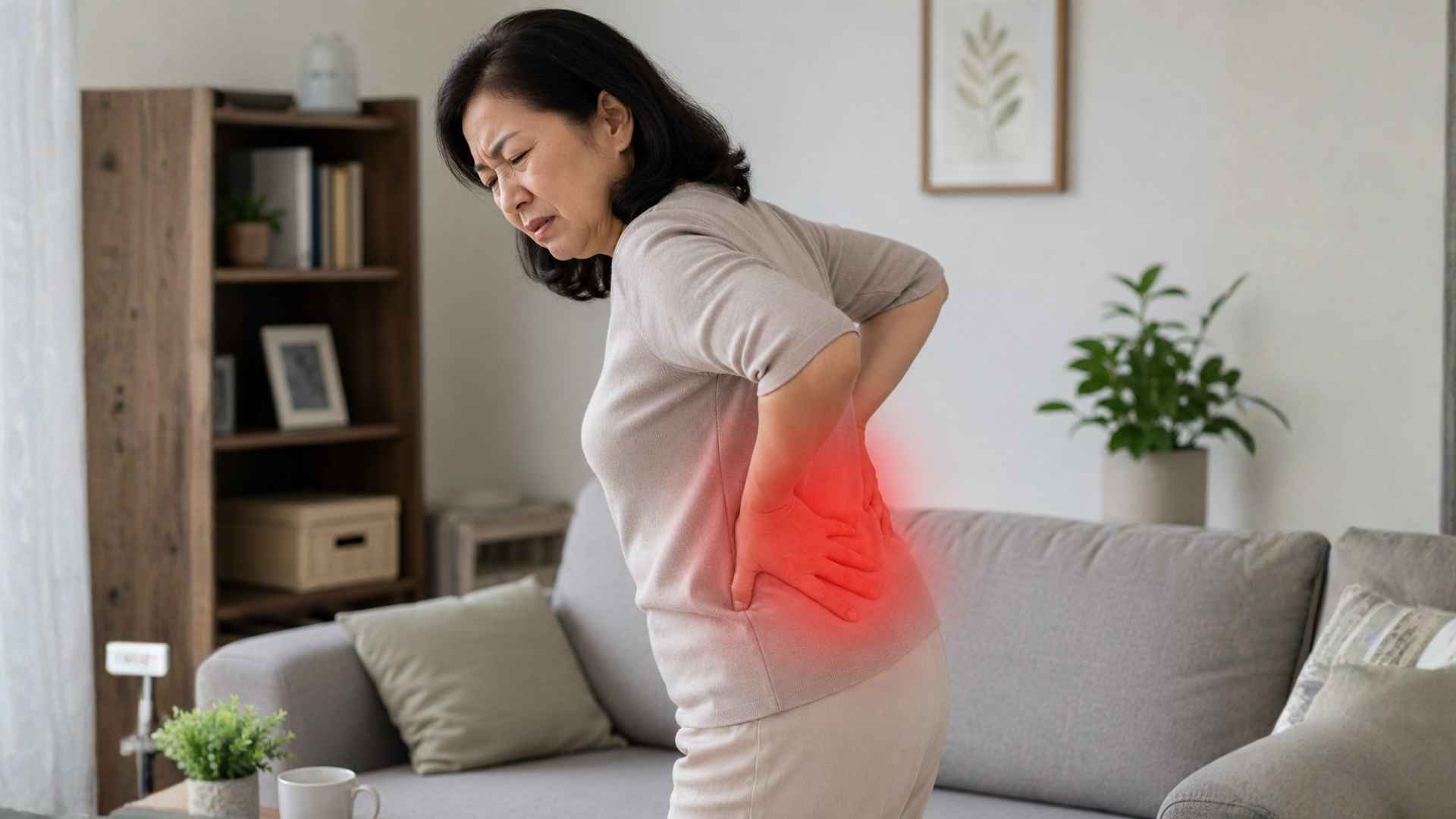
How Do I Know If I Have a Slipped Disc?
August 12, 2026
CONTENTS
Quick Answer:
You may have a slipped disc if you feel sharp or burning pain that starts in your back or neck and radiates down an arm or leg, along with numbness, tingling, or muscle weakness. Pain that worsens with sitting, bending, or coughing is another common sign. A pain specialist can confirm the diagnosis with a physical examination and, if needed, imaging.
If you’ve been feeling a nagging ache in your lower back that suddenly starts shooting down your leg, or a stiff neck that now sends tingling into your fingers, it’s natural to wonder whether you’ve slipped a disc. This article walks you through the specific signs that point to a slipped disc, how it differs from sciatica and other look-alike conditions, and when it’s time to get properly assessed. Understanding what’s actually happening in your spine — rather than guessing — is the first step toward the right treatment and lasting relief.
What Is a Slipped Disc?
A slipped disc, medically known as a herniated or prolapsed disc, occurs when the soft, gel-like centre (nucleus pulposus) of a spinal disc pushes through a tear in its tougher outer layer (annulus fibrosus). This bulging or leaking material can press on nearby spinal nerves, causing the pain, numbness, or weakness that many patients first notice in a limb rather than the back itself.
Slipped discs are generally grouped by where they occur along the spine:
Lumbar disc herniation — the most common type, affecting the lower back (L4–L5 and L5–S1 levels in particular). It typically causes pain that radiates into the buttock, thigh, calf, or foot.
Cervical disc herniation — occurs in the neck and can send pain, numbness, or weakness down the shoulder, arm, and into the hand or fingers.
Thoracic disc herniation — the least common type, affecting the mid-back; symptoms can wrap around the chest or abdomen and are sometimes mistaken for other conditions.
Back pain is extremely common locally: up to 80% of Singaporeans experience low back pain at some point in their lives, and most episodes resolve within about six weeks with self-management (HealthHub, Ministry of Health-affiliated health portal) [1]. Separately, work-related musculoskeletal disorders — of which back injuries are the most prevalent type — accounted for 60% of all confirmed occupational disease cases reported in Singapore between 2019 and 2021, with construction, transport and storage, and food services among the worst-affected sectors (Ministry of Manpower, Singapore) [2]. Not every backache is a slipped disc, but these figures show how common spinal strain is among the local working population — and why persistent or radiating pain deserves a proper look.
How Do I Know If I Have a Slipped Disc?
Because a slipped disc can feel different depending on where it occurs and which nerve is affected, doctors look for a cluster of signs rather than a single symptom. Here are the main ways a slipped disc typically shows itself.
Pain That Radiates Down an Arm or Leg
The hallmark sign of a slipped disc is pain that doesn’t stay in one place. When the herniated disc material presses on a spinal nerve root, pain travels along the path of that nerve — down the buttock and leg for a lumbar disc, or down the shoulder and arm for a cervical disc. This is known as radicular pain, and it’s often what actually drives people to seek help, more than the back or neck pain itself.
Numbness or Tingling in a Specific Pattern
A compressed nerve doesn’t just transmit pain signals — it can also disrupt normal sensation. Many patients describe a “pins and needles” feeling or patches of numbness in the foot, calf, hand, or fingers. Because each spinal nerve supplies a specific area of skin, the location of the numbness can help a specialist work out which disc level is affected.
Muscle Weakness or Reduced Reflexes
If nerve compression is significant, the muscles that the nerve controls can weaken. You might notice your foot dragging slightly when you walk, difficulty pushing off on your toes, or trouble gripping objects firmly if the herniation is in the neck. A specialist will often test your reflexes and muscle strength, since a genuine weakness is a stronger diagnostic clue than pain alone.
Pain That Worsens With Sitting, Bending, or Coughing
Movements and positions that increase pressure on the spinal discs — prolonged sitting, bending forward, twisting, or even coughing and sneezing — tend to intensify slipped disc pain. Conversely, some patients find brief relief when lying down or changing position frequently. This pattern of mechanical, activity-linked pain is a useful clue that distinguishes a disc problem from other causes of limb pain.
Localised Stiffness or Muscle Spasm at the Source
Alongside the radiating symptoms, many people also notice stiffness, tightness, or muscle spasm at the level of the spine where the disc has herniated. This is the body’s protective response to instability at that segment, and it often accompanies — rather than replaces — the radiating pain described above.
None of these signs alone confirms a slipped disc, but when several appear together — especially radiating pain plus numbness or weakness — it’s a strong enough pattern to warrant a proper clinical assessment.
Slipped Disc vs Sciatica: What’s the Difference?
Slipped disc and sciatica are two of the most commonly confused conditions, largely because a slipped disc is one of the most frequent causes of sciatica. Sciatica isn’t a diagnosis on its own — it’s a description of nerve pain along the sciatic nerve, which can be triggered by a slipped disc, spinal stenosis, or piriformis syndrome, among other causes. The table below outlines how they typically differ.
| Feature | Slipped Disc | Sciatica |
|---|---|---|
| What it is | A structural problem where disc material pushes through a weakened or torn outer layer. | A symptom pattern caused by irritation or compression of the sciatic nerve or its nerve roots. |
| Common causes | Age-related disc degeneration, improper lifting, repetitive strain, or sudden injury. | Often caused by a slipped disc, but can also result from spinal stenosis, bone spurs, or other conditions affecting the sciatic nerve. |
| Pain location | Usually in the lower back or neck, with pain sometimes radiating into an arm or leg. | Typically from the lower back or buttock down the back of one leg, following the sciatic nerve pathway. |
| Pain character | Sharp, burning, aching, or electric-shock-like; may be accompanied by local stiffness. | Sharp, shooting, burning, or electric-shock-like pain; may be constant or intermittent. |
| Onset | Can occur suddenly after an injury or develop gradually due to disc degeneration. | Can develop suddenly or gradually, depending on the underlying cause. |
| Aggravating triggers | Sitting, bending, lifting, coughing, or sneezing may worsen symptoms. | Prolonged sitting, coughing, sneezing, or certain movements may aggravate symptoms. |
| Associated signs | Numbness, tingling, or weakness may occur in areas supplied by the affected nerve. | Tingling, numbness, or weakness may follow the affected nerve pathway, usually into the leg or foot. |
A note on overlap: slipped disc and sciatica frequently coexist — in fact, a slipped disc is one of the leading causes of sciatica symptoms. Because the two conditions overlap so closely, self-diagnosis based on symptoms alone is unreliable. A clinical assessment is needed to confirm whether your symptoms stem from a disc herniation, and if so, at which spinal level.
Symptoms of a Slipped Disc
If you have a slipped disc, you may notice:
- Sharp, burning, or aching pain in your lower back or neck
- Pain that radiates into your buttock, thigh, calf, or foot (lumbar) or shoulder, arm, or hand (cervical)
- Numbness or a “pins and needles” sensation in a limb
- Muscle weakness, such as a foot that drags slightly or a weaker grip
- Pain that worsens when sitting, bending forward, coughing, or sneezing
- Some relief when lying flat or changing positions frequently
- Stiffness or reduced range of motion in your back or neck
- Muscle spasms near the affected area of your spine
If your numbness, tingling, or weakness is spreading, getting worse, or affecting both limbs rather than one, these are signs the nerve involvement may be progressing and should prompt a same-week assessment rather than a wait-and-see approach. A slipped disc can also cause leg numbness that some patients mistake for a purely muscular issue.
When to See a Slipped Disc Specialist?
While mild disc-related discomfort often eases with rest and activity modification, certain symptoms mean you shouldn’t wait to be assessed. See a pain specialist promptly if you experience:
- Leg or arm pain that is severe, persistent, or getting worse over days to weeks
- Numbness, tingling, or weakness that is spreading or affecting both sides of the body
- Difficulty walking, a noticeable limp, or a foot that drags
- Loss of bladder or bowel control, or numbness in the saddle area — this needs emergency care
- Pain that hasn’t improved after several weeks of rest, activity modification, or over-the-counter pain relief
- Back or neck pain accompanied by unexplained weight loss, fever, or night sweats
Early diagnosis matters because untreated nerve compression can, in some cases, lead to more persistent weakness or prolonged recovery. Identifying the exact source of your pain early gives you access to a wider range of treatment options — most of which are far less invasive than what may be needed if the condition is left to progress.
How Is a Slipped Disc Diagnosed?
Diagnosing a slipped disc requires more than an X-ray. At Singapore Paincare, our pain specialists use the Painostic® methodology — a structured, three-protocol assessment designed to identify the true source of your pain before any treatment begins.
Diagnostic Formulation
A multi-dimensional assessment covering pain history, physical examination, imaging findings, and pain questionnaire. Differentiates mechanical from functional pain, and evaluates all potential pain generators. Goal: pinpoint the exact source before any treatment decision.
Injection Roadmap
Once the pain source is identified, a structured, evidence-based treatment plan is developed — combining minimally invasive procedures, physical therapy, and pharmacotherapy in a sequence tailored to the specific condition.
Injection Technique
Refined techniques determine precise needle depth and optimal placement to ensure medication is delivered accurately to the affected anatomical structure.
Where the pain source remains unclear, image-guided diagnostic nerve blocks can be used to confirm the generator. Treating the wrong source not only delays relief — it can mean unnecessary procedures targeted at a structure that was never causing your pain in the first place.
A Message From Our Slipped Disc Specialist in Singapore
“Patients often come to us convinced their leg pain is a hip or muscle problem, when the real source is a disc pressing on a nerve in their lower back. Getting the diagnosis right — down to the exact spinal level — is what determines whether treatment actually works.”
Treatment Options for a Slipped Disc
Conservative (Non-Surgical) Care
For many patients, especially in the early stages, conservative treatment can help manage symptoms:
- Physiotherapy — targeted exercises to strengthen supporting muscles and improve spinal mechanics
- Medications — NSAIDs, muscle relaxants, or nerve-stabilising medications to manage pain and inflammation
- Activity and posture modification — adjusting how you sit, lift, and move to reduce pressure on the affected disc
- Weight management — reducing excess load on the spine, particularly the lower back
Minimally Invasive Procedures
When conservative care isn’t enough, Singapore Paincare offers minimally invasive procedures under two treatment pathways.
MYOSPAN — for associated muscle spasm and soft tissue pain
| Procedure | How It Helps |
|---|---|
| Coreflex Injections | Delivers a mixture of local anaesthetic, anti-inflammatory, and muscle relaxant to reduce muscle spasm and inflammation around the affected spinal segment. [→ Learn more about Coreflex Injection] |
| Myofascial Block | Local anaesthetic and anti-inflammatory medication injected into tense, spasming back or neck muscles to relieve chronic muscle tightness associated with disc irritation. |
NEUROSPAN — for the nerve and disc source itself
| Procedure | How It Helps |
|---|---|
| Nucleoplasty | Uses controlled plasma ablation to decompress a herniated disc and reduce pressure on the affected nerve root. |
| Neuroplasty | Uses a catheter-based technique to break down adhesions and deliver anti-inflammatory medication around a trapped nerve, helping to reduce nerve irritation. [→ Learn more about Neuroplasty] |
| Epidural Analgesia | Delivers epidural steroid and local anaesthetic to the affected spinal level to reduce inflammation and relieve nerve-related and axial pain. |
| Pulsed Radiofrequency (PRF) | Uses low-temperature radiofrequency energy to desensitise pain-signalling nerves without ablating them, helping preserve normal nerve function. |
| Endoscopic Laser Decompression | Uses a camera-guided, needle-sized port to precisely remove or laser bone spurs and disc tissue pressing on a nerve under direct vision. |
| Peripheral Nerve Block | Delivers local anaesthetic and anti-inflammatory medication around the affected nerve to help confirm the pain source and provide symptom relief. |
Singapore Paincare has delivered minimally invasive treatment for spinal and nerve-related conditions for over a decade, positioning these procedures as a structured middle ground between conservative care and open spine surgery.
Self-Management Tips
- Mind your sitting posture — use lumbar support and take standing breaks every 30–45 minutes to reduce sustained pressure on your lower back.
- Lift with your legs, not your back — bend at the knees and keep the object close to your body when lifting anything, even light loads.
- Stay gently active — short walks and light stretching can help, whereas complete bed rest for more than a day or two may slow recovery.
- Sleep in a supportive position — side-sleeping with a pillow between your knees, or back-sleeping with a pillow under your knees, can ease pressure on the spine.
- Build core strength gradually — a stronger core helps stabilise the spine and reduces the load on the affected disc, but check with a specialist before starting new exercises while symptomatic.
Learn More: Slipped Disc
Frequently Asked Questions
How do I know if I have a slipped disc?
Look for pain radiating from your back or neck into an arm or leg, along with numbness, tingling, or weakness. Pain that worsens with sitting, bending, or coughing is another common sign. A specialist can confirm the diagnosis through examination and, if needed, imaging.
How can I tell a slipped disc apart from sciatica?
A slipped disc is a structural injury to the disc itself, while sciatica describes nerve pain along the sciatic nerve’s path — which a slipped disc often causes. If your pain follows a clear line down the back of one leg, it may be sciatica caused by an underlying disc problem.
Do my symptoms mean the condition is getting worse?
Spreading numbness, increasing weakness, or symptoms affecting both limbs can indicate the nerve compression is progressing. These changes are a signal to seek assessment promptly rather than waiting for symptoms to resolve on their own.
Can minimally invasive procedures help a slipped disc?
Yes, many patients experience improvement with minimally invasive options such as nucleoplasty, neuroplasty, or epidural analgesia, which target the affected disc or nerve directly. Suitability depends on your specific diagnosis and symptom severity.
Is surgery always required for a slipped disc?
No — most people with a slipped disc improve with conservative care or minimally invasive procedures, and surgery is generally reserved for cases with significant or progressive neurological symptoms that don’t respond to other treatment.
Where can I see a slipped disc specialist in Singapore?
Singapore Paincare has pain specialists, including Dr. Bernard Lee Mun Kam, available at our Paragon and Novena clinics. You can book a consultation to have your symptoms properly assessed using the Painostic® methodology.
Key Takeaways
- A slipped disc most often shows itself through pain that radiates down an arm or leg, not just localised back or neck pain.
- Numbness, tingling, and muscle weakness in a specific pattern are important clues that point to nerve involvement.
- Slipped disc and sciatica frequently overlap, which is why self-diagnosis alone is unreliable — a slipped disc is a common underlying cause of sciatica.
- Warning signs such as spreading weakness or loss of bladder/bowel control call for urgent specialist assessment, not a wait-and-see approach.
- Accurate diagnosis using the Painostic® methodology — not imaging alone — is what allows treatment to target the true source of your pain.
Speak to a Slipped Disc Specialist in Singapore
If you’ve been experiencing radiating pain, numbness, or weakness and suspect it might be a slipped disc, you don’t have to work out the cause on your own. Our pain specialists use the Painostic® diagnostic approach to help identify the true source of your symptoms before recommending a treatment plan tailored to your condition, though individual outcomes vary and diagnosis requires an in-person assessment.
References
- HealthHub (Singapore’s national health portal) — “Up to 80% of Singaporeans experience low back pain at some point in their lives,” with most cases resolving within approximately six weeks through self-management.
- Ministry of Manpower, Singapore — Work-related musculoskeletal disorders accounted for 60% of all confirmed occupational disease cases in Singapore from 2019–2021, with back injuries the most prevalent type.
- Annals of the Academy of Medicine, Singapore — Local pain prevalence data identifying the back, lower limbs, and head among the main pain locations reported in the Singapore population.
- Singapore Medical Journal — Clinical guidance on red-flag symptoms (including progressive neurological deficit and cauda equina signs) that warrant urgent assessment in patients presenting with acute low back pain.
- Cleveland Clinic — Approximately 9 out of 10 people with a herniated disc improve with nonsurgical treatment; disc herniation is most common between ages 30–50.
Medical Discliamer:This article is intended for general informational purposes only and does not constitute medical advice. Please consult a qualified healthcare professional for diagnosis and treatment tailored to your individual condition.