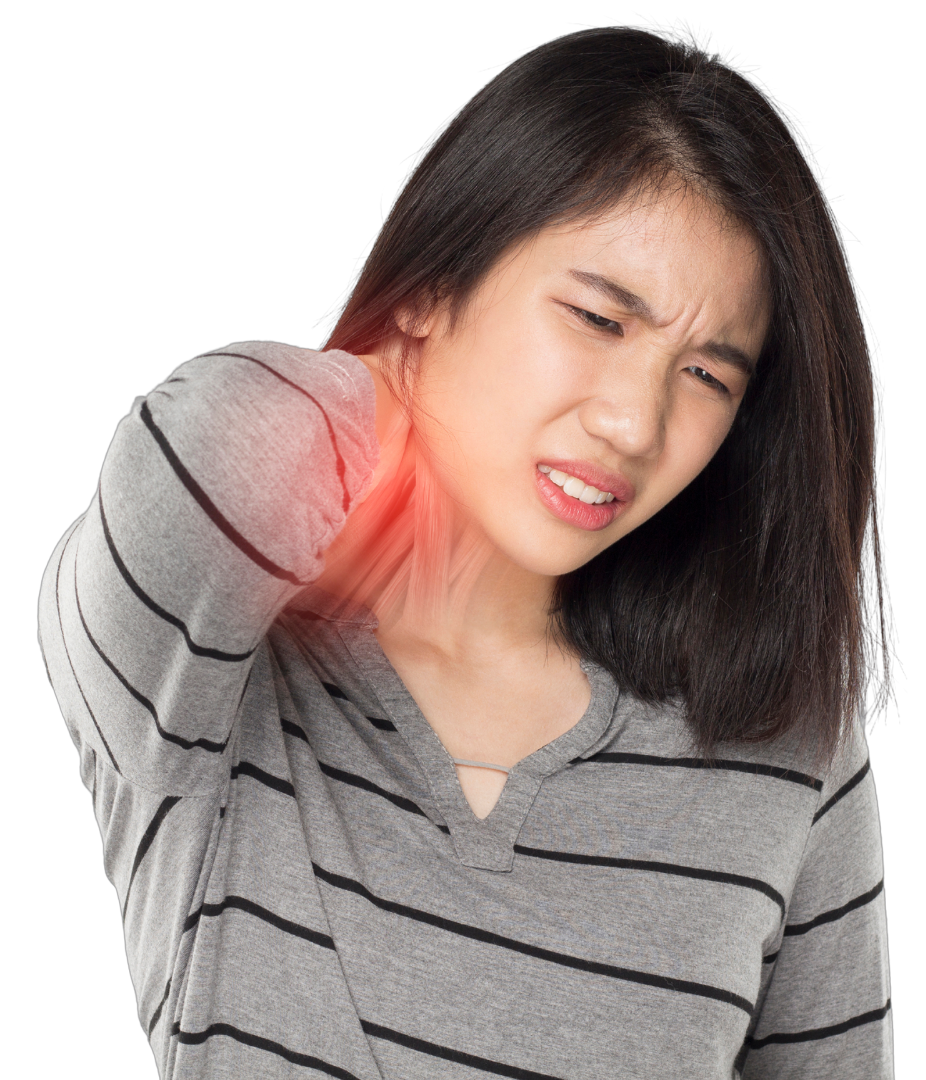
What Causes Neck Spasm?
Neck spasms develop when the neck muscles are overloaded, irritated, or reacting to an underlying problem. Causes range from everyday strain to more complex medical conditions.
Poor posture
Prolonged slouching, forward-head posture, or frequent phone use puts constant strain on neck muscles, causing fatigue and involuntary tightening.
Extended screen time
Long hours at a computer without breaks can overload the neck and shoulder muscles — a common issue for office workers.
Repetitive neck movements
Frequent turning or tilting of the neck may irritate muscles over time, leading to spasms.
Neck or shoulder strain
Carrying heavy bags on one side or making sudden awkward movements can overstretch muscles and trigger pain.
Stress-related muscle tension
Emotional stress often causes unconscious tightening of neck and shoulder muscles, resulting in persistent stiffness.
More Serious Underlying Causes
Some neck spasms act as warning signs of deeper issues and should not be ignored:
- Spinal stenosis – narrowing of the spinal canal that irritates cervical nerves
- Whiplash or trauma – lingering muscle guarding after accidents or falls
- Herniated cervical disc – nerve compression that may cause arm pain or tingling
- Cervical dystonia – involuntary neck muscle contractions with abnormal posture
- Meningitis – severe neck stiffness requiring urgent medical care
- Temporomandibular joint (TMJ) disorders – jaw problems affecting neck muscle balance
- Neurological or systemic conditions – such as Parkinson’s disease, rheumatism, or fibromyalgia
- Accurate diagnosis is essential to distinguish simple muscle strain from conditions that require targeted care.
What Are the Symptoms of Neck Spasm?
Pain
Neck spasms often cause sudden, sharp pain deep in the muscles. The neck may feel hard or "locked," with pain worsening during movement.
Other Symptoms
- Chronic neck stiffness – Your neck may feel tight, heavy, or “locked,” making it difficult to turn your head fully. This stiffness often feels worse in the morning or after long periods of sitting, affecting driving, desk work, and sleep comfort.
- Headaches – Tight neck muscles can pull on the base of the skull, triggering tension-type headaches. These headaches may feel like pressure around the head or pain starting from the back of the neck and moving upward.
- Dizziness – Severe muscle tightness or altered neck movement can affect balance signals or blood flow around the neck, leading to lightheadedness or a spinning sensation, especially when turning your head.
- Tingling at the base of the neck – Muscle spasms may irritate nearby nerves, causing mild tingling, buzzing, or “pins and needles” sensations around the neck or upper shoulders. This can be unsettling but often improves once muscle tension is relieved.
- Pain spreading to nearby areas – Neck spasm pain may extend into the shoulders, upper back, or head. In some cases, it overlaps with nerve-related conditions such as occipital neuralgia, making pain feel sharper or more persistent.
What Are the Treatment Options for Neck Spasm in Singapore?
Conservative Treatments
If your neck spasm is mild or moderate, you may benefit from conservative treatments, including:
- Physiotherapy and Exercises: Physiotherapists can help alleviate neck pain by using physical therapies to improve joint motion, relieve soft tissue tension, and strengthen supporting muscles. This approach helps restore normal movement patterns and prevent future spasms.
- Medication Management: Non-steroidal anti-inflammatory drugs (NSAIDs) may be prescribed to help reduce pain and swelling during acute episodes. Your specialist will recommend appropriate medications that provide relief without long-term dependency.
Minimally Invasive Procedures
If your symptoms do not improve or continue to interfere with movement, minimally invasive treatments can target the real source of pain without the need for open surgery. At Singapore Paincare, we offer precise procedures designed to relieve pain at its origin.
Surgical Treatment
There is no surgical treatment for neck sprain or most neck spasms. The vast majority of patients improve with non-surgical care.
How to Prevent Neck Spasm?
While not all neck spasms can be prevented, these practices can help reduce your risk and support neck health:
- Try to keep good posture at all times, especially during Singapore’s long work hours at desks
- Exercise and stretch regularly to maintain flexibility and strengthen neck-supporting muscles
- Take regular screen breaks—follow the 20-20-20 rule: every 20 minutes, look at something 20 feet away for 20 seconds
- Use supportive pillows that maintain proper neck alignment during sleep
- Manage stress through relaxation techniques, mindfulness, or activities that help you decompress
- Adjust your workstation ergonomics—keep screens at eye level and maintain proper seating posture
Frequently Asked Questions
A Message About Neck Spasm from Our Pain Specialist
A neck spasm is not merely a painful inconvenience—it is your body sending a critical signal. Whether the pain stems from chronic "tech neck" due to Singapore's demanding work culture or from a more serious spinal issue like nerve compression or cervical dystonia, ignoring it can lead to declining quality of life, persistent headaches, and limited mobility.
At Singapore Paincare, our Painostic® method goes beyond treating symptoms. We identify the real source of discomfort and build an individualized, minimally invasive plan—so you can move comfortably and confidently again.