What are the Causes of Achilles Tendonitis?
Achilles tendonitis develops when the tendon is subjected to more load or repetitive stress than it can tolerate. Causes fall into two broad categories — mechanical and non-mechanical.
What are the Symptoms of Achilles Tendonitis?
Achilles Tendonitis symptoms can range from manageable discomfort to deeply debilitating pain that impacts daily functions. If condition is severe or persistent, it's best to have it checked by a pain specialist.
General Symptoms of Achilles Tendonitis
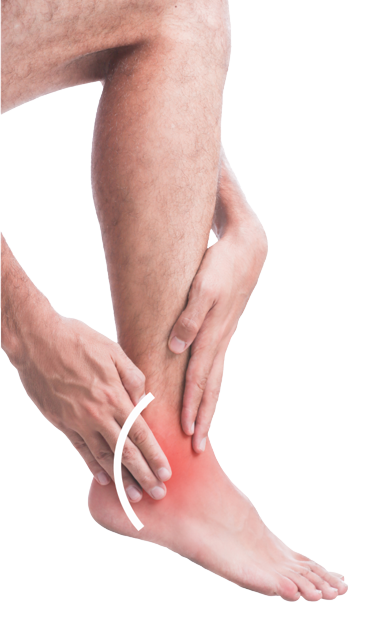
- Heel Pain: Pain is a hallmark symptom, often severe in the morning. It can be felt anywhere along the tendon's path, from the heel up to the calf. While it may improve somewhat with motion, it typically worsens with increased activity.
- Stiffness and Tenderness: The affected area is likely to feel tender, swollen, and stiff due to inflammation.
- Limited Range of Motion: Inflammation can restrict movement, causing difficulties in bending your ankle or walking comfortably.
When to Seek Expert Medical Attention
You should seek consultation with a pain specialist when you experience any of the following, as they indicate a need for professional diagnosis and early intervention:
- Pain or stiffness at the back of the heel
- Mild aches at the back of the heel
- Tenderness near the affected area
- Pain in the middle of the tendon. Associated with swelling and oedema
- Limited Range of motion
What Are the Options for Achilles Tendonitis Treatment in Singapore?
Conservative Treatments
- Orthotics: Doctors may recommend shoe inserts, which can be standard-sized or custom-made, to help correct foot problems, improve weight distribution, and reduce stress on the tendon. This provides mechanical support to the foot structure.
- Physiotherapy: A physiotherapist will tailor a variety of exercises to improve the elasticity, strength, and support of the feet and ankles. Targeted muscle exercise is crucial to reduce pain, improve tendon tolerance, and prevent damage from worsening.
- Non-Steroidal Anti-Inflammatory Drugs (NSAIDs): Over-the-counter or prescription pain medications can be used to temporarily relieve pain and reduce inflammation associated with the condition.
- Extracorporeal Shock Wave Therapy (ESWT): This procedure involves applying high-energy sound waves to the affected area. The shockwaves stimulate a metabolic reaction and promote a healing response in the damaged tendon tissue.
Minimally Invasive Procedures
If your symptoms do not improve or continue to interfere with movement, minimally invasive treatments can target the real source of pain without the need for open surgery. At Singapore Paincare, we offer precise procedures designed to relieve pain at its origin.
- Platelet-Rich Plasma Injection Therapy: This treatment involves injecting a concentration of the patient’s own platelets into the affected area. The concentrated platelets are rich in growth factors which can help reduce inflammation and swelling in the bursa and the tendonitis, promoting cellular repair and healing. Early treatment with Platelet-Rich Plasma injection is highly recommended to prevent the progression of tears or rupture.
Surgical Treatment
Surgery is rarely required for Achilles tendonitis and is considered only when conservative and minimally invasive treatments have failed after an appropriate period — typically six months to a year — or when imaging confirms significant structural damage such as severe tendon degeneration or partial rupture.
- Foot Surgery makes an incision at the back of the ankle to remove any infected area of the tendon and then stitches or sews up the frayed ends of the tendon tears. It is important to note that surgery carries associated risks, potential complications, and a long downtime—up to 4 to 6 months in a cast—and may not be suitable for all patients.
How Does Singapore Paincare Treat Achilles Tendonitis?
At Singapore Paincare, our specialists use the proprietary Painostic® method, developed from years of clinical experience. This in-house approach goes beyond standard assessment to identify the real source of your pain and map treatment pathways tailored specifically to your condition.
We focus on the least invasive options first, including targeted injections and minimally invasive procedures, often supported by medication and physical or cognitive rehabilitation. Even in complex or persistent cases, this integrated approach helps relieve pain, improve mobility and reduce the risk of recurrence.
How to Prevent Achilles Tendonitis?
You can significantly reduce your risk of developing Achilles tendonitis by adopting preventative measures, particularly in a high-activity lifestyle common in Singapore:
- Doing a Proper Warm-up: Always perform a proper warm-up before engaging in any exercise or sports activity to prepare the tendon for stress.
- Varying Exercises: Incorporate a variety of exercises to avoid repetitive stress on the Achilles tendon, which can lead to overuse injuries.
- Maintaining Muscle Activity: Keep your muscles active and strong, focusing on the calf and surrounding supporting muscles.
- Wearing Proper Footwear: Always wear shoes that fit well and are appropriate for the activity you are undertaking.
- Choosing Appropriate Terrain: Avoid running uphill or on uneven ground, which places excessive and sudden strain on the Achilles tendon.
FAQs About Achilles Tendonitis
A Message About Achilles Tendonitis from Our Pain Specialist
Achilles tendon pain may start as a mild ache, but if ignored it can affect how you walk, exercise, or even stand comfortably. Everyday factors like repetitive stress, sudden increases in activity, poor footwear, or tight calf muscles can trigger it. If left untreated, the tendon may become inflamed, stiff, or develop micro-tears — potentially leading to partial or complete rupture.
Many people assume heel or foot pain always points to simple strain or ageing. In reality, Achilles tendonitis is often the real cause, and deeper issues such as tendon degeneration, muscle imbalance, or poor biomechanics may be involved. That's why the first step is always to find out exactly where your pain comes from.
At Singapore Paincare, our Painostic® method goes beyond treating symptoms. We identify the real source of discomfort and build an individualised, minimally invasive plan—so you can eat comfortably, sleep well, and return to your daily life with confidence.