Nucleoplasty, also called percutaneous disc decompression, is a minimally invasive day surgery. It uses controlled radiofrequency coblation to shrink a herniated or bulging spinal disc and ease pressure on nearby nerve roots. It is done under local anaesthesia and X-ray guidance. Most patients go home the same day.
What Is Nucleoplasty?
Nucleoplasty, also known as percutaneous disc decompression, is a minimally invasive procedure that decompresses a herniated disc in the spine. A herniated disc can irritate nearby nerve roots. The procedure reduces the disc protrusion. It also lowers the pressure on the compressed nerve roots or spinal cord.
The procedure uses coblation, a form of controlled ablation. Coblation applies low temperature radiofrequency energy to dissolve tissue at the centre of the spinal disc. Once the excess disc tissue is vaporised, it creates a vacuum effect inside the disc. This draws the herniated portion back in. Nucleoplasty is one of the minimally invasive spinal and nerve treatments offered within Singapore Paincare’s Neurospan suite.
How Is Nucleoplasty Performed?
Nucleoplasty is performed as a day surgery. It has a low rate of complications and a short recovery period. The steps are:
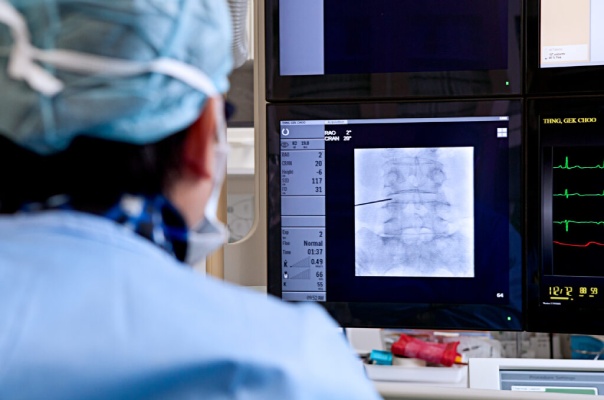
- A small needle is placed at the centre of the affected disc, guided by X-ray for accurate positioning.
- Contrast dye is injected through the needle to improve visibility of the disc.
- A wand-like coblation device is passed through the needle. It generates radiofrequency energy that vaporises and removes excess disc tissue.
- This process relieves most of the pressure on the neighbouring nerve.
Who May Benefit From Nucleoplasty?
Nucleoplasty may be suitable for patients with:
- Pain caused by a bulging or herniated spinal disc, causing lower back pain that may radiate to the legs
- Spinal stenosis
Nucleoplasty is generally indicated for contained disc herniations, where the outer layer of the disc remains intact. It is not typically used for large or extruded herniations. Your specialist will confirm suitability with MRI imaging before recommending the procedure.
How We Determine If Nucleoplasty Is Right for You?
Not every episode of back or leg pain will respond to nucleoplasty. Our specialists use the Painostic® methodology to guide this assessment. It is a multi-dimensional review of pain pathology, pain patterns, and imaging findings. The goal is to confirm that a contained disc herniation is the primary source of a patient’s symptoms. This is combined with MRI confirmation and a history of symptoms. Patients typically qualify when conservative care, such as physiotherapy and medication, has not brought sufficient relief.
What is Recovery Like?
Nucleoplasty is performed as a day surgery. Patients can typically go home on the same day. Many can return to work or resume daily activities the following day. This varies by individual and by the physical demands of their work. Extended bed rest is generally not required. Once the anaesthesia wears off, patients may feel a different type of ache. The original pain may ease immediately or over the following weeks. Some patients compare the sensation to that of a dental procedure.
Is There Any Downtime?
Nucleoplasty typically involves minimal downtime compared with open spine surgery. It generally offers comparable pain relief to open discectomy, while involving a less invasive approach and a shorter recovery period. After the procedure, patients generally begin a rehabilitation programme to strengthen the surrounding muscles. Medication may also be prescribed. This is not for pain relief, but to help stabilise irritated nerves.
What Are the Risks and Side Effects?
Nucleoplasty carries a low risk of complications. The procedure is performed under X-ray guidance. This helps the surgeon identify safe treatment zones and stay clear of unsafe ones. Complications such as nerve injury, infection, or allergic reaction are uncommon. Nucleoplasty is generally associated with fewer complications than traditional open surgical discectomy. Individual risk still varies, and your specialist will discuss this with you based on your condition.
Is the Pain Relief Permanent?
Many patients experience a meaningful and lasting reduction in pain after nucleoplasty. Many are able to reduce or stop pain medication within the first year. For some, relief continues for many years. Relief is not the same for every patient, however. Nucleoplasty does not stop the underlying process of disc degeneration, so wear and tear can continue over time. A new area of pain can occur, either in a different disc or the same general region of the spine. Individual results vary and are not guaranteed
Frequently Asked Questions
Updated 20 Aug 2026