Intrathecal Pump Implants

What Are Intrathecal Pump Implants?
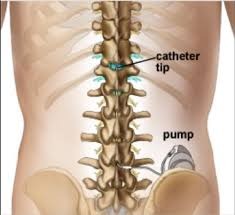
Intrathecal drug delivery, or “pain pump”, is a method of giving medication directly to your spinal cord. The system uses a small pump that is surgically placed under the skin of your abdomen and delivers medication through a catheter to the area around your spinal cord – similar to an epidural that women may have during childbirth.
A pain pump may be a treatment option if all other traditional methods have failed to relieve your long-term symptoms. Because the medication is delivered directly to the spinal cord, your symptoms can be controlled with a much smaller dose than is needed with oral medication. The goal of a drug pump is to better control your symptoms and to reduce oral medications, thus reducing their associated side effects.
Who will benefit from Intrathecal Pump Implants?
Patients with conditions listed below may require the use of intra-spinal morphine pump:
- Cancer pain
- Pain from failed back surgery
- Conditions that leads to high doses of opioid/ morphine use

What are Intrathecal Pump Implants?
The fluid-filled space around your spinal cord is called the intrathecal space. Cerebrospinal fluid (CSF) flows through this area, bathing and protecting your brain and spinal cord. An intrathecal drug pump works much more efficiently than oral medication because it delivers medicine directly into the CSF, bypassing the path that oral medication takes through your body.
The pump is a round metal device about the size of a hockey puck that is surgically implanted beneath the skin of your abdomen. A small plastic tube, called a catheter, is surgically placed in the intrathecal space of the spine and is connected to the pump. A space inside the pump, called the reservoir, holds the medication.
The pump is programmed to slowly release medication over a period of time. It can also be programmed to release different amounts of medication at different times of the day, depending on your changing needs. The pump stores the information about your prescription in its memory, and your doctor can easily review this information with the programmer. When the reservoir is empty, the doctor or nurse refills the pump by inserting a needle through your skin and into the fill port on top of the reservoir.
This therapy is completely reversible, should you ever decide to have the pump removed.
Frequently Asked Questions
An intrathecal pump implant is a programmable drug delivery system placed under the skin of the abdomen. A catheter carries medication from the pump into the cerebrospinal fluid around the spinal cord, allowing targeted delivery for selected patients with severe, persistent pain.
It may be considered for selected patients with severe cancer pain, persistent pain after back surgery, or pain requiring high doses of opioid medication when other appropriate treatments have not provided enough relief or side effects are difficult to tolerate. A specialist assessment is required.
Oral medication travels through the body before reaching the nervous system. An intrathecal pump delivers medication directly into the cerebrospinal fluid around the spinal cord. This targeted route can allow smaller doses, although the effect and side-effect profile vary by medication and patient.
Refill timing varies according to the pump model, reservoir size, medication and prescribed dose. Refills are performed through the skin into the pump fill port, and the treating team will set a follow-up schedule based on the individual treatment plan.
Yes. The system can be surgically removed if clinically appropriate. Removal or major medication changes should be planned by the treating specialist because intrathecal medicines may need to be adjusted safely.
Possible risks include infection, bleeding, cerebrospinal fluid leakage or headache, catheter or pump problems, medication side effects, dosing errors and, uncommonly, an inflammatory mass near the catheter tip. Regular specialist follow-up is important for ongoing safety and device management.
No. An intrathecal pump is used to help manage pain in selected patients. It does not necessarily remove the underlying cause of pain, and the level of benefit varies between individuals.
Updated 31 August 2026