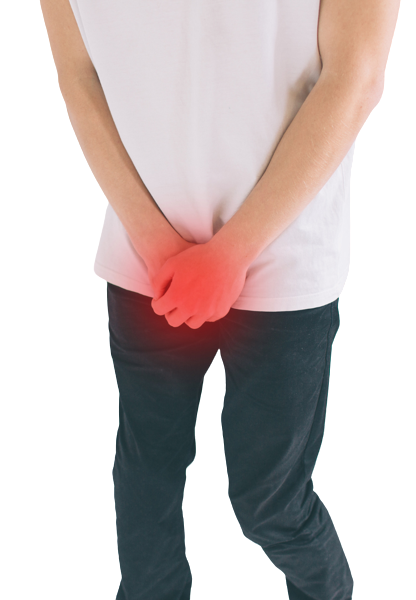
What Is Testicular Pain?
The testes are two small organs located inside the scrotum, below the penis. Testicular pain can affect males of any age. It falls into two broad types: acute pain, which is sudden and short-lived, and chronic pain, which develops gradually and lasts longer. A sudden injury usually causes sharp pain first, followed by a dull ache that worsens with activity or over time.
What Causes Testicular Pain?
Testicular pain generally falls into three categories: ischemic (poor blood supply), inflammatory, or neuropathic (nerve-related) pain. The most common conditions behind it are epididymitis (inflammation of the testes), testicular torsion (a twisted spermatic cord that cuts off blood flow to the scrotum), and inguinal hernia. Most cases trace back to either a person’s biological build or an infection passed on through sexual contact.
Epididymitis is one of the most frequently diagnosed causes: international data puts its incidence at roughly 25 to 65 cases per 10,000 adult men each year, most often in men aged 18 to 35.1 Testicular torsion is less common but time-sensitive. Nationwide studies report an annual incidence of around 2 to 4.5 cases per 100,000 males, with about 86% of cases occurring in males older than 10 (median age 15).2 These figures are drawn from international population studies rather than Singapore-specific data, but they illustrate why persistent or sudden testicular pain shouldn’t be ignored.
What Are the Symptoms of Testicular Pain?
How Is Testicular Pain Diagnosed?
At Singapore Paincare, our pain specialists work alongside urologists to reach a thorough diagnosis. This starts with a physical examination, a review of your symptoms, and your medical history. Blood or urine tests may be used to check for infection. If a lump is found on the testicle, an ultrasound will be ordered to check for testicular cancer.
What Treatments Are Available for Testicular Pain?
In many cases, non-surgical treatment can provide good outcomes. At Singapore Paincare, we aim to treat pain using the least invasive option appropriate, once the cause has been accurately identified. Our approach focuses on addressing the source of pain through specialised injections and minimally invasive procedures, combined where needed with medication and rehabilitative therapy, to help patients recover function and reduce the chance of pain returning.
How Can I Prevent Testicular Pain?
- Go for regular check-ups
- Wear an athletic cup during full-contact sports
- Wear protective clothing for higher-risk tasks or jobs
A Message About Testicular Pain From Our Pain Specialist
Many men find it awkward or embarrassing to talk about testicular pain, and it’s common to dismiss a dull ache as nothing worth mentioning. Left unaddressed, it can develop into something more serious. Testicular pain that isn’t distressing but persists for more than a month should still be checked by a doctor, to rule out more serious causes such as cancer or infection. On the other end of the spectrum, less serious conditions like a hydrocele (a cyst-like swelling behind the testes) can also cause persistent testicular pain.
Persistent testicular pain is more common than many men realise. Chronic testicular pain, also called chronic orchialgia, is estimated to account for around 2.5% to 5% of all urology consultations internationally.3 Testicular pain can also follow an infection or a surgical procedure. Prostate infections and some urinary tract infections, including those following prostate surgery, can present as nerve-type pain. Research also shows that around 1% to 15% of men experience chronic pain after a vasectomy, and 3% to 6% after inguinal hernia repair.4 This type of pain happens when the nerves become irritated or hypersensitised by the earlier condition or procedure. Because the original condition has already resolved, treating it again won’t relieve this type of pain. The focus instead shifts to calming and stabilising the sensitised nerve.
Frequently Asked Questions
References:
- American Academy of Family Physicians, “Epididymitis: An Overview” (2016): https://www.aafp.org/pubs/afp/issues/2016/1101/p723.html
- StatPearls (NCBI Bookshelf), “Epididymitis”: https://www.ncbi.nlm.nih.gov/books/NBK430814/
- “The incidence of testicular torsion and testicular salvage rate in Korea over 10 years: A nationwide population-based study,” Investigative and Clinical Urology: https://pmc.ncbi.nlm.nih.gov/articles/PMC9262487/
- “A nationwide epidemiological study of testicular torsion: Analysis of the Japanese National Database,” PLOS ONE: https://journals.plos.org/plosone/article?id=10.1371%2Fjournal.pone.0297888
- “Testicular torsion: epidemiological risk factors for orchiectomy in pediatric and adult patients,” International Journal of Impotence Research: https://www.nature.com/articles/s41443-020-0331-8
- “Chronic orchialgia: epidemiology, diagnosis and evaluation,” Translational Andrology and Urology: https://pmc.ncbi.nlm.nih.gov/articles/PMC5503922/
- “Chronic Testicular Pain and Orchalgia,” StatPearls (NCBI Bookshelf): https://www.ncbi.nlm.nih.gov/books/NBK482481/
- “Chronic Testicular Pain and Orchalgia,” PubMed: https://pubmed.ncbi.nlm.nih.gov/29494088/
Updated on July 2026