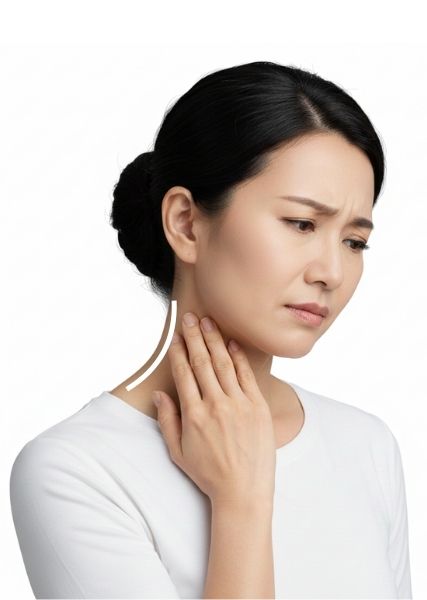
What Causes Neck Pain?
Neck pain can come from many different factors, ranging from everyday strain to specific injuries or medical conditions. Common triggers include:
- Muscle or ligament strain from poor posture, long hours at a desk, or carrying heavy bags
- Repetitive or awkward positions that overwork the neck muscles
- Stress and tension, which can tighten neck and shoulder muscles
- Direct trauma, such as falls, sports injuries, or road accidents
- Cold exposure or restless sleep, which may cause muscle spasms
- Age-related wear and tear of the neck bones and joints (medically referred to as degenerative changes in the cervical spine)
- Less common causes, such as infection, inflammation, or tumours
What are the Types of Neck Pain?
Postural or Muscle-Related Neck Pain
This type of pain often develops suddenly and may resolve within a few days. Common examples include:
- Wry Neck: Waking up with a stiff, painful neck, sometimes after disturbed sleep or exposure to cold.
- Non-specific Neck Pain: General soreness without a clear cause, often self-limiting. It can appear after a minor twist or strain.
- Neck Spasm: Involuntary tightening of neck muscles due to poor posture, stress, or sudden movement, causing stiffness and discomfort.
- Tension-Related Neck Pain: Constant contraction of neck muscles, often worsened by stress, injury, or awkward positions. This can lead to tightness and even tension headaches.
Structural or Degenerative Neck Pain
This type of neck pain is linked to changes or pressure within the cervical spine. Common causes include:
- Slipped Disc/Prolapsed Disc: A spinal disc bulges or ruptures, pressing on nearby nerves and causing pain.
- Nerve Compression: Bone spurs or narrowing of the spinal canal put pressure on nerves, which can lead to pain, tingling, or numbness along the arm or hand.
- Facet Joint Syndrome: Inflammation or wear in the small joints that connect the vertebrae, leading to neck stiffness and discomfort.
- Cervical Spondylosis: Age-related wear and tear in the neck bones and joints, causing stiffness and pain.
- Cervical Stenosis: Narrowing of the spinal canal in the neck that compresses nerves, resulting in pain, weakness, or numbness.
Injury-Related Neck Pain
This type of neck pain arises from sudden force, trauma, or physical strain. Common examples include:
- Whiplash Injury: Often seen after rear-end car accidents. The rapid back-and-forth movement of the head strains the neck’s soft tissues.
- Neck Sprain: Stretching or tearing of the neck ligaments from sudden twisting, heavy lifting, or direct impact.
Chronic or Widespread Pain Syndromes
In some individuals, neck pain occurs as part of broader pain conditions.
- Fibromyalgia: A chronic condition that causes widespread muscle pain, fatigue, and tenderness. Neck and shoulder discomfort are common symptoms.
What Are the Symptoms of Neck Pain?
Neck pain symptoms can range from mild discomfort to severe, daily limitations If your pain persists, worsens, or spreads into the arms, it’s best to have it assessed by a neck pain specialist.
- Pain and Headaches: Aching or sharp pain in the neck that may spread to the head, shoulders, arms, or hands. May cause one-sided or both-sided headaches.
- Stiffness: Reduced ability to move the neck, often worse after rest or prolonged rest.
- Numbness or Tingling: “Pins and needles” or loss of sensation in the arms or fingers, which may indicate nerve involvement.
- Joint Noises (Crepitus): Clicking, grinding, or grating sounds during neck movement.
- Abnormal Posture: Holding the neck in a fixed or tilted position to minimise discomfort.
- Dizziness: In rare cases, looking upward may trigger dizziness due to changes in blood flow.
- Fatigue or Mood Changes: Prolonged/chronic neck pain may affect sleep, energy, and mood
What Are the Treatment Options for Neck Pain in Singapore?
Conservative Treatments
Most mild to moderate cases of neck pain improve with non-surgical care, including:
- Physical Therapy: Physiotherapy helps improve neck mobility, relax tight muscles, and reduce pain through targeted techniques.
- Neck Collars: May be used temporarily to keep the neck supported during sleep or during acute pain episodes. However, evidence suggests they provide little long-term benefit for chronic pain.
- Acupuncture: Helps relieve muscle-related neck pain and supports overall recovery.
Minimally Invasive Procedures
For persistent or more severe neck pain, minimally invasive treatments can target the exact source of pain without the need for open surgery. At Singapore Paincare, we offer precise procedures designed to relieve pain at its origin.
- Myospan Injections: Targeted injections of local anaesthetic or steroid into tender trigger points, painful ligaments, or inflamed tissues to reduce pain and inflammation. In selected cases, Platelet-Rich Plasma (PRP) may be used to support the natural healing of injured muscles or tendons.
- Facet Denervation: A precision-guided radiofrequency procedure that blocks pain signals from inflamed facet joints in the cervical spine, helping restore comfort and movement.
- Nucleoplasty: A minimally invasive technique that uses a fine needle and radiofrequency energy to shrink a slipped disc, easing pressure on nearby nerves and reducing pain.
- Neuroplasty: A technique that uses specialised catheters to free nerves that are trapped or irritated in the spinal canal, improving nerve function and easing chronic pain.
Surgical Treatment
Surgery is rarely needed for neck pain. It may be considered if a nerve is severely compressed and causing ongoing weakness or intense pain that does not improve with other treatments. Before recommending surgery, a specialist will review detailed scans of your spine to understand the exact cause. They will then discuss whether surgery is necessary and explain the potential benefits and risks.
How Singapore Paincare Treats Neck Pain?

At Singapore Paincare, our specialists use the proprietary Painostic® method, developed from years of clinical experience. This in-house approach goes beyond standard assessment to identify the true source of your pain and map treatment pathways tailored specifically to your condition.
We focus on the least invasive options first, including targeted injections and minimally invasive procedures, often supported by medication and physical or cognitive rehabilitation. Even in complex or persistent cases, this integrated approach helps relieve pain, improve mobility and reduce the risk of recurrence.
How to Prevent Neck Pain?
- Try to keep a good posture at all times.
- Exercise and stretch regularly.
- Take regular screen breaks.
- Adjust your workstation—keep screens at eye level, use a suitable chair and proper posture
- Use supportive pillows (especially for sleep).
A Message About Neck Pain from Our Pain Specialist
Neck pain may start as a simple ache, but if ignored it can affect how you move, sleep, and focus. Everyday factors like long hours at a desk, stress, or poor posture can trigger it. If left untreated, the neck may become stiff, and nearby nerves could get irritated — potentially causing pain, tingling or discomfort to spread.
Many people assume neck pain always points to a “slipped disc.” In reality, tight muscles, strained ligaments or inflamed joints are often the real cause. That is why accurate diagnosis is the most important first step in effective neck pain treatment.
At Singapore Paincare, our Painostic® method goes beyond treating symptoms. We identify the precise source of discomfort and build a personalised, minimally invasive plan — so you can move comfortably and confidently again.