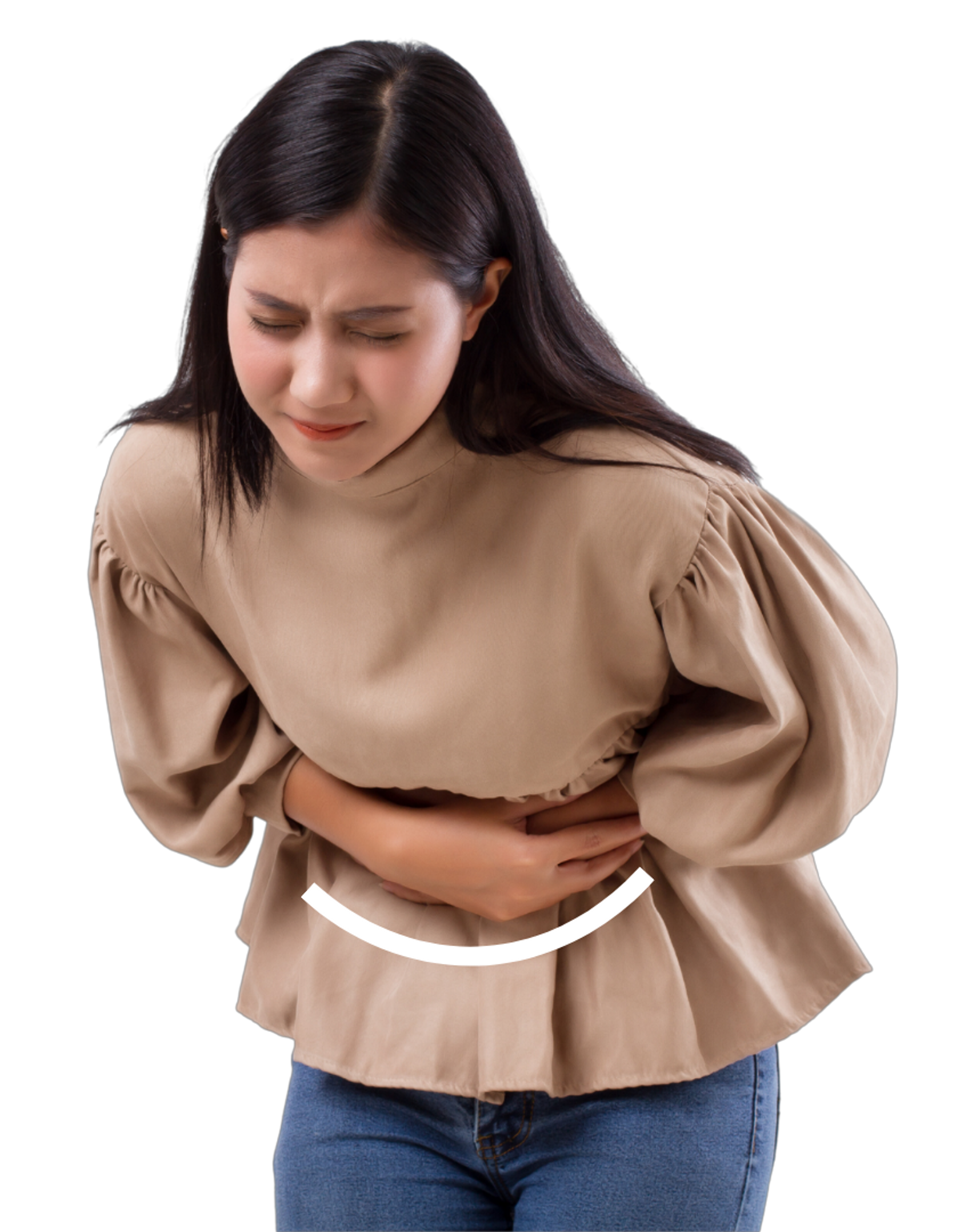
What Are Menstrual Cramps?
Menstrual cramps refer to the cramping, aching pain felt in the lower abdomen before or during a woman’s period. The medical term is dysmenorrhea, and it is classified into two types:
| Type | What it means | Common causes |
|---|---|---|
| Primary dysmenorrhea | Recurring cramps not caused by another medical condition | Prostaglandin-driven uterine contractions |
| Secondary dysmenorrhea | Painful periods caused by an underlying reproductive condition | Endometriosis, fibroids, ovarian cysts, pelvic congestion syndrome |
It is estimated that up to 90% of adolescent women and up to 80% of reproductive-age women experience dysmenorrhea at some point — making it the leading cause of absenteeism from work and school among women in Singapore and globally.
What Causes Menstrual Cramps?
During your period, the uterus contracts to shed its lining. A hormone-like chemical called prostaglandin drives these contractions. When prostaglandin levels are high, contractions become stronger — temporarily cutting off blood and oxygen to the uterine muscle, which triggers pain.
For secondary dysmenorrhea, additional factors may be involved:
- Endometriosis — tissue similar to the uterine lining grows outside the uterus
- Uterine fibroids — non-cancerous growths in the uterus wall
- Ovarian cysts — fluid-filled sacs on the ovaries
- Pelvic congestion syndrome — enlarged, varicose-like veins in the pelvis
- Adenomyosis — uterine lining grows into the uterine muscle wall
- Cervical stenosis — a narrowed cervix that restricts menstrual flow
What Are the Symptoms of Menstrual Cramps?
Menstrual cramp symptoms typically begin one to three days before your period and peak around 24 hours after it starts. Common symptoms include:
- Aching or cramping pain in the lower abdomen — ranging from dull and constant to sharp and intense
- Pain that radiates to the lower back, hips, and inner thighs
- Pressure or heaviness in the pelvis
- Nausea, bloating, or loose stools
- Fatigue during the menstrual period
If your cramps are worsening over time, lasting beyond your period, or not responding to pain relief, these may be signs of secondary dysmenorrhea and warrant specialist evaluation.
How Does Singapore Paincare Diagnose Menstrual Cramps?
At Singapore Paincare, our specialists use the proprietary Painostic® methodology — a multi-dimensional diagnostic approach developed by Dr. Bernard Lee Mun Kam — to go beyond surface symptoms and identify the true source of your pain.
Your assessment may include:
- A detailed review of your menstrual cycle history and pain patterns
- Pelvic examination by our team, which includes pain specialists and an obstetrician-gynaecologist
- Ultrasound imaging may be recommended if fibroids, cysts, or adenomyosis are suspected
- Laparoscopy may be considered to diagnose endometriosis in confirmed or suspected cases
- Assessment for pelvic congestion syndrome when pain is persistent and diffuse
Where relevant, we also consider how factors such as stress, sleep, and central pain sensitisation may be amplifying your pain experience.
What Treatments Are Available for Menstrual Cramps in Singapore?
Treatment depends on whether your cramps are primary or secondary. At Singapore Paincare, we always start with the least invasive option that is appropriate for your condition.
Medications
- NSAIDs (e.g. ibuprofen, naproxen, celecoxib) — reduce prostaglandin production and are highly effective for primary dysmenorrhea. Newer COX-2 inhibitors offer fewer gastrointestinal side effects.
- Paracetamol — useful for mild to moderate pain, particularly when NSAIDs are not tolerated.
- Hormonal therapy — oral contraceptive pills or progestin-only pills can suppress ovulation and may significantly reduce secondary dysmenorrhea, particularly in endometriosis.
- Pharmacotherapy (antidepressants, anticonvulsants) — for women with central sensitisation or nerve-driven pain, medications such as low-dose amitriptyline or gabapentin may reduce pain nerve fibre sensitivity and improve muscle relaxation.
Lifestyle Measures
- Regular aerobic exercise improves blood flow to the uterus and may reduce the intensity of contractions over time
- Applying heat to the lower abdomen may offer short-term relief for mild cramps
- Dietary adjustments may help for women with endometriosis-related pain
Minimally Invasive Procedures
For women whose menstrual pain is severe, persistent, or linked to an underlying pelvic condition, minimally invasive procedures may be considered to provide more targeted, longer-lasting relief. These are performed on an outpatient or day-surgery basis with minimal downtime.
At Singapore Paincare, our specialists will assess your condition using the Painostic® methodology and recommend the most appropriate treatment pathway for you.
A Message About Menstrual Pain from Our Pain Specialist
“Menstrual cramps may be dismissed as a normal part of life for women — but severe, recurring pain that interferes with daily activities is worth investigating. In my experience, a significant proportion of women living with disabling menstrual pain have an underlying condition such as endometriosis or pelvic congestion syndrome that can be effectively managed once properly identified.”
When Should You See a Specialist for Menstrual Cramps in Singapore?
You should consider consulting a pain specialist if:
- Your menstrual pain is not adequately relieved by over-the-counter painkillers
- The pain is worsening with each cycle rather than remaining stable
- You experience pain outside of your period, including during intercourse or bowel movements
- Your periods are unusually heavy or irregular
- You have been unable to work or attend school due to period pain
These symptoms may indicate secondary dysmenorrhea. Early evaluation can help identify underlying conditions and guide appropriate management.